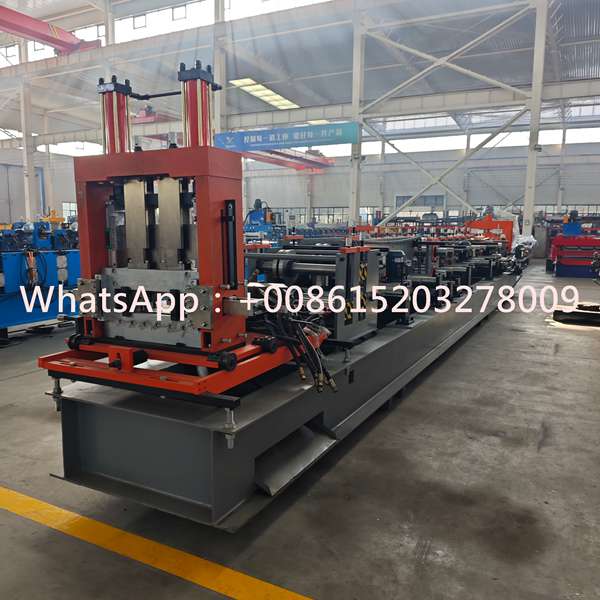
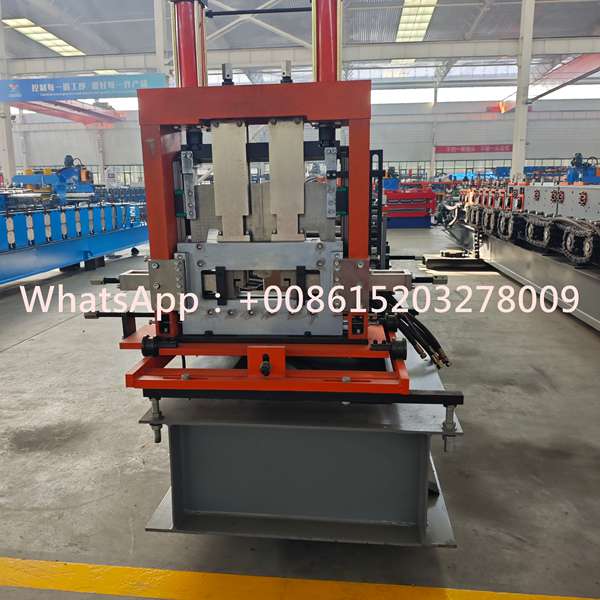
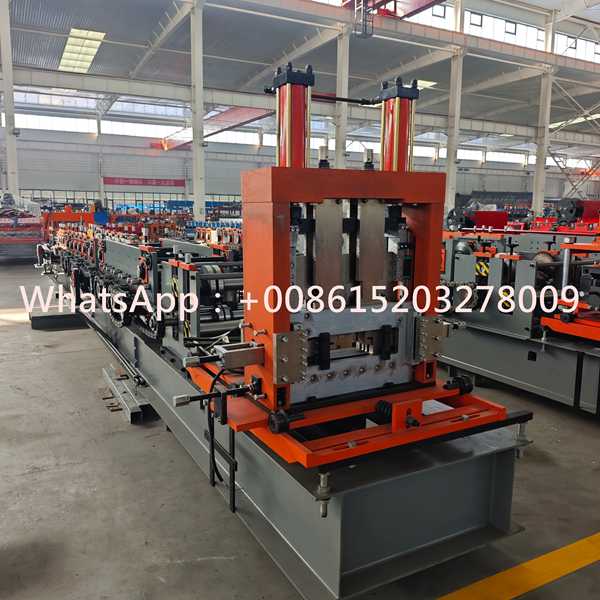
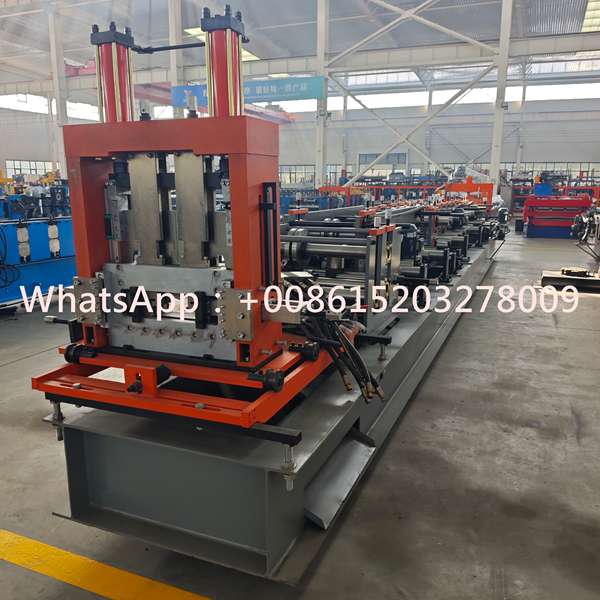
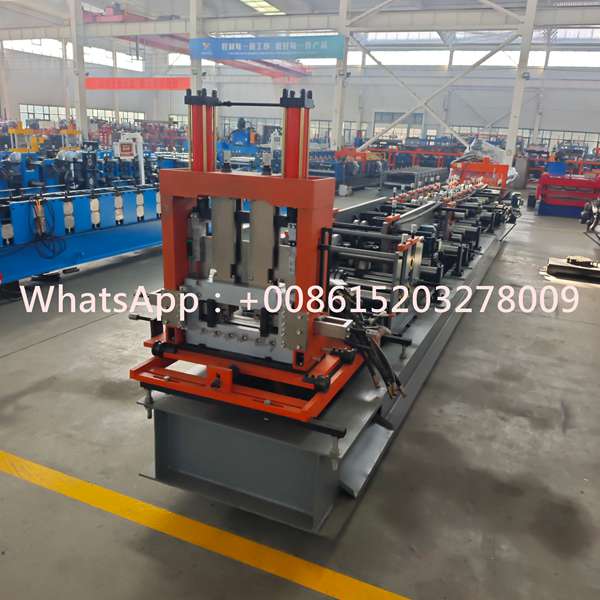
Produces structural roof members from continuously fed steel strip
Accepts coated materials for demanding exterior building environments
Digital controls simplify repeat orders and production scheduling
Precision-guided strip movement supports consistent finished geometry
Adjustable tooling accommodates different structural member dimensions
Integrated processing minimizes manual handling during fabrication
Ideal for European steel building and roofing projects
A continuous cold-forming solution for manufacturing steel purlins used in roof, wall, and secondary framing systems.
“Pfetten” is the German term commonly used for purlins, the secondary structural members positioned within many roof and wall framing systems. These components transfer loads from roof or wall cladding toward the primary structural framework and are an important part of many steel building designs.
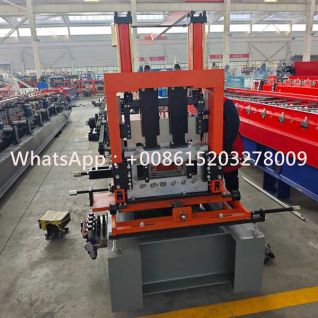
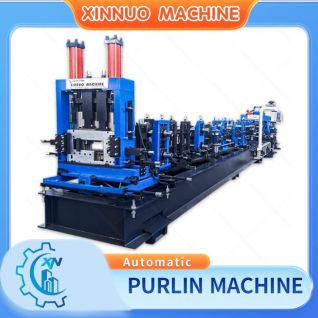
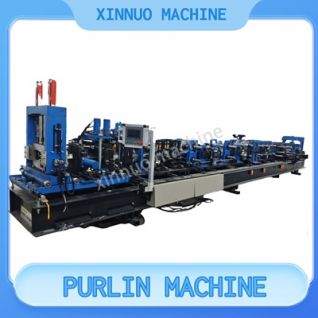
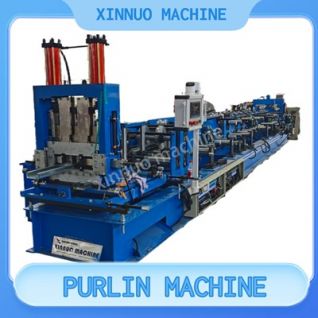
This forming machine provides a continuous method for manufacturing steel purlins from coil. The incoming strip is gradually shaped through a series of forming stations until the required cross-section is achieved. Depending on the project, the final product can be configured as a C or Z section.
Continuous production offers a practical alternative to repeated individual bending operations. Once the coil is loaded and the machine has been configured, the material can move through feeding, forming, optional punching, and cutting operations in an organized sequence.
The machine configuration is determined according to the required profile drawing, material thickness, steel grade, production capacity, finished lengths, punching requirements, and available workshop conditions. This allows the equipment to be developed for the customer's actual production program.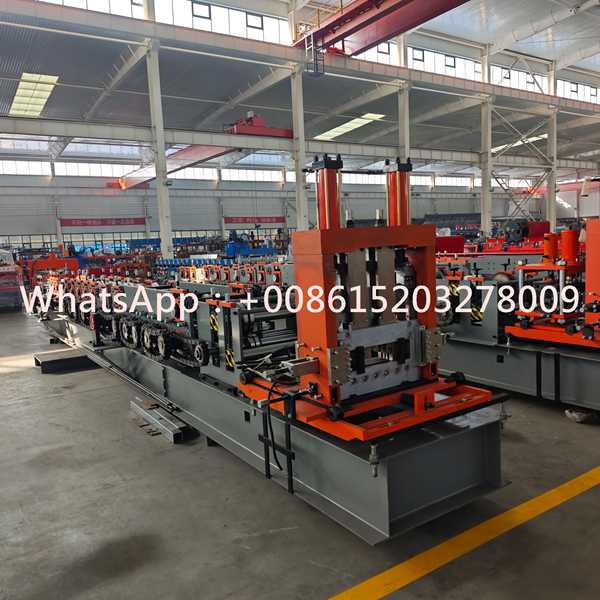
Every structural section has its own dimensional requirements. Roller geometry, forming sequence, shaft arrangement, punching position, and cutting method can be selected according to the approved section drawing and material specification.
| Parameter | Reference Specification |
|---|---|
| Machine Type | Automatic Pfetten Forming Machine |
| Profile Options | C / Z Purlins |
| Web Width Range | Approximately 80–300 mm |
| Web Height | Approximately 40–80 mm |
| Lip Dimension | Approximately 10–20 mm |
| Material Thickness | Approximately 1.5–3.2 mm |
| Forming Speed | Approximately 10–20 m/min |
| Raw Material | Galvanized or coated steel coil |
| Punching | Optional in-line punching system |
| Cutting | Automatic cut-to-length |
| Control | PLC-based automatic operation |
| Applications | Roof framing, wall framing, warehouses, workshops, industrial buildings |
Note: Final parameters depend on the approved profile drawing, steel grade, material thickness, production speed, punching layout, finished length, and customer-specific requirements.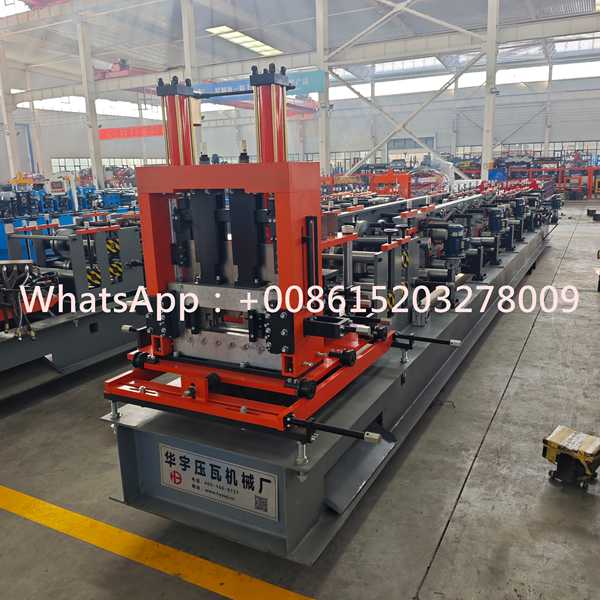
In German construction terminology, “Pfetten” generally refers to horizontal structural members that support roof elements and transfer loads toward the primary building frame. In English-language technical documentation, the corresponding term is usually “purlins.”
Depending on the structural system, purlins can have different cross-sectional forms and dimensions. Cold-formed C and Z sections are frequently considered for steel building applications because they provide efficient structural geometry while allowing continuous production from coil.
The correct section must be selected through structural design. Span, roof loading, snow and wind conditions, connection requirements, steel properties, and applicable construction standards all influence the final specification.
The forming machine itself does not determine the structural capacity of the finished member. Instead, it provides the manufacturing process needed to reproduce the approved section consistently from the specified steel material.
Production begins with a steel coil installed on the decoiler. The coil is released progressively and guided toward the forming line. Depending on the machine configuration, a leveling or preparation section may be incorporated before the strip enters the forming stations.
The feeding system keeps the material aligned with the machine centerline. This is important because lateral deviation can affect the geometry of the finished section.
The steel strip then passes through multiple roller stations. Each station introduces a controlled bend, allowing the profile to develop progressively rather than being formed in a single aggressive operation.
As the strip moves forward, the web and flanges are gradually established. Additional stations create the final lip or other geometric features included in the approved profile.
When the continuous section reaches the cutting area, the automatic cutter separates individual purlins according to the programmed production length. If punching is included, connection holes can be produced at designated positions during the continuous process.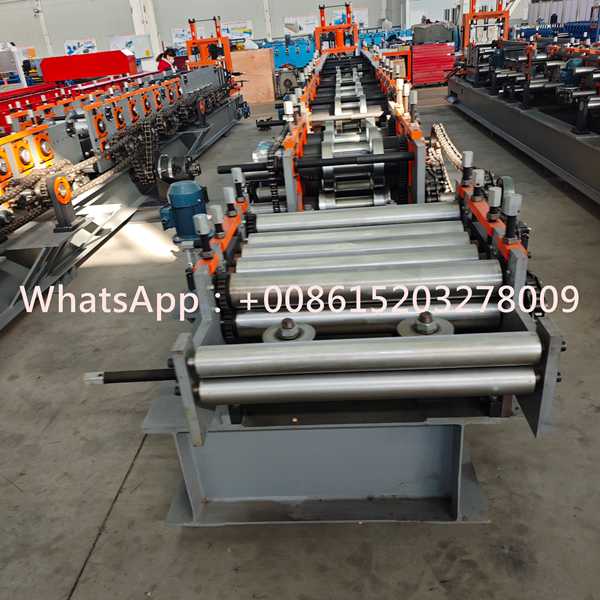
C and Z sections provide different geometric solutions for secondary steel framing. The choice between them is normally made by the structural engineer according to the building's design and connection arrangement.
C sections have a channel-style configuration. They can be used as secondary members in selected roof and wall systems where their geometry fits the structural design.
Z sections use an offset shape that can allow overlapping between adjacent members in certain framing systems. This can provide a practical solution for continuous roof arrangements when specified by the structural design.
A machine intended to produce multiple dimensions should be designed around the actual product range. Depending on the number of sizes, adjustment mechanisms, interchangeable components, or other profile-change solutions may be considered.
Channel-shaped sections for selected secondary framing applications, including roof and wall support systems.
Offset sections that can be used in framing arrangements where overlapping connections are required by design.
Steel coil is selected according to the requirements of the finished structural member. Galvanized steel is frequently used for purlins where surface protection is required for the intended building environment.
The machine can be engineered around specified steel thickness and mechanical properties. Material strength should be confirmed before the roller system and drive components are finalized.
Higher-strength structural steels can require different forming conditions from conventional grades. For this reason, the exact grade and yield strength should be included in the technical information supplied for machine design.
Stable coil quality is also important. Consistent strip width, thickness, flatness, and surface condition can contribute to predictable forming performance and help maintain the dimensional stability of the finished profiles.
Structural projects rarely require every member to have the same length. The automatic control system allows the operator to establish target cutting lengths according to the fabrication schedule.
During production, the control system coordinates profile movement and cutting operations. This allows continuous material processing while individual members are separated at the programmed positions.
Automatic length management can reduce repetitive manual measuring and improve organization when multiple batches are required. Operators can prepare production sequences according to different project orders.
The actual achievable cutting tolerance depends on the machine configuration, material characteristics, production conditions, and specified requirements. Final acceptance criteria should be established from the approved product drawings.
Many purlins require holes for connections with primary frames, braces, or adjacent structural members. An optional punching system can be integrated into the production line to create these openings before final cutting.
The punching layout is normally determined by the engineering drawing. Hole diameter, longitudinal position, transverse position, spacing, and quantity should all be confirmed before tooling is manufactured.
In-line punching can reduce the amount of secondary processing required after forming. This can simplify production flow for manufacturers producing standardized structural members in larger quantities.
Trial pieces should be inspected before full-scale production. Hole locations should be checked against the approved drawing to ensure the punching system is correctly configured.
Steel purlins are used in a wide variety of building systems. The machine can support manufacturers producing secondary structural sections for projects where cold-formed steel members are specified.
Produces selected roof and wall framing members for factories, workshops, and industrial halls.
Supports manufacturing of secondary steel members for warehouses and distribution facilities.
Suitable for selected roof framing components used in agricultural and farm buildings.
Provides production capacity for secondary framing sections used in commercial steel construction.
Different steel fabricators may manufacture different section ranges. The forming line can therefore be configured according to the customer's actual product requirements rather than using a fixed universal setup.
Custom engineering may include web dimensions, flange width, lip geometry, steel thickness, material grade, number of forming stations, punching arrangement, cutting method, automation functions, and finished-product collection.
A profile drawing is the most useful starting point for machine development. It should identify the finished dimensions and, where applicable, include the punching pattern and required dimensional tolerances.
Factory conditions are also considered during layout planning. Coil loading direction, machine footprint, product discharge, maintenance clearance, operator access, foundation requirements, and electrical supply can all affect the final installation arrangement.
Finished purlins should be checked against the approved technical drawing to confirm that their dimensions and connection features are suitable for the intended project.
Typical inspection points can include overall section dimensions, web height, flange width, lip geometry, straightness, finished length, hole position, and general surface condition.
The forming rollers should remain correctly aligned during operation. Material deviation, uneven forming, or changes in profile dimensions should be investigated promptly.
Production inspection procedures can be established according to the manufacturer's quality system, customer requirements, and applicable construction standards. Sample measurements can be recorded throughout production to support process control.
The machine should be installed according to the approved equipment layout and foundation requirements. Sufficient space should be provided for coil loading, operation, finished-product discharge, maintenance, and safe access.
Before trial production, the mechanical and electrical systems are inspected. Forming stations, drive components, guides, cutting equipment, punching units, control functions, and safety devices should be checked.
Trial forming is performed with the specified steel material and profile. Sample sections are measured and compared with the approved drawing before regular production begins.
Operator training can include machine startup and shutdown, control-panel operation, production parameter settings, material feeding, profile adjustment, routine maintenance, safety procedures, and basic troubleshooting.
Routine maintenance is important for maintaining reliable forming performance. Rollers, shafts, bearings, transmission components, cutting tools, punching equipment, electrical connections, and fastening points should be inspected regularly.
Operators should monitor abnormal vibration, unusual noise, material tracking, dimensional changes, cutting performance, and punching quality. Early identification of unusual conditions can help minimize production interruptions.
Technical support can cover machine operation, forming adjustments, production settings, punching configuration, cutting functions, maintenance procedures, and troubleshooting.
Replacement components should be selected according to the actual machine configuration. Maintaining appropriate spare parts can help support continuous operation during demanding production schedules.
This automatic forming machine provides a coordinated production method for manufacturing C and Z steel purlins from coil. With progressive forming, programmable cutting, optional punching, and configurable tooling, the system can serve manufacturers supplying roof and wall framing components for industrial halls, logistics buildings, warehouses, agricultural structures, and commercial steel projects.
Xinnuo Roll Forming Machine Co., Ltd., established in 1995, is a leading enterprise specializing in the design, development, manufacturing, and sales of various cold roll forming equipment.
Located in Botou Economic Development Zone, the company benefits from a well-developed electromechanical manufacturing industry and a complete industrial chain...[ Read More >>]