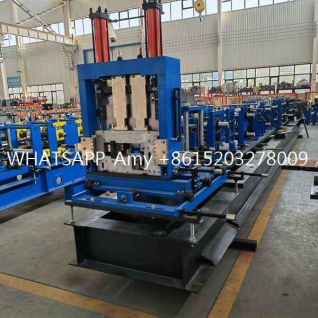
Correa Roll Forming Machine: From Steel Coil to Structural Section in One Continuous Line
Roll forming is the most efficient industrial method for converting flat steel strip into consistent structural open sections. Unlike press-brake bending — which forms one length at a time through a sequential series of tool setups — roll forming is a continuous process: coil feeds in at one end, finished correa sections exit at the other, and the machine runs uninterrupted for the duration of the production batch.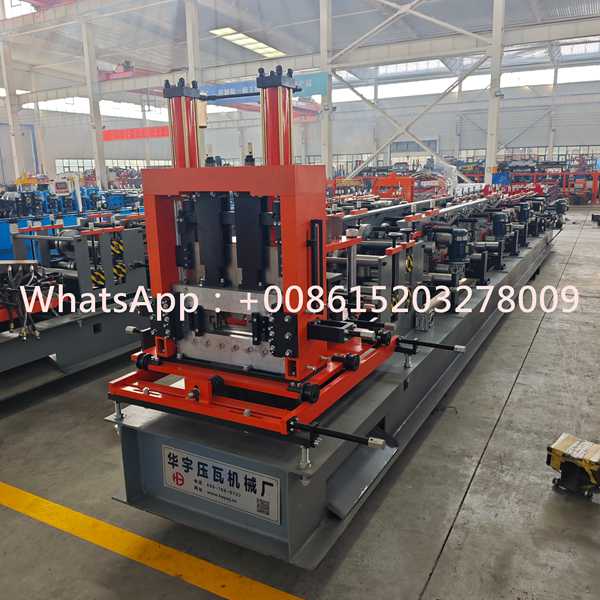
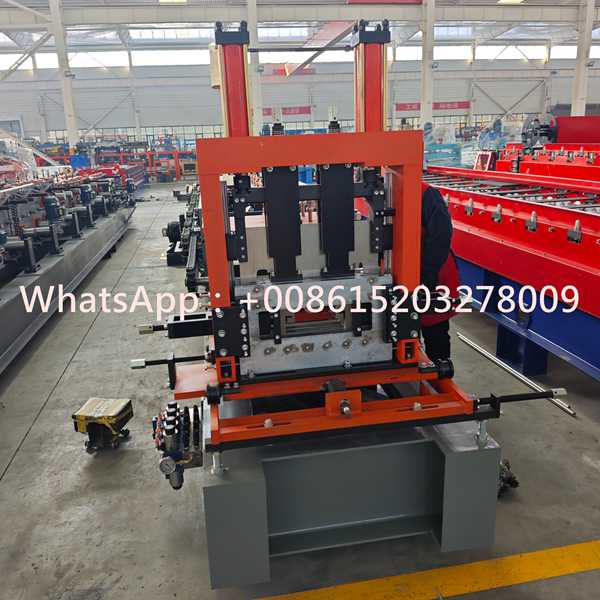
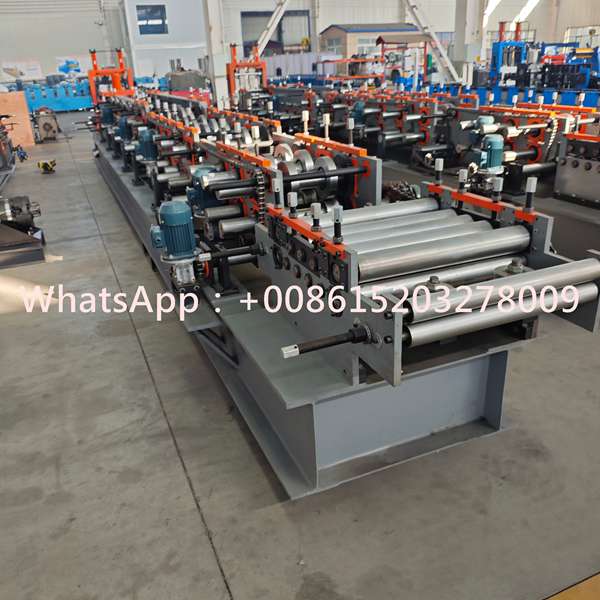
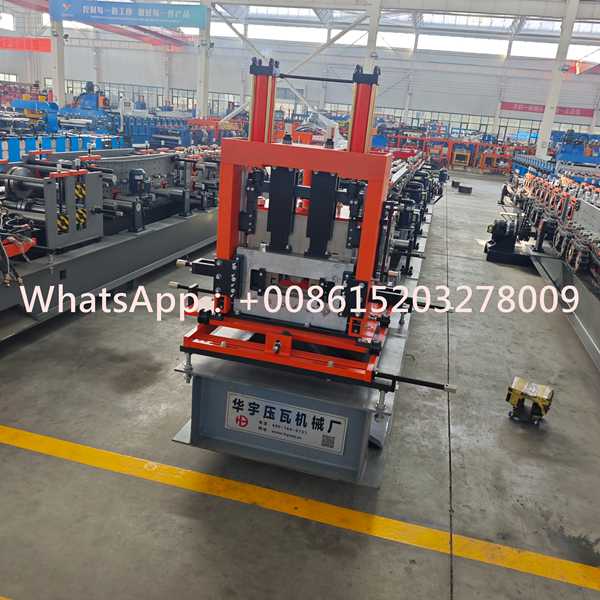
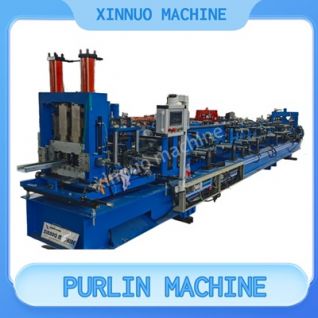
This correa roll forming machine applies that principle to the production of C-profile and Z-profile correa sections used as secondary structural members in steel-frame construction. Profile dimensions — section depth, flange width, lip length — are held in the PLC and recalled digitally. When an order requires a different section size, the operator selects the stored profile, and the motorized adjustment system repositions the forming components without manual roller removal or re-shimming. Production resumes in minutes rather than hours.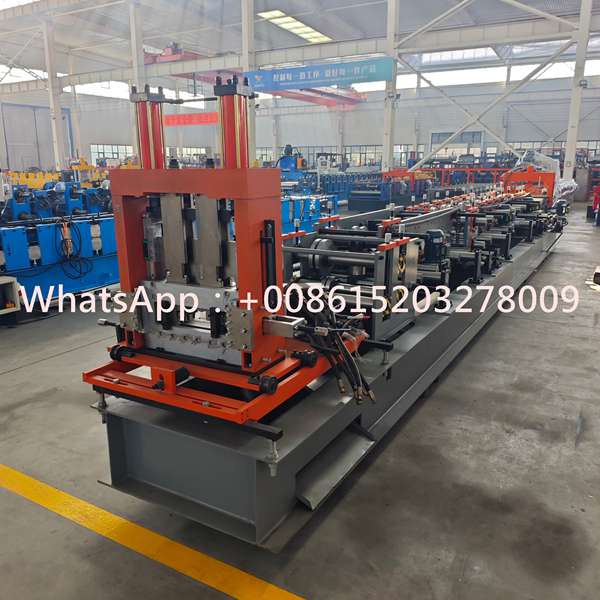
Designed for steel fabricators and building component manufacturers who produce correa sections across multiple size ranges, serve mixed-order customers, and need a forming line that adapts to changing specifications without sacrificing output consistency or coil surface quality.
The Roll Forming Process — Step by Step
01
Coil Loading and Tensioned UnwindingSteel coil is mounted on the decoiler and unwound under controlled back-tension. Consistent strip tension at the entry point prevents lateral wander and surface scratching on the underside of the coil as it feeds forward.
02
Leveling and Coil-Set RemovalThe strip passes through a multi-roller leveling unit that counteracts the residual curvature acquired during coiling. Flat, straight strip entering the forming train is the foundation of accurate profile geometry along the full section length.
03
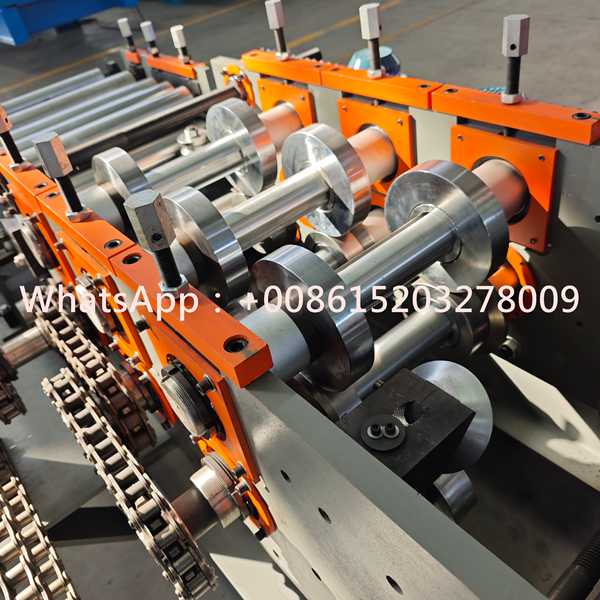
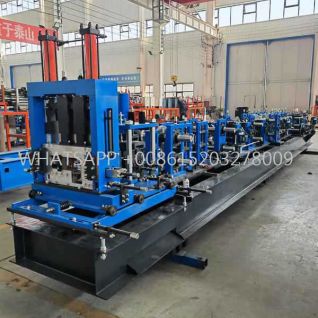
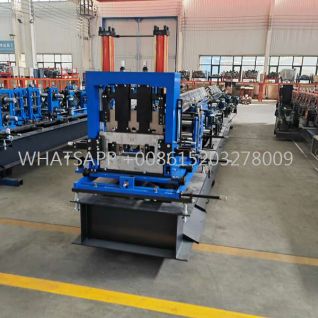
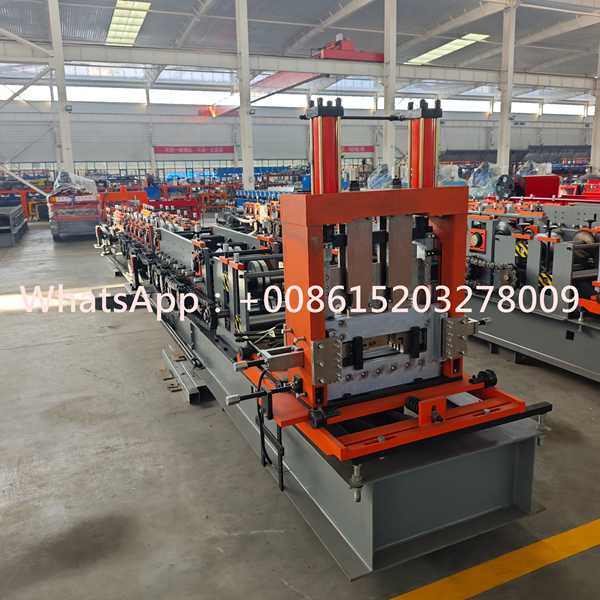
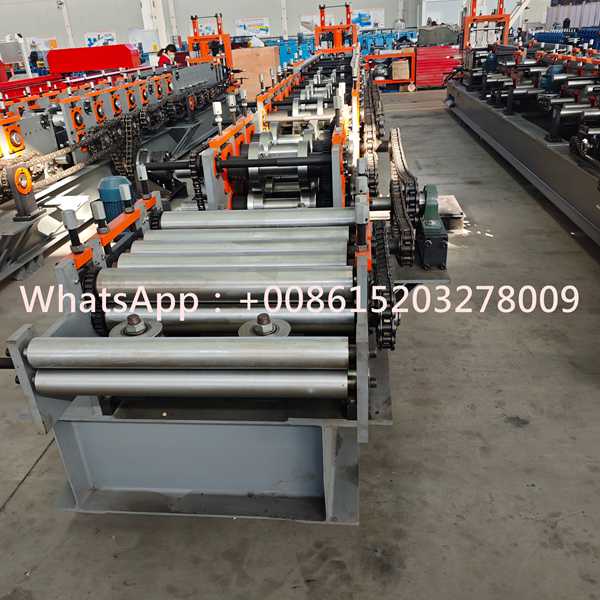
Progressive Cold Roll FormingA sequence of matched upper and lower roller pairs progressively shapes the flat strip into the correa profile. Each roller station contributes an incremental bend, distributing the total forming load to prevent localized thinning or surface damage — critical for PPGI and Galvalume inputs.
04
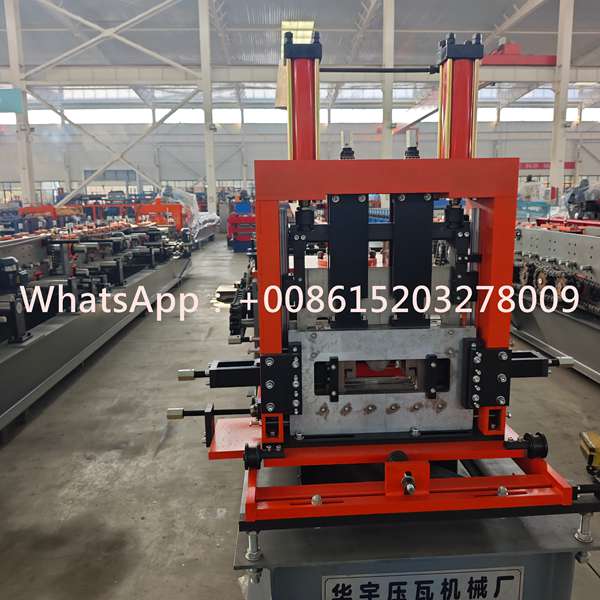
Inline Hydraulic PunchingWhere bolt holes or service openings are required, the punching unit stamps hole patterns into the section web or flange during the forming cycle. Hole size, pitch, and position are set via the PLC control screen — no separate punching operation is needed after forming.
05
Hydraulic Cut-to-LengthThe hydraulic shear cuts each finished correa section at the programmed length. Because the cutting die accommodates a range of section depths through positional adjustment, the machine handles varied cut-length orders within the same production run without blade changes.
06
Section Collection and StackingFinished correa sections exit onto the receiving table for manual collection or transfer to an optional automatic stacking system. Sections are ready for dimensional inspection, bundling, labelling, and dispatch without further processing.
Technical Overview
| Parameter |
Specification |
| Profile Output |
C-section correa, Z-section correa |
| Input Material |
GI · GL · PPGI · PPGL steel coil |
| Material Thickness |
1.5–3.0 mm (standard); extended range configurable |
| Section Adjustment |
Motorized — no roller removal between sizes |
| Main Drive |
Servo motor |
| Punching |
Inline hydraulic, PLC-programmed position and pitch |
| Cutting |
Hydraulic post-forming shear, digital length entry |
| Control |
Touchscreen PLC — multi-batch order storage |
| Power Supply |
380V / 50Hz / 3-phase (other voltages available) |
| Warranty |
12 months full machine |
| Lead Time |
Approx. 60 working days after deposit |
Full configuration sheets — roller layout drawings, punching diagrams, production line footprint plans — are provided at the quotation stage and finalized to your section drawings before manufacture begins.
Where Correa Roll Forming Output Is Used
- Steel portal frame buildings — C and Z correa sections as roof purlin and wall rail members spanning between primary rafters and columns to carry metal sheeting in warehouses, factories, and logistics facilities
- Agricultural construction — correa roll forming output for grain stores, livestock shelters, and covered equipment yards, where pre-coated coil inputs deliver structural performance and built-in corrosion resistance in one component
- Commercial and retail steel buildings — secondary framing members for single-story and low-rise commercial units where correa sections support cladding and provide lateral bracing to the primary frame
- Prefabricated building exports — cut-to-length correa sections in standardized sizes for flat-pack steel building packages supplied to construction markets across multiple regions from a single production facility
- Photovoltaic mounting systems — punched correa channel sections as rail and rafter members for ground-mount and rooftop solar PV racking, with hole patterns matched to standard module mounting hardware at the PLC
- Mezzanine floor and platform framing — Z-section correa as floor joist members in industrial mezzanine storage levels and elevated working platform structures
Line Configuration Options
Section Geometry to DrawingWeb depth, flange width, and lip dimension locked to your confirmed section drawing at order stage. Roller sets machined to your specified tolerances.
Auto C / Z Profile SwitchServo-actuated one-touch switching between C and Z output. Eliminates all manual roller changeover between profile types during a production shift.
Punching ConfigurationHole diameter, pitch, and face position — bottom flange or web — defined via PLC. Two independent punching groups available for complex patterns.
Hydraulic Decoiler Upgrade5-tonne hydraulic decoiler with optional powered loading trolley reduces coil changeover time and eliminates overhead crane dependency for coil handling.
Auto Stacker Integration6-metre or 12-metre automatic stacking system at the line exit. Delivers neatly layered, ready-to-bundle output stacks without manual section handling.
Remote PLC AccessInternet-connected control module allows the engineering team to monitor machine status and adjust parameters remotely — minimizes downtime on overseas installations.
After-Sales and Technical Support
Factory Test
Pre-Shipment Production Run
Complete production cycle completed at the manufacturing facility using your confirmed section geometry and coil thickness. Measured sample sections are supplied for your dimensional verification before shipment is approved.
Documents
Full Documentation Package
Commissioning video, operating manual, scheduled maintenance checklist, and electrical diagrams supplied with the machine. Documentation available in English or your preferred language on request.
Remote
24-Hour Remote Engineering Support
Technical engineers available around the clock via video call and remote PLC connection for commissioning guidance, forming adjustment, and fault diagnosis — applicable from day one of installation.
On-Site
Field Commissioning Service
Engineers available to travel to your facility for machine installation and commissioning. Buyer is responsible for visa, travel, accommodation, and per-diem costs. Scheduling confirmed at the point of order.
Warranty
12-Month Full Machine Warranty
Manufacturing defect coverage for 12 months from delivery. Confirmed warranty claims receive replacement parts at no charge. Technical support and spare parts supply — forming rollers, cutting blades, hydraulic components, control modules — continues beyond warranty at factory pricing.