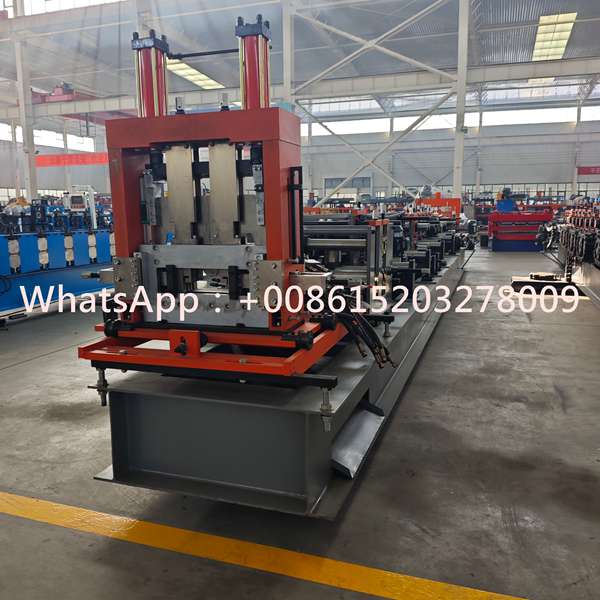
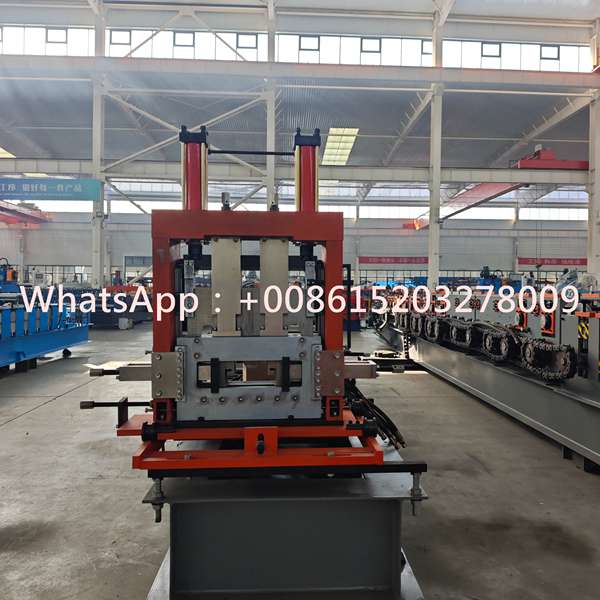
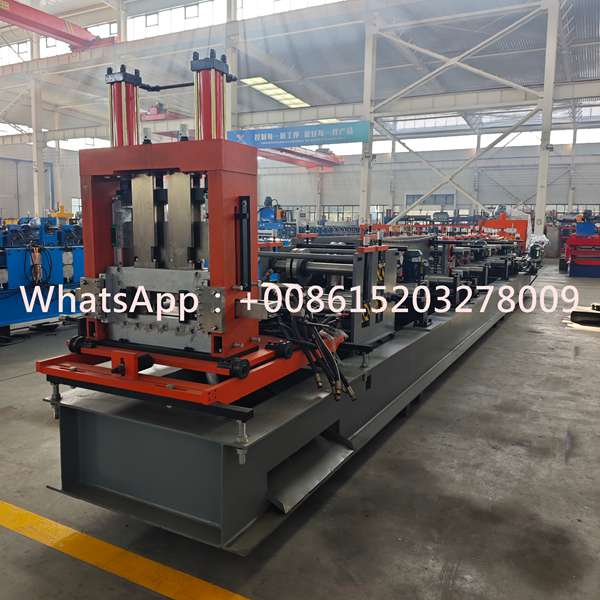
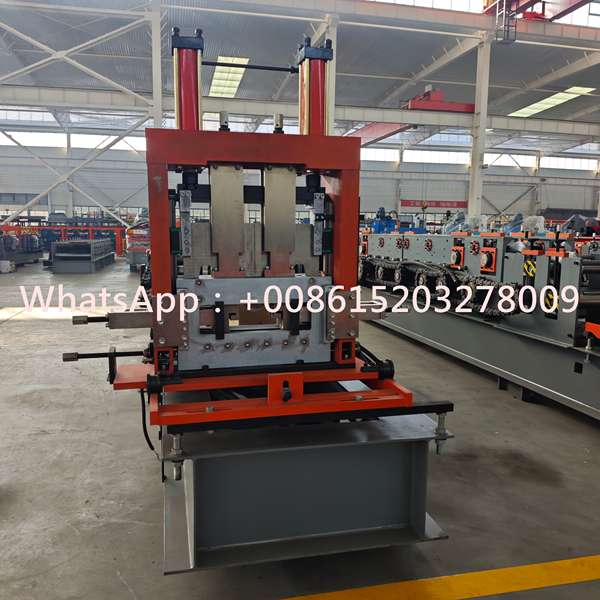
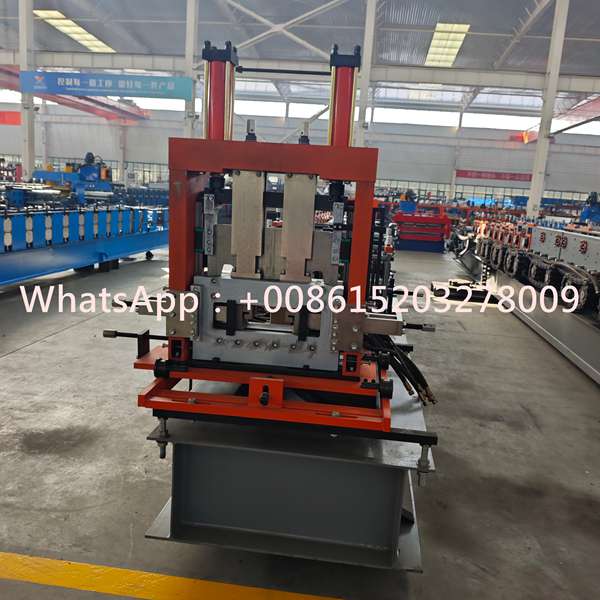
Shapes durable steel members for demanding construction environments
Processes galvanized coils with controlled material guidance
Maintains stable section geometry throughout continuous fabrication
Simplifies production of accurately sized structural components
Supports different member dimensions for varied building designs
Reduces secondary preparation before transportation to construction sites
Suitable for roofs, walls, warehouses, and industrial facilities
A continuous forming solution for producing steel pannes used in roof, wall, and secondary framing systems for modern buildings.
Steel pannes are widely used as secondary structural members in metal building systems. They can connect the primary structural frame with roof or wall cladding and provide a supporting framework for the external building envelope. Their final dimensions and material specifications are normally determined through structural engineering calculations.
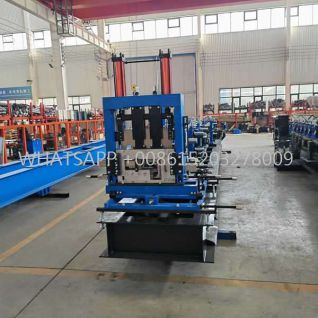
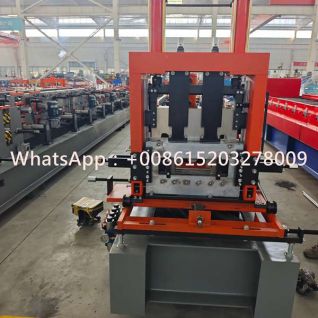
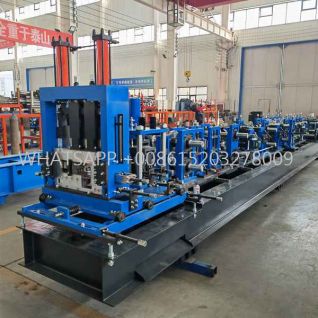
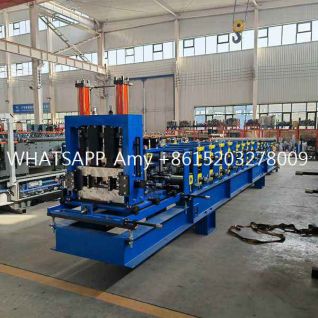
This steel pannes forming machine provides a continuous manufacturing method for converting steel coil into cold-formed structural sections. The production line guides the incoming strip through a sequence of forming stations, gradually creating the required cross-sectional geometry before cutting the finished members to length.
The equipment can be configured according to the required section size, steel thickness, material grade, finished length, production capacity, and connection-hole arrangement. This makes the system suitable for steel fabricators producing components for both standard product ranges and individual construction projects.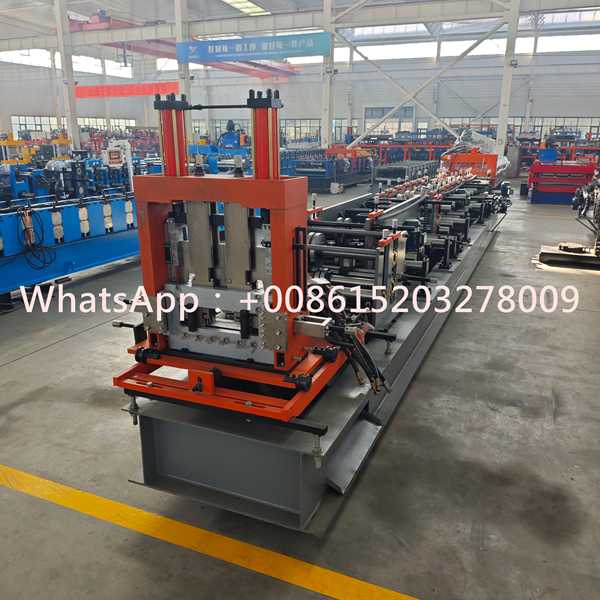
The forming rollers are developed around the required finished profile. Web dimensions, flange geometry, return lips, corner shapes, material thickness, and other profile characteristics can be considered during machine engineering.
| Parameter | Reference Specification |
|---|---|
| Equipment Type | Steel Pannes Forming Machine |
| Profile Options | C / Z Structural Pannes |
| Raw Material | Galvanized or coated structural steel coil |
| Reference Thickness | Approximately 1.5–3.2 mm |
| Reference Web Height | Approximately 40–80 mm |
| Reference Lip Dimension | Approximately 10–20 mm |
| Forming Speed | Approximately 10–20 m/min |
| Punching | Optional in-line punching |
| Cutting | Automatic cut-to-length |
| Control System | PLC-based automatic control |
| Length Setting | Programmable according to production requirements |
| Main Applications | Roof framing, wall framing, warehouses, workshops, industrial buildings |
Note: Final machine parameters depend on the approved profile drawing, steel grade, material thickness, required production speed, punching arrangement, finished length, and customer-specific production conditions.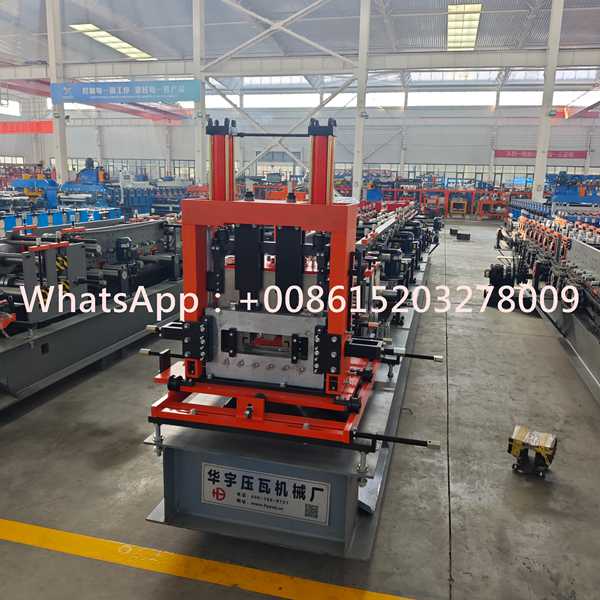
In several European and international construction markets, “pannes” refers to secondary steel members positioned within the roof or wall framing system. In English technical terminology, these members are commonly referred to as purlins.
Their function is to provide an intermediate structural support between primary frames and building cladding. Depending on the structural design, pannes can be produced in C-shaped, Z-shaped, or other cold-formed configurations.
The required profile should be selected by the project engineer based on building span, loading conditions, connection design, steel properties, applicable standards, and environmental requirements.
A dedicated forming line allows steel fabricators to manufacture these members directly from coil. This continuous approach is particularly useful when projects require substantial quantities of profiles with consistent dimensions.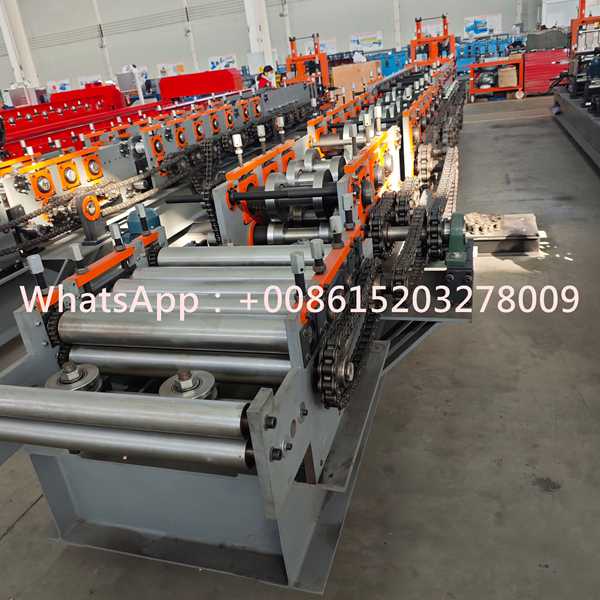
The production process begins with the steel coil mounted on the decoiler. The coil is released at a controlled rate and enters the feeding section, where guide components help maintain the correct strip position.
If required by the material and machine configuration, a leveling section can be used before the forming stations. The purpose is to establish a suitable material condition before the strip undergoes progressive bending.
The strip then moves through a series of forming rollers. Rather than creating the final shape in one operation, the rollers introduce gradual bends at different stages until the specified panne cross-section is achieved.
This progressive approach distributes the forming work along the production line and allows the profile geometry to develop in a controlled sequence. Roller positioning and alignment are important factors in maintaining consistent finished dimensions.
After forming, the continuous section enters the cutting area. The cutting unit separates individual members according to the programmed length, after which the finished pannes can be collected and inspected.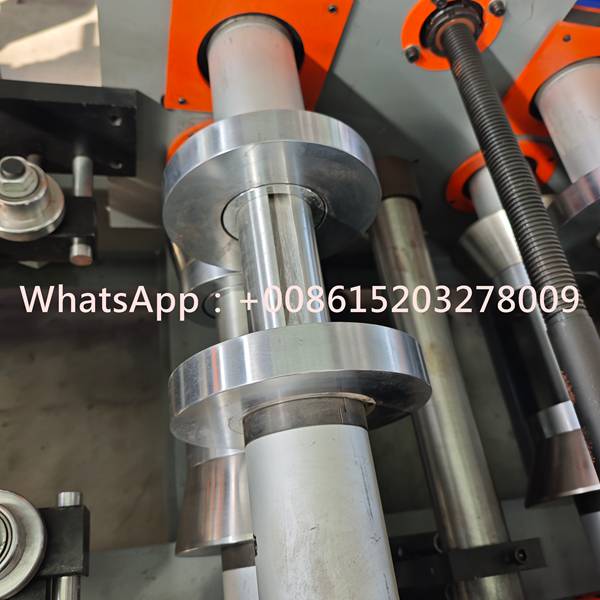
C and Z profiles are frequently selected for secondary steel framing because their section geometry provides practical solutions for many roof and wall systems. The correct profile depends on the structural design and the specific requirements of the building.
C sections provide a channel-shaped configuration, while Z sections have an offset geometry that can be advantageous for certain framing arrangements. The roller tooling must be designed specifically around the required section dimensions.
A production line can be developed for a single profile range or engineered to accommodate multiple dimensions. The appropriate configuration depends on the number of products, expected production volume, and required changeover method.
Before production, the finished section should be checked against the customer's approved drawing. This ensures that the roller configuration, material specification, and production parameters correspond to the intended structural product.
Steel coil is the primary raw material used by the machine. Galvanized steel can be selected when corrosion resistance and long-term surface protection are important considerations for the intended building environment.
The steel grade, yield strength, thickness, and surface condition should be confirmed before finalizing the machine configuration. Different material properties can influence forming force and the behavior of the strip as it passes through the roller stations.
Coated materials should be handled carefully throughout the production process. Proper alignment and suitable forming conditions can help reduce unnecessary surface marking during continuous manufacturing.
Consistent incoming material also contributes to predictable production. Coil thickness and width should remain within the agreed material tolerance for the selected machine configuration.
Construction projects frequently use structural members with different lengths. The automatic cutting system allows the operator to establish the required dimensions through the control interface and organize production according to the project schedule.
The control system coordinates profile movement and cutting operation so that the continuous section can be divided into individual members at programmed positions.
This process minimizes repetitive manual measuring and can make batch production easier to organize. When multiple lengths are required, operators can arrange the production sequence according to the fabrication list.
Actual cutting accuracy should be verified during commissioning using the specified material and profile. The final acceptable tolerance should be established according to the product drawing and applicable project requirements.
Many structural pannes require connection openings for fastening to primary frames or other structural members. An in-line punching unit can be incorporated when these holes need to be produced during the forming process.
The punching configuration is developed according to the approved connection drawing. Hole diameter, position, spacing, and quantity can be specified according to the project requirements.
Integrating punching into the production line can reduce separate post-processing and simplify material movement within the fabrication workshop.
Test pieces should be produced and inspected before starting a large batch. The hole pattern should be compared with the engineering drawing to confirm the relationship between hole positions and the finished section.
The forming line can support manufacturers producing secondary structural members for a wide range of steel buildings. The final application depends on the engineering specification of the project.
Produces secondary framing sections for roof and wall systems in storage facilities.
Supports fabrication of structural members for factories, workshops, and production buildings.
Can manufacture selected framing components for barns, farm structures, and agricultural facilities.
Provides secondary steel framing components for commercial construction applications.
Steel fabrication companies may have different product portfolios, production targets, and customer requirements. For this reason, the machine can be configured around the actual pannes that need to be manufactured.
Customization can include profile dimensions, web height, flange width, lip size, material thickness, steel grade, roller configuration, punching arrangement, cutting method, production speed, and automation functions.
Customers can provide CAD drawings, profile samples, dimensional drawings, or detailed product specifications. These technical materials are used to establish the required forming geometry and production configuration.
The machine layout can also be considered according to the available workshop. Coil loading direction, product discharge, operator working area, maintenance clearance, safety protection, and electrical requirements can be incorporated into the overall design.
Dimensional consistency is important when structural pannes are manufactured for prefabricated steel buildings. The finished members should correspond to the approved profile and connection drawings.
During commissioning, sample pieces can be measured for overall width, web height, flange dimensions, lip geometry, straightness, finished length, and hole position when punching is included.
During normal production, operators should monitor material alignment and the condition of the forming rollers. Changes in profile geometry can indicate material variation, roller misalignment, or the need for machine adjustment.
Inspection frequency can be established according to production volume, product requirements, internal quality procedures, and applicable standards. Maintaining production records can also help with traceability for large construction orders.
The machine should be positioned on a suitable foundation according to the final installation drawing. Adequate working space is required around the decoiler, forming section, cutting area, and finished-product discharge.
After installation, mechanical components and electrical systems are inspected before the first trial. Control functions, emergency devices, transmission components, forming stations, cutting equipment, and optional punching units are checked.
Trial production is carried out with the customer's specified steel material. The finished pannes are then measured and compared with the approved drawing.
Operator training can include machine startup, control-panel operation, parameter input, production monitoring, profile adjustment, routine inspection, lubrication, safety procedures, and basic troubleshooting.
Routine maintenance helps maintain stable forming performance over extended production periods. Rollers, shafts, bearings, transmission components, cutting tools, punching tooling, electrical connections, and fastening points should be inspected regularly.
Operators should watch for unusual vibration, abnormal noise, material tracking issues, changes in section dimensions, and deterioration in cutting or punching performance.
Technical assistance can cover machine operation, forming adjustment, control parameters, punching settings, cutting functions, maintenance procedures, and troubleshooting.
Spare wear parts can be selected according to the actual machine configuration. Keeping commonly required components available can help reduce unnecessary downtime during intensive production schedules.
This steel pannes forming machine provides a continuous production platform for manufacturing C and Z structural sections from steel coil. With configurable roller tooling, automatic cutting, optional punching, and programmable production control, it can support steel fabricators serving warehouses, industrial facilities, agricultural buildings, commercial projects, and other engineered steel structures.
Xinnuo Roll Forming Machine Co., Ltd., established in 1995, is a leading enterprise specializing in the design, development, manufacturing, and sales of various cold roll forming equipment.
Located in Botou Economic Development Zone, the company benefits from a well-developed electromechanical manufacturing industry and a complete industrial chain...[ Read More >>]