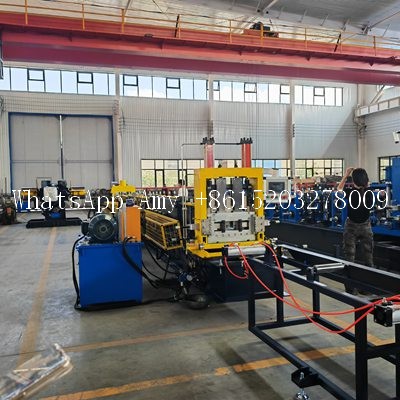
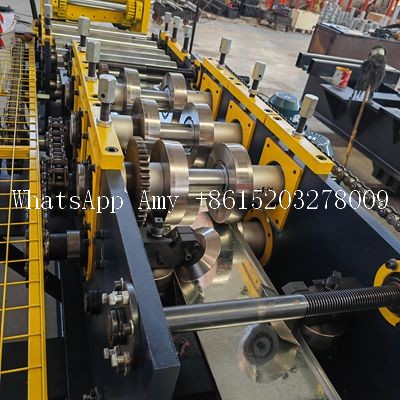
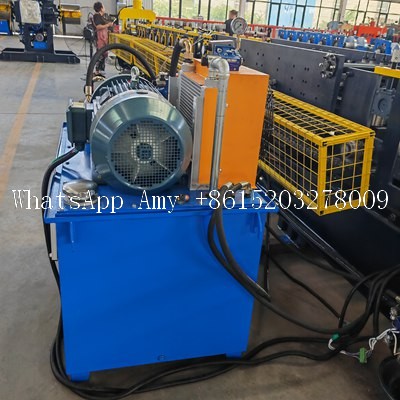
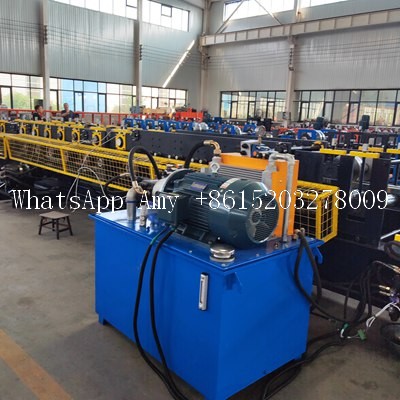
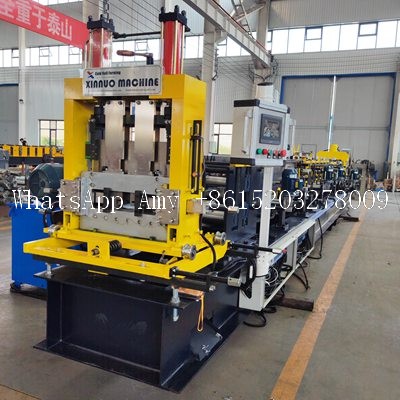
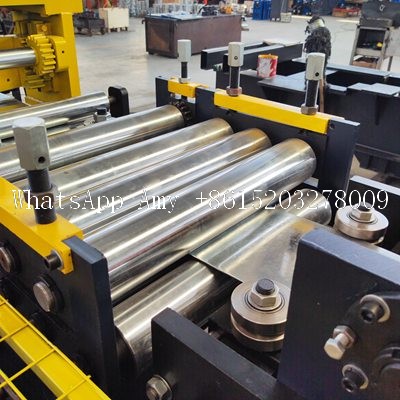
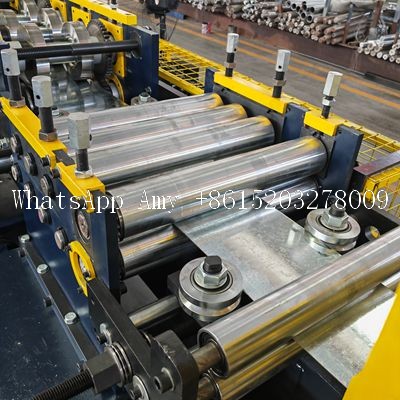
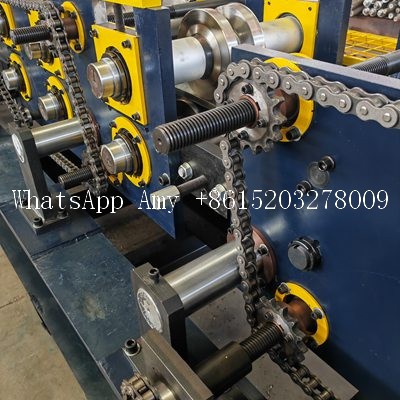
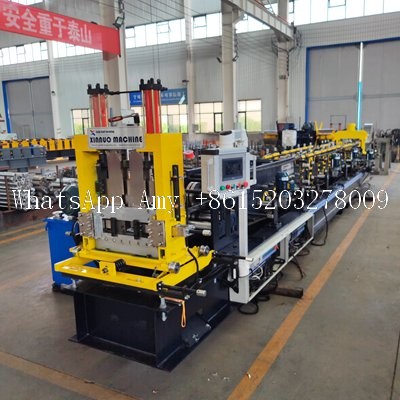
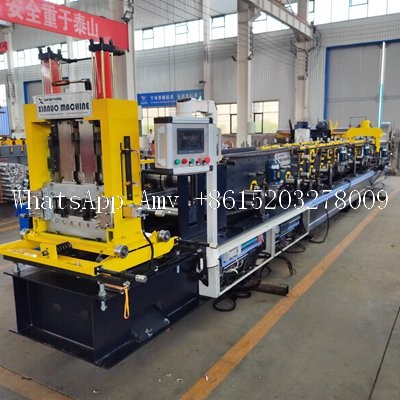
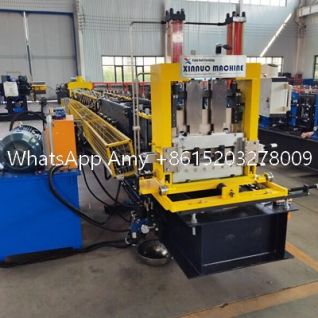
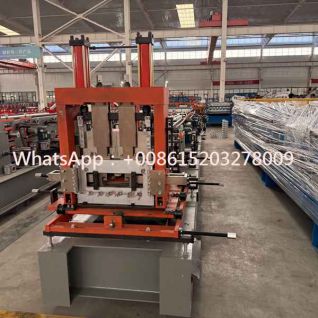
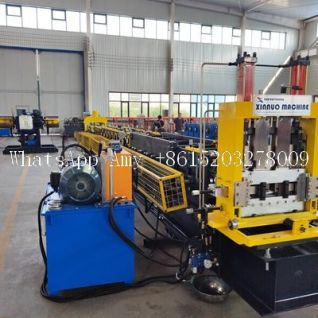
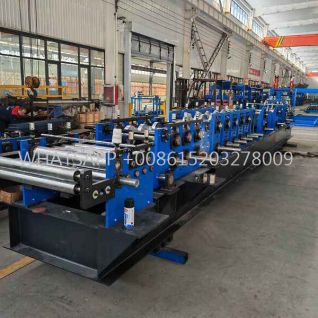
The purlin forming machine is an indispensable core equipment in the steel structure manufacturing industry, designed to produce high-quality purlins (C/Z/U-section) for diverse construction scenarios. Its integration of precision, efficiency, flexibility, and durability addresses the core needs of manufacturers, making it a preferred choice for projects ranging from industrial workshops to renewable energy infrastructure. Below are its key competitive advantages:
First, superior forming precision ensures structural reliability. The machine is equipped with calibrated alloy steel rollers and a high-precision PLC control system, which strictly controls the dimensional tolerance of purlins within ±0.5mm. The produced purlins feature uniform cross-sections, smooth edges, and consistent thickness, ensuring seamless matching with steel structure main frames during installation. This precision not only enhances the overall load-bearing capacity and stability of buildings but also eliminates potential safety hazards caused by dimensional deviations common in semi-automatic or manual processing, fully complying with international construction standards.
Second, high production efficiency accelerates project delivery. The fully automated continuous production line integrates uncoiling, leveling, forming, and fixed-length cutting modules, achieving a processing speed of 5–10 meters per minute. This is 3–4 times faster than traditional semi-automatic equipment, enabling manufacturers to fulfill large-batch orders for tight-schedule projects such as large-scale warehouse complexes or photovoltaic support systems. The seamless connection between modules minimizes auxiliary production time, further boosting overall operational efficiency.
Third, strong specification flexibility adapts to diverse demands. Operators can easily adjust PLC parameters via an intuitive touch interface to switch between C/Z/U-section purlins or modify dimensions (thickness 1.5–4mm, height 100–300mm). No complex mechanical disassembly or roller replacement is required, allowing quick adaptation to standard production or custom project needs. This flexibility eliminates the need for multiple single-purpose machines, saving workshop space and equipment investment costs.
Fourth, durability and easy maintenance reduce operational costs. The machine’s frame is welded with thickened steel plates, providing robust stability to withstand 24/7 continuous high-intensity operation. Core components such as rollers are treated with hard chrome plating, enhancing wear resistance and corrosion resistance, extending service life to over 10 years. Additionally, the modular design simplifies maintenance—common issues can be resolved by on-site staff without professional technical teams, minimizing downtime and long-term maintenance expenses.
Fifth, excellent cost-effectiveness maximizes profit margins. The optimized forming path and precision cutting system reduce material waste to less than 3%, significantly saving raw material costs. Equipped with energy-efficient motors, the machine consumes 12% less power than traditional models, lowering daily operating expenses. For manufacturers, its multi-functional design and high efficiency comprehensively reduce unit product costs, enhancing market competitiveness and profit space.
In summary, the purlin forming machine integrates precision, efficiency, flexibility, durability, and cost-effectiveness, making it a cornerstone of modern steel structure component production. It not only improves product quality and production efficiency but also reduces comprehensive costs, empowering enterprises to meet the demands of diverse construction projects and achieve sustainable development