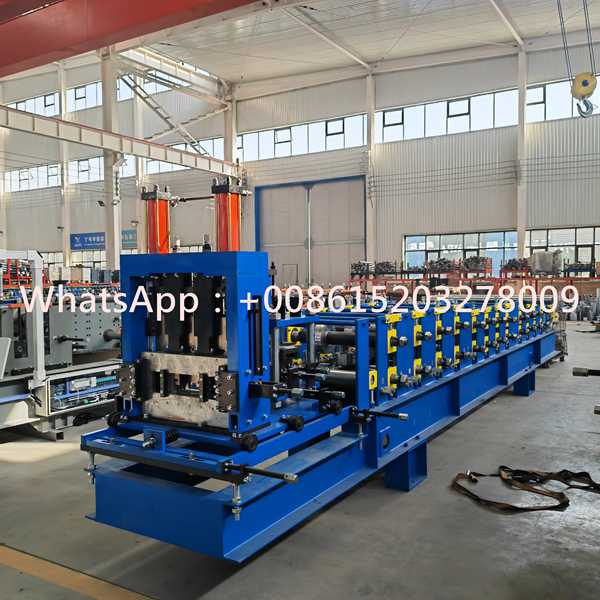
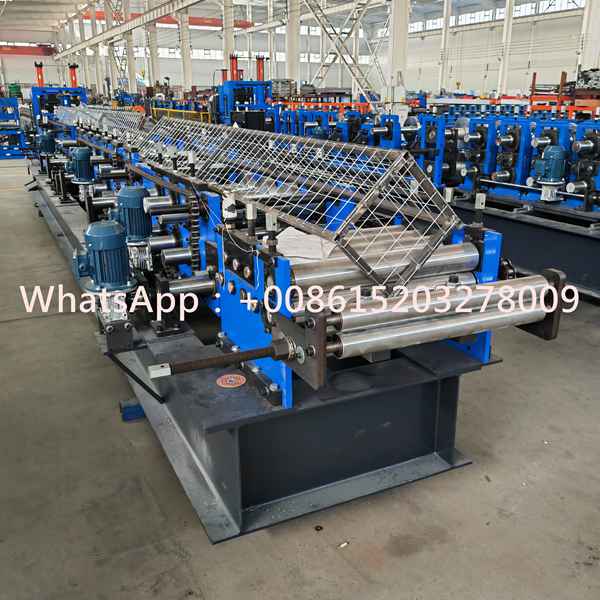
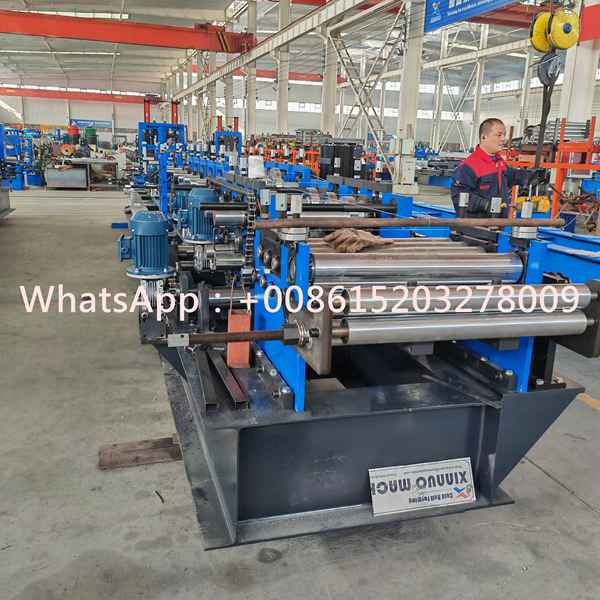
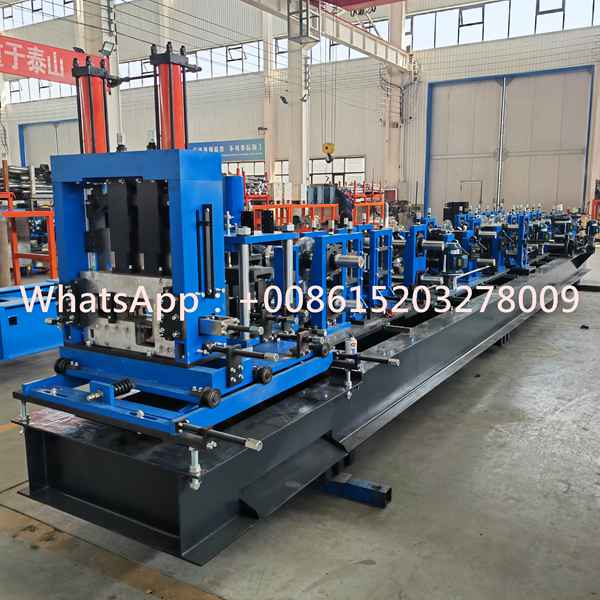
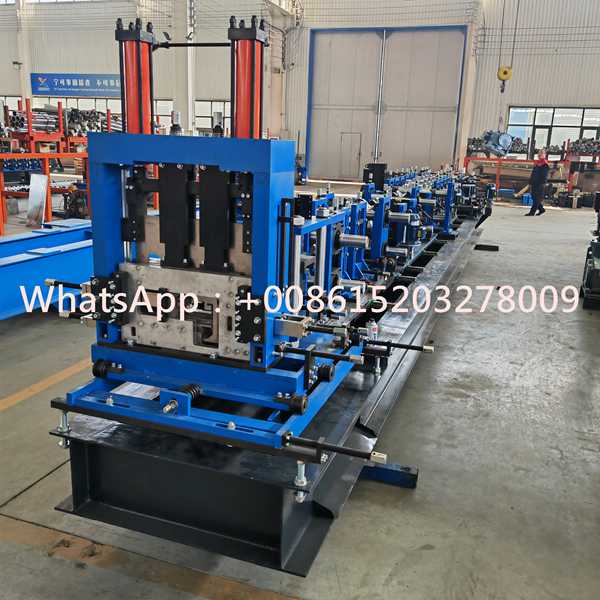
Touchscreen operation provides clear access to production parameters
Programmable sequences simplify repeated manufacturing orders
Synchronized sensors coordinate feeding and downstream processing
Digital monitoring helps maintain stable operating conditions
Automatic settings reduce repetitive adjustments during production
Flexible programming supports project-specific fabrication schedules
Suitable for structural steel workshops and prefabricated buildings
An intelligent control solution for continuous production of C and Z steel purlins with coordinated feeding, forming, punching, and cutting functions.
Modern steel fabrication requires more than mechanical forming capability. Production orders can involve different lengths, hole positions, material batches, and profile dimensions, making reliable process control an important part of an efficient manufacturing line.
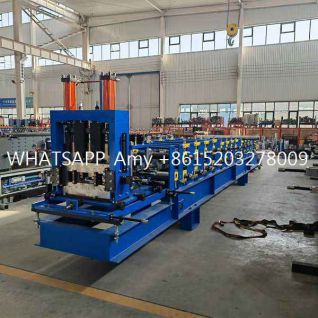
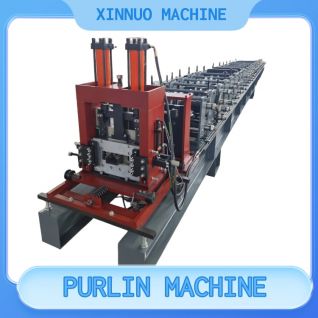
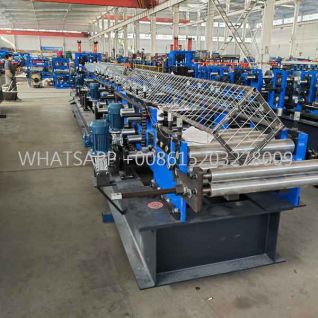
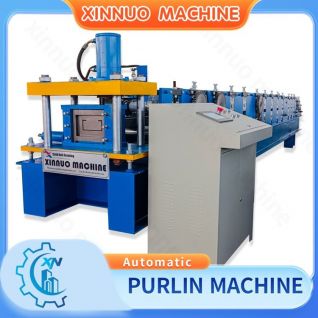
This PLC controlled purlin machine combines a mechanical roll forming system with programmable electrical control. The control architecture coordinates material feeding, forming operation, length measurement, optional punching, cutting, and other machine functions according to the configured production sequence.
The system is designed for continuous processing of steel coil into structural C or Z purlin sections. Instead of relying on manual operation for every individual action, the PLC coordinates the production cycle after the required parameters have been entered.
A touchscreen interface can provide operators with access to production settings and machine status. Depending on the final configuration, users can manage target lengths, production quantities, operating commands, and other relevant parameters from the control interface.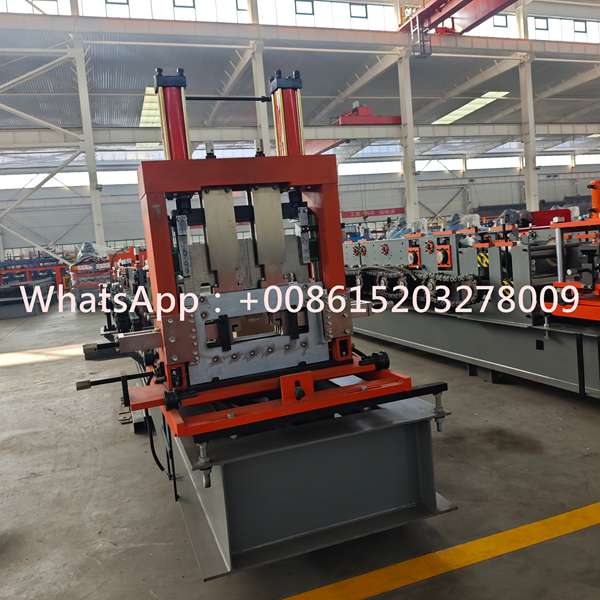
The PLC does not replace the forming mechanism. Instead, it coordinates the machine's mechanical, electrical, hydraulic, and sensing components so that the production sequence can be performed in a controlled and repeatable manner.
| Parameter | Reference Specification |
|---|---|
| Machine Type | PLC Controlled Purlin Roll Forming Machine |
| Profile Options | C / Z Purlin Profiles |
| Web Width Range | Approximately 80–300 mm |
| Web Height | Approximately 40–80 mm |
| Lip Dimension | Approximately 10–20 mm |
| Material Thickness | Approximately 1.5–3.2 mm |
| Forming Speed | Approximately 10–20 m/min |
| Control System | PLC + Touchscreen HMI |
| Length Setting | Programmable automatic cut-to-length |
| Punching | Optional in-line hydraulic punching |
| Raw Material | Galvanized or coated structural steel coil |
| Typical Applications | Warehouses, industrial halls, roof structures, workshops, prefabricated buildings |
Note: The final specification depends on the approved profile drawing, material properties, thickness, required output, punching pattern, cutting length, and selected automation configuration.
The PLC acts as the central logic controller of the production line. Signals from sensors, encoders, switches, and other devices are received by the control system and processed according to the programmed operating logic.
When the operator starts a production order, the controller coordinates the required machine actions. Material feeding, forming movement, length detection, punching commands, and cutting operations can be synchronized according to the selected configuration.
The HMI provides a practical interface between the operator and the machine. Production parameters can be entered through the touchscreen, while operating information and machine status can be displayed for monitoring.
This centralized control arrangement helps reduce unnecessary manual intervention. It also provides a structured method for changing production settings when the fabrication schedule requires different product lengths or quantities.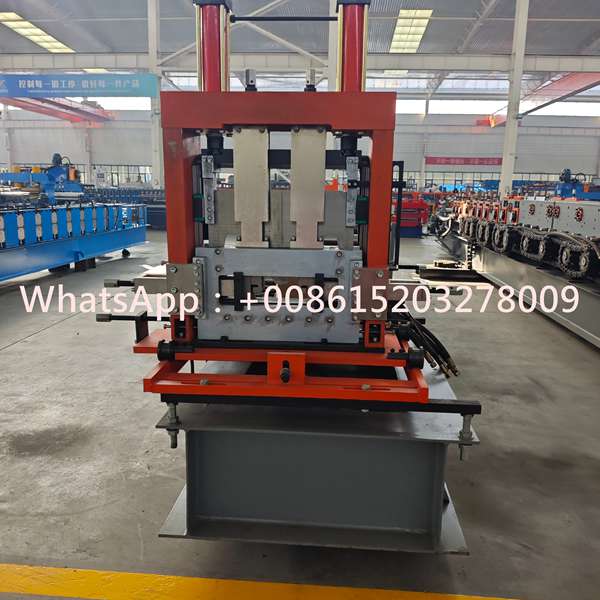
Steel fabrication orders often contain multiple member lengths. A programmable control system makes it easier to organize these requirements without manually recalculating and measuring every section.
The operator can enter the target length and required quantity through the HMI according to the production plan. The controller then manages the corresponding feeding and cutting sequence.
For manufacturers serving several construction projects, this approach can improve workflow organization. Production batches can be arranged according to project schedules, material availability, and finished-member requirements.
Actual control functions depend on the selected PLC, HMI, sensors, encoder, drive system, and machine configuration. Customized programming can be developed according to the required production sequence.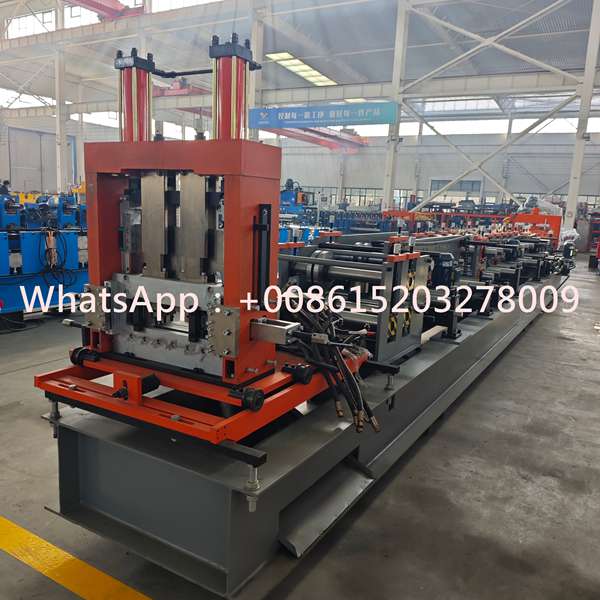
The electrical control system operates together with a series of forming rollers. The rollers progressively bend the flat strip until the required purlin geometry is obtained.
For a C section, the forming sequence gradually establishes the web and turns the material into the required flange and lip configuration. For a Z section, the rollers create the offset geometry specified by the profile drawing.
The gradual forming method helps distribute deformation across multiple stations. This is important when processing structural steel strips because aggressive bending at one point may negatively affect the finished geometry.
Roller design is determined by the material properties and profile dimensions. The exact number of forming stations and roller geometry should therefore be confirmed during machine engineering.
A channel-style section formed progressively for selected roof and wall framing systems.
An offset section that can support overlapping structural arrangements where specified by engineering design.
The machine is intended to process steel coil within the specified forming range. Galvanized steel is commonly selected for purlin production where corrosion protection is required for the intended building environment.
Other coated or structural steel materials can be considered when their mechanical properties fall within the machine's design parameters. Material thickness and yield strength should always be confirmed before production.
A reference thickness range of approximately 1.5–3.2 mm can be used for this type of structural purlin equipment. The actual range may vary according to profile dimensions and material strength.
Consistent coil quality is important for stable forming. Variations in thickness, width, flatness, or mechanical properties may influence material tracking and final profile geometry.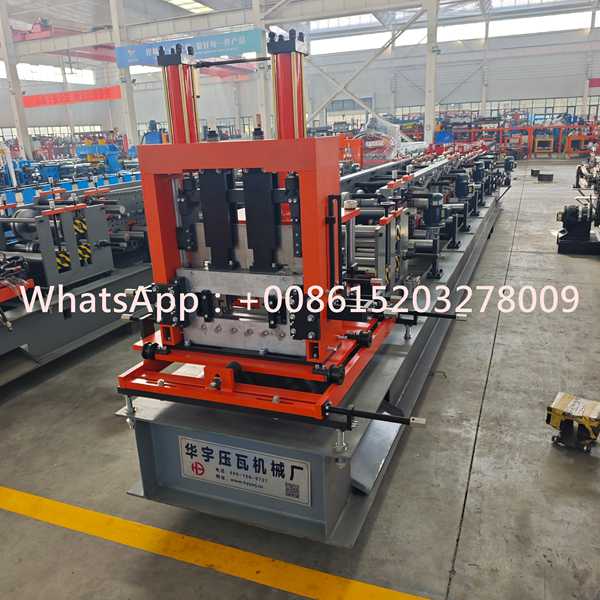
Purlins frequently require connection holes for attachment to primary frames, braces, or other structural components. A hydraulic punching system can be incorporated into the line and controlled through the central PLC.
Punching commands can be synchronized with material movement so that holes are produced at predetermined positions. The required hole diameter, spacing, and location should be supplied through the approved fabrication drawing.
Automatic cutting is also coordinated by the controller. Once the required length has been reached, the cutting unit separates the finished member and the line can continue with the next production cycle.
Combining these functions within one control system can reduce the need for separate manual processing steps. It also provides a more organized production sequence for repetitive structural member orders.
The human-machine interface is designed to make routine operation more straightforward. Important parameters can be displayed in a structured format so that operators can identify production settings before starting the line.
Depending on the final control design, the interface may provide functions for product length, quantity, automatic or manual mode, start and stop commands, speed-related settings, and machine status.
Alarm information can help operators identify abnormal operating conditions. Troubleshooting procedures can then focus on the corresponding mechanical, electrical, hydraulic, or material-related area.
A clear HMI layout is especially useful for production environments where several operators may use the same machine. Basic operating procedures can be standardized to support consistent daily production.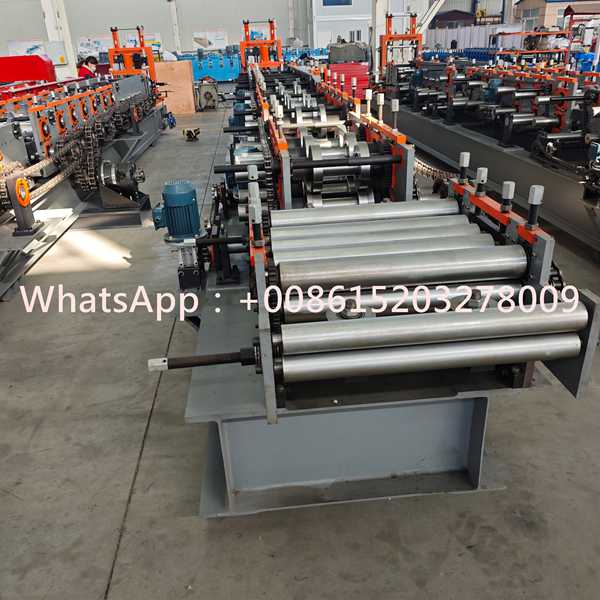
PLC-controlled purlin equipment is suitable for manufacturers producing secondary steel members for construction projects with repeatable fabrication requirements.
Manufactures roof and wall support members for warehouse construction and storage facilities.
Supports fabrication of secondary framing components for factories and production buildings.
Provides production capacity for structural members used in distribution and logistics facilities.
Can produce selected roof support sections for barns and agricultural steel structures.
Suitable for fabricators supplying secondary framing members for commercial construction projects.
Automation requirements can differ considerably between manufacturers. Some customers may need basic programmable cutting, while others require integrated punching, multiple product dimensions, automatic profile changes, or more extensive production monitoring.
The control system can therefore be designed around the machine's mechanical configuration and the customer's workflow. PLC selection, HMI functions, encoder arrangement, sensors, drives, hydraulic control, and safety circuits can be considered during engineering.
Customized programming is particularly valuable when production involves several standard lengths or recurring project orders. The control sequence can be arranged to match the expected manufacturing process.
The following information helps determine the appropriate configuration:
Automation improves process coordination, but finished-product quality still depends on correct mechanical adjustment, suitable raw material, proper tooling, and regular inspection.
Operators should periodically check section dimensions, straightness, finished length, flange geometry, lip dimensions, and punching positions where applicable.
Sensors and encoders should remain correctly positioned and maintained because they provide important signals for automatic control. Incorrect sensor alignment or unstable signal transmission may affect the production sequence.
Production monitoring can also help identify changes in forming performance. When dimensions gradually move outside the specified range, operators can inspect the material, guides, rollers, drive system, and machine settings.
Proper installation provides the foundation for reliable machine operation. The workshop should have sufficient floor space for coil loading, machine access, finished-product discharge, maintenance, and operator movement.
Electrical installation should follow the supplied requirements and local regulations. Control cabinets, power connections, grounding, sensors, motors, and hydraulic components should be checked before commissioning.
During the initial trial, the machine is operated with the specified material and profile. Production settings are adjusted while sample sections are inspected against the approved drawing.
Operator training can cover HMI operation, production parameter entry, automatic and manual modes, machine startup and shutdown, emergency procedures, routine inspection, lubrication, and basic fault diagnosis.
Regular maintenance should cover both the mechanical and control systems. Rollers, shafts, bearings, transmission components, sensors, encoder connections, electrical terminals, cutting tools, and hydraulic components should be inspected at appropriate intervals.
Keeping the forming stations clean and correctly lubricated can help reduce unnecessary wear. Operators should also check for unusual vibration, noise, material tracking, or changes in finished-profile geometry.
Control-system maintenance may include checking sensor signals, cable connections, control cabinet components, and HMI functions. Backup procedures for important PLC programs and machine parameters can also be established as part of equipment management.
Technical support can cover operation guidance, parameter configuration, forming adjustment, PLC-related troubleshooting, punching settings, cutting functions, maintenance procedures, and replacement-component identification.
A PLC-controlled purlin machine combines progressive steel forming with programmable production management. Coordinated feeding, length measurement, optional punching, automatic cutting, touchscreen operation, and configurable control functions provide a practical solution for manufacturers producing structural members for warehouses, industrial halls, logistics facilities, and modern steel buildings.
Xinnuo Roll Forming Machine Co., Ltd., established in 1995, is a leading enterprise specializing in the design, development, manufacturing, and sales of various cold roll forming equipment.
Located in Botou Economic Development Zone, the company benefits from a well-developed electromechanical manufacturing industry and a complete industrial chain...[ Read More >>]