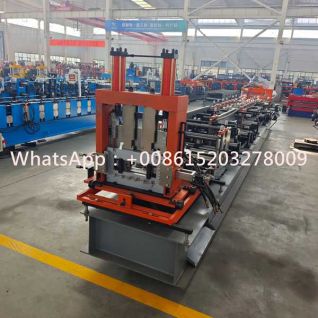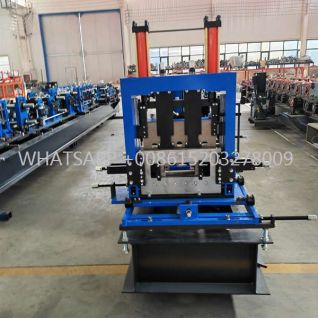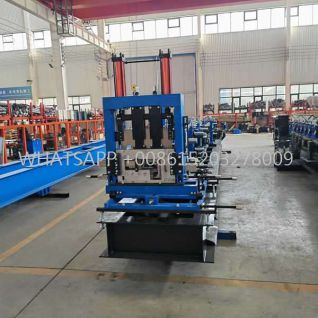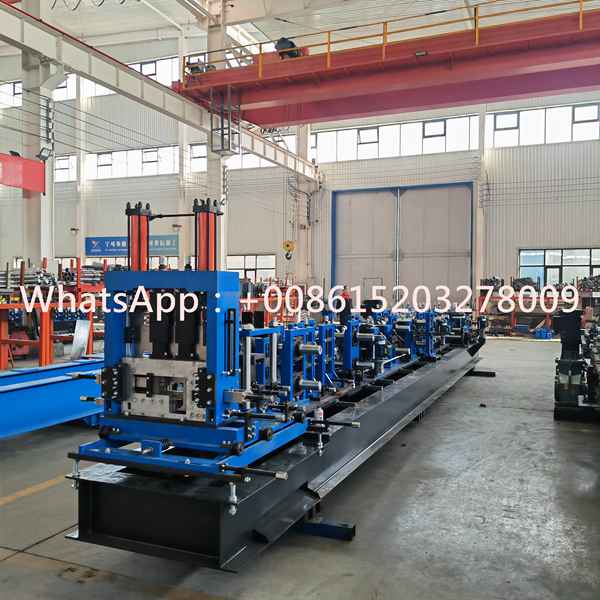
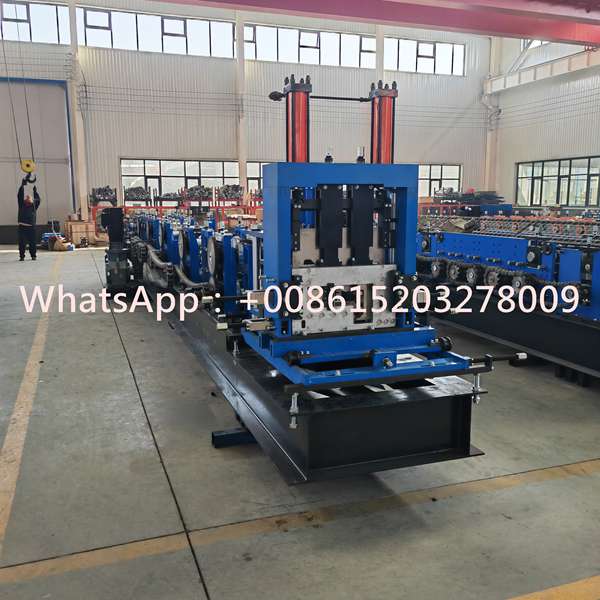
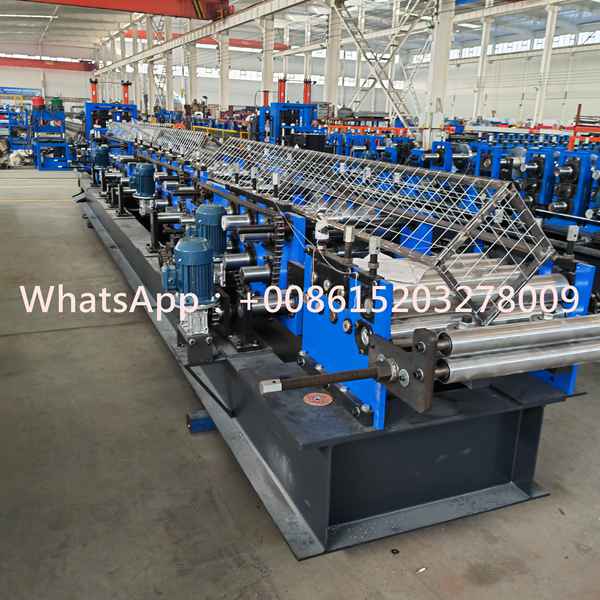
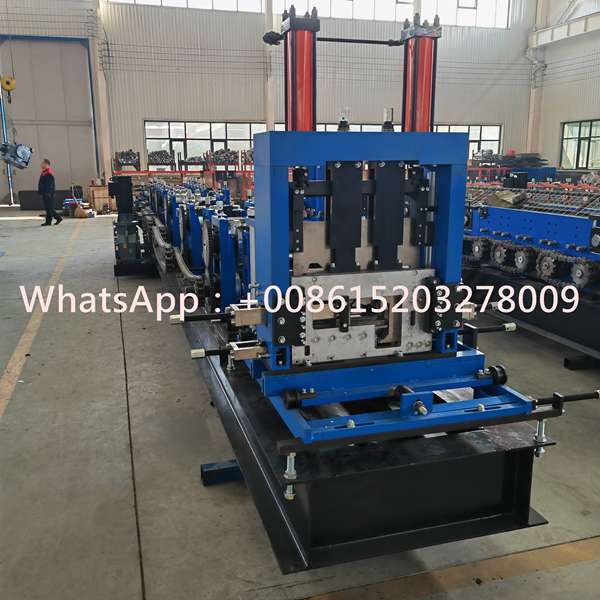
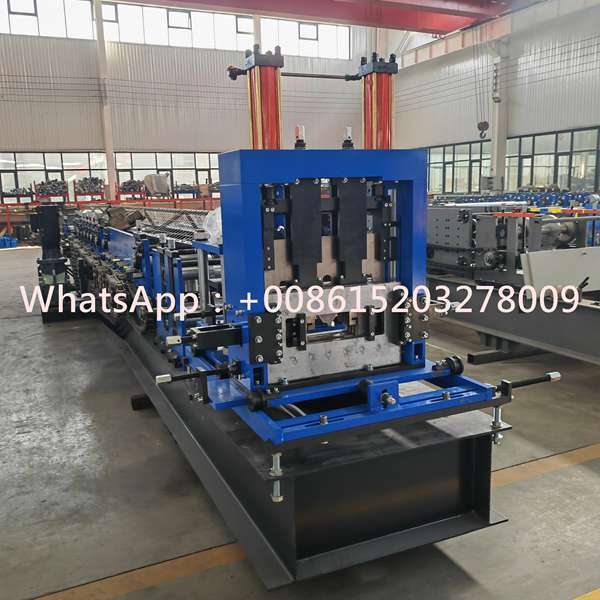
Handles corrosion-resistant galvanized coils for structural framing production
Smooth material guidance protects finished surfaces during profile fabrication
Progressive forming develops stable C and Z section geometry
Automated length control supports organized batch manufacturing operations
Reinforced tooling accommodates continuous industrial steel processing requirements
Profile settings can be adapted to project-specific structural drawings
Suitable for warehouses, workshops, factories, and agricultural structures
A continuous steel forming solution designed to convert galvanized coils into reliable C and Z structural purlins for modern steel construction.
Galvanized steel is widely selected for structural framing applications where surface protection and long-term durability are important considerations. A CZ purlin roll forming machine designed for galvanized coils provides a continuous manufacturing method for converting flat steel strip into C and Z-shaped structural members.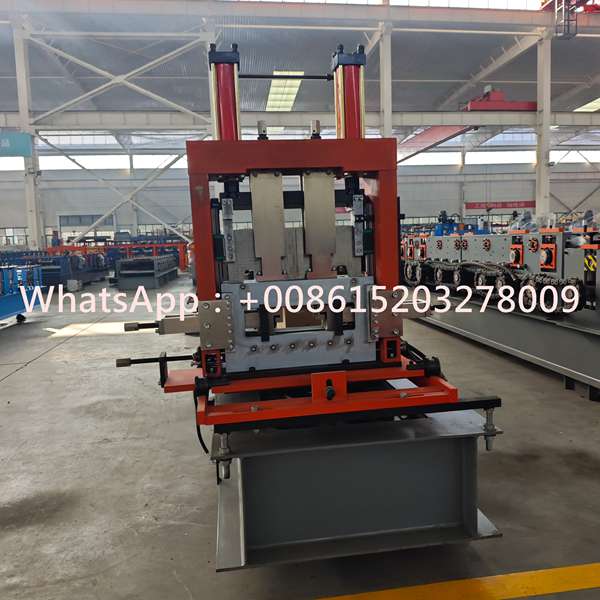
The production system combines coil feeding, material guidance, progressive forming, optional punching, automatic cutting, and finished-profile discharge. By connecting these stages into one production flow, manufacturers can reduce repeated handling and establish a more consistent method for producing structural purlins.
C and Z purlins are commonly used as secondary framing members in steel buildings. They can support roof and wall cladding systems while providing an efficient structural solution for industrial, commercial, agricultural, and storage buildings. The machine can therefore serve steel fabricators producing components for different construction projects.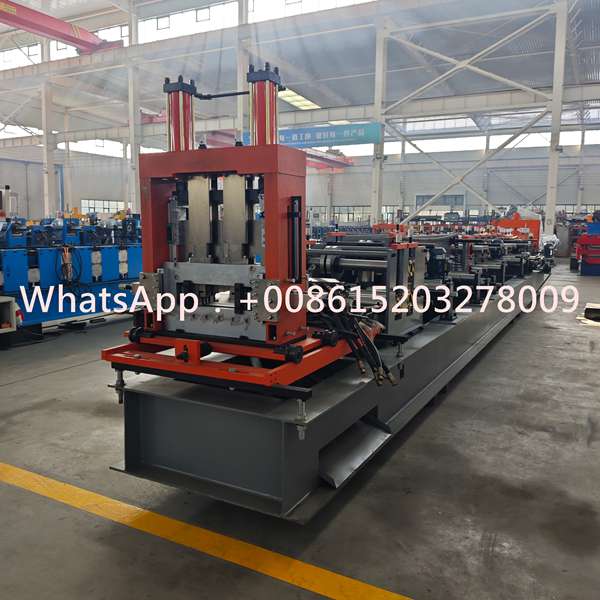
The system is designed around galvanized steel coil processing, with the forming configuration selected according to the required C/Z profile, material thickness, section dimensions, hole arrangement, finished length, and production objectives.
| Parameter | Reference Specification |
|---|---|
| Machine Type | Galvanized Steel CZ Purlin Roll Forming Machine |
| Production Profiles | C Purlin / Z Purlin |
| Raw Material | Galvanized Steel Coil |
| Material Thickness | Approximately 1.5–3.2 mm |
| Profile Width | Configured according to required profile dimensions |
| Reference Web Height | Approximately 40–80 mm flange configuration |
| Reference Lip Size | Approximately 10–20 mm |
| Forming Speed | Approximately 10–20 m/min |
| Control System | PLC-based automatic control |
| Punching | Optional according to structural drawings |
| Cutting | Automatic cut-to-length configuration |
| Profile Adjustment | Configured for selected C/Z production range |
Note: Final technical parameters are confirmed according to the customer's profile drawing, steel grade, coil thickness, production speed, punching requirements, and electrical standards.
Galvanized steel provides a zinc-protected surface that is widely used in construction products where resistance to environmental exposure is required. This makes galvanized coils a practical material choice for many secondary framing applications, particularly in buildings where steel components may be exposed to varying humidity and atmospheric conditions.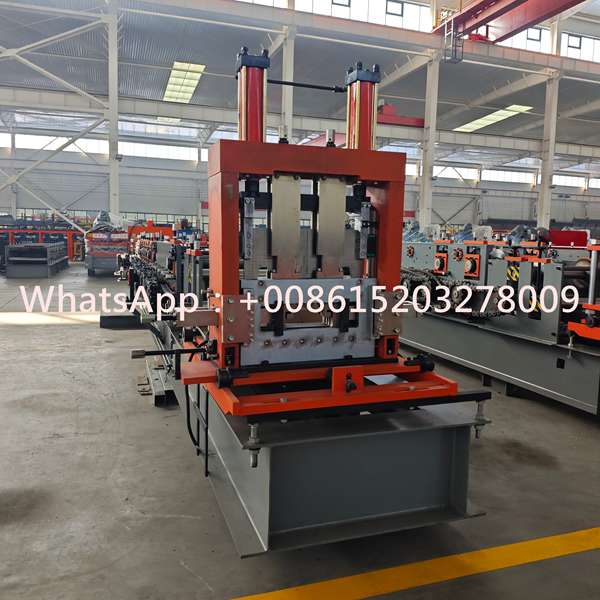
During roll forming, maintaining stable material guidance is important because the galvanized surface is part of the finished product. Proper feeding and roller alignment help minimize unnecessary surface contact and reduce the possibility of unwanted marks caused by incorrect machine adjustment.
The forming process must also be matched to the actual material characteristics. Coil thickness, steel grade, yield strength, coating condition, and profile geometry can influence the forming requirements. For this reason, the final roller configuration is selected according to the customer's actual production material rather than applying one universal setting to every galvanized coil.
Production begins with a galvanized steel coil positioned on the decoiler. The coil is released at a controlled rate and guided toward the feeding section. Depending on the production configuration, leveling equipment can be used to correct coil curvature and provide a flatter strip before the material enters the forming section.
The strip then moves through the forming stations. Each station introduces a controlled bend, gradually transforming the flat galvanized strip into the required C or Z cross-section. The progressive forming method distributes deformation over multiple stages and helps maintain a stable material path.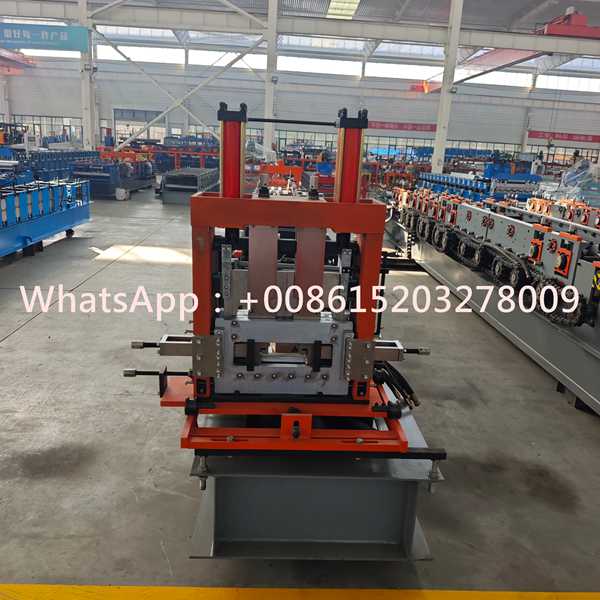
If connection holes are required, a punching system can be integrated into the production line. Hole patterns may be located on the web, flange, or other designated areas according to the customer's engineering drawing. Punching parameters are coordinated with the material movement so that hole positions correspond to the required finished length.
After forming and punching, the finished purlin passes through the cutting section. The control system can coordinate production length and quantity according to the programmed requirements. Finished sections are then transferred to the output area for collection, stacking, bundling, or further handling.
The quality of a purlin depends heavily on the stability of its cross-sectional geometry. The web, flanges, and lips need to remain within the intended dimensions so that the finished components can be installed efficiently with other structural members.
Multiple forming stations work together to establish the final shape gradually. Rather than forcing the galvanized strip into its final configuration in a single step, the roller arrangement distributes the bending operation across the forming section. This provides a controlled route from flat coil to finished C or Z profile.
Correct roller alignment is especially important when producing long purlins. A properly adjusted forming path helps reduce problems such as uneven flange development, excessive profile distortion, or unwanted lateral movement. Routine checks of roller alignment and machine condition can further support consistent production.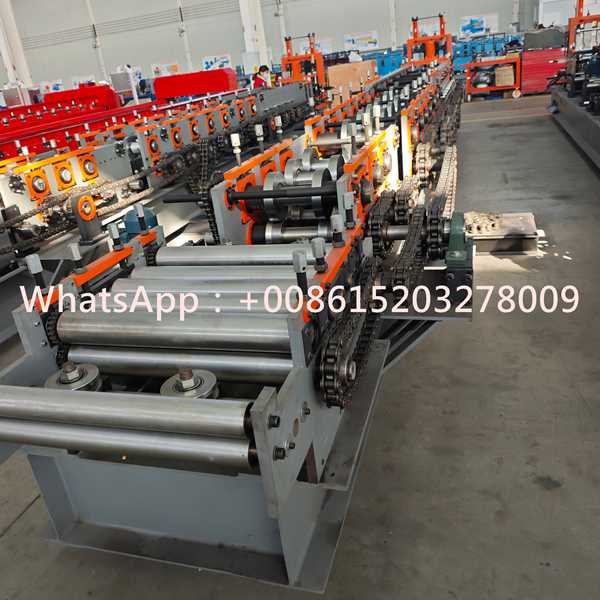
The PLC control system coordinates the major production functions and provides operators with a centralized interface. Production parameters such as finished length, quantity, and operating sequence can be managed through the control panel according to the selected machine configuration.
Automated coordination is valuable when manufacturers process repeated batches of galvanized purlins. Once appropriate production parameters have been established, the operator can use the control system to reproduce the required operating conditions instead of manually controlling each individual production step.
The automation level can also be selected according to production volume. A basic configuration may focus on automatic length control and cutting, while higher-level configurations can integrate automatic size adjustment, profile interchange, punching coordination, and other functions.
Galvanized C and Z purlins are widely used in steel framing systems where secondary structural members are required. Their applications cover a broad range of buildings and construction projects.
Suitable for roof and wall framing systems in storage and logistics facilities.
Supports production of secondary framing members for factories and manufacturing plants.
Useful for selected agricultural buildings, storage facilities, and steel shelters.
Provides repeatable structural members for modular and prefabricated construction systems.
Different steel structure projects require different purlin dimensions. The machine can therefore be engineered around the required section drawing rather than being limited to one fixed size. Web height, flange width, lip dimensions, material thickness, punching locations, and finished length can be considered during the technical design stage.
Manufacturers producing both C and Z profiles can select a suitable interchangeable configuration when the production volume and product range justify it. Depending on the selected design, profile conversion and dimensional adjustment may be carried out through mechanical adjustment or automated control.
Customers can provide profile drawings, material specifications, expected production output, and hole patterns before the machine is finalized. These details allow the roller tooling, punching equipment, cutting method, and control system to be matched to the actual production requirements.
Galvanized coils require appropriate handling throughout the production process to preserve the surface condition of the finished product. Coil loading, feeding, guiding, forming, and discharge should be organized to minimize unnecessary impact or abrasion.
The roller tooling and guiding components should be maintained in good condition. Dirt, metal particles, damaged roller surfaces, or incorrect alignment may affect the appearance of the galvanized strip. Regular cleaning and inspection can help maintain a stable production environment.
Finished purlins should also be collected in a manner appropriate for their surface coating. Proper stacking and handling can help prevent unnecessary scratching or deformation before the profiles are transported to the construction site or subsequent fabrication process.
Continuous roll forming provides a more streamlined manufacturing method than producing structural members through multiple separate bending operations. Once the coil is correctly loaded and the production parameters are established, the material can move continuously through the forming line.
Automatic punching and cutting can further reduce manual processing. Instead of measuring and cutting each purlin individually, the production system can coordinate finished lengths according to programmed values. This can make batch manufacturing easier to organize and improve the consistency of finished-product dimensions.
For manufacturers handling regular orders, the combination of continuous feeding, progressive forming, automatic processing, and controlled discharge can provide a more predictable workflow. The actual production speed depends on material thickness, profile geometry, punching requirements, cutting method, and machine configuration.
Before the machine enters regular production, the equipment should be installed according to the final factory layout and connected to the specified electrical supply. The forming line should be checked for correct alignment, secure mechanical connections, and proper operation of the control and safety systems.
Commissioning is normally carried out using the customer's specified galvanized steel material. The forming condition, profile dimensions, hole positions, cutting lengths, and production parameters can be checked during trial production. Any necessary adjustments can then be made before normal manufacturing begins.
Operators can receive guidance covering machine startup, production parameter entry, profile adjustment, routine inspection, lubrication, cleaning, and basic troubleshooting. Clear operating procedures help establish stable production practices from the beginning.
Routine maintenance is important for keeping the forming system operating smoothly. Inspection should focus on forming rollers, shafts, bearings, transmission components, cutting tools, electrical connections, fasteners, and other parts subject to regular wear.
Galvanized steel production also benefits from regular cleaning of the material path and forming area. Removing accumulated metal particles and maintaining clean contact surfaces can help reduce unnecessary surface marks and maintain stable material movement.
Technical support can assist with machine operation, production parameter adjustment, maintenance procedures, component identification, and troubleshooting. For machines configured for multiple C/Z sizes, support can also cover profile change and dimensional adjustment procedures.
Designed around galvanized coil processing, this CZ purlin roll forming machine provides a practical production platform for manufacturers of structural steel components. Continuous forming, optional punching, automatic cutting, controlled feeding, and flexible profile configuration make the system suitable for producing C and Z purlins for warehouses, workshops, agricultural buildings, and other steel construction projects.
Xinnuo Roll Forming Machine Co., Ltd., established in 1995, is a leading enterprise specializing in the design, development, manufacturing, and sales of various cold roll forming equipment.
Located in Botou Economic Development Zone, the company benefits from a well-developed electromechanical manufacturing industry and a complete industrial chain...[ Read More >>]