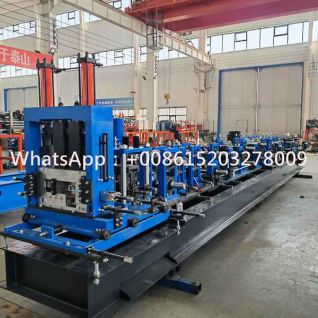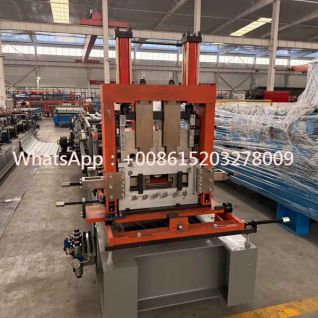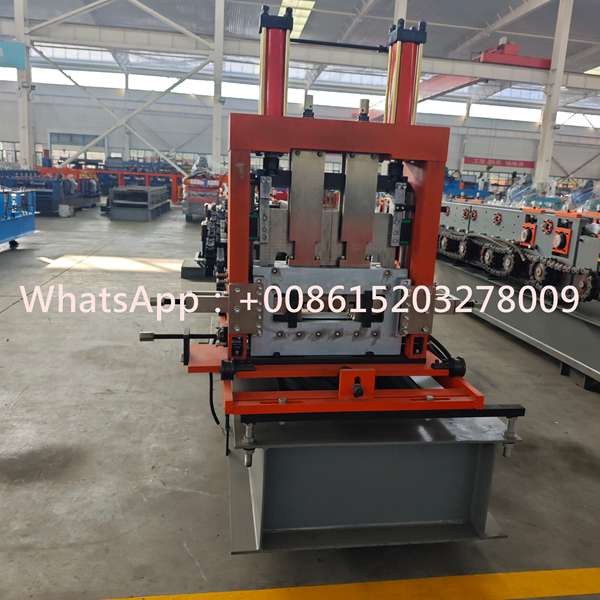
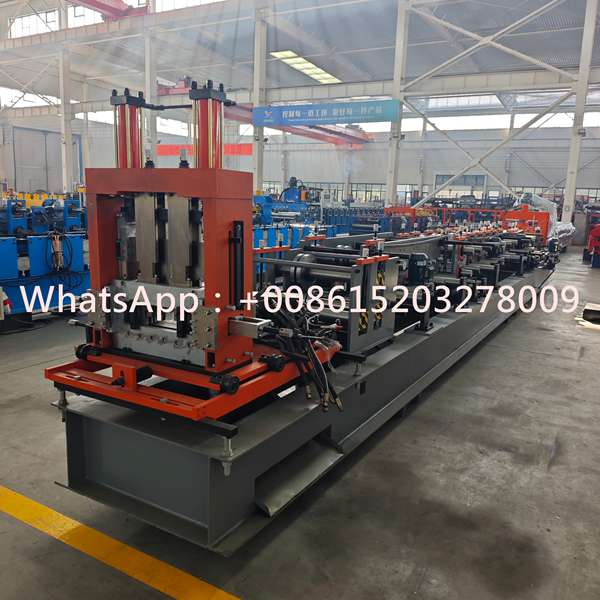
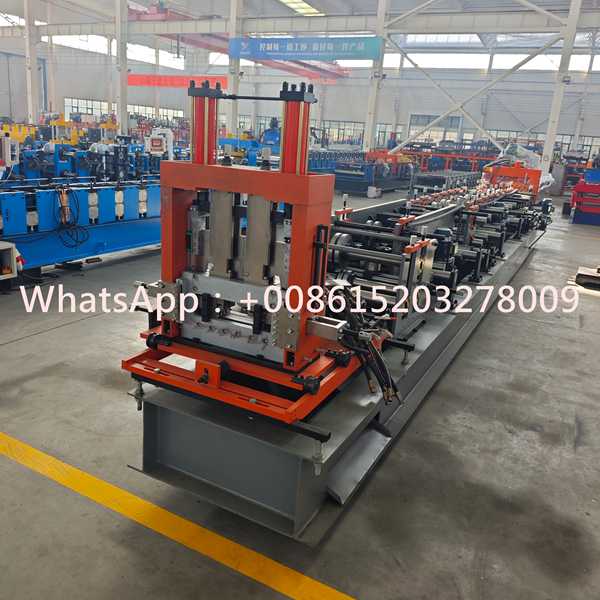
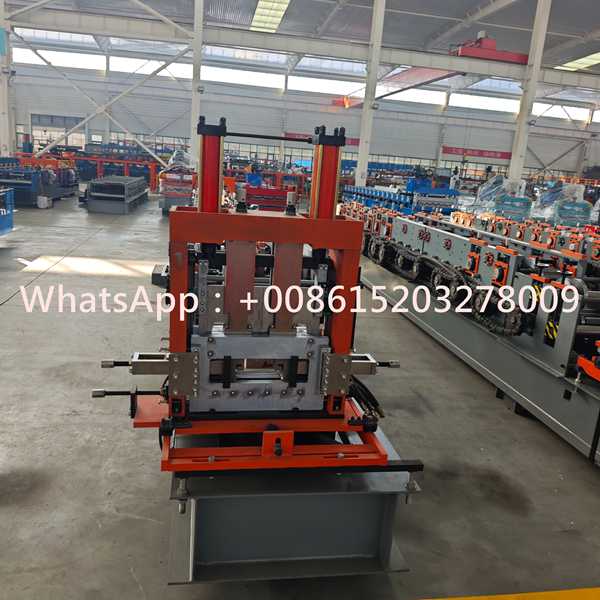
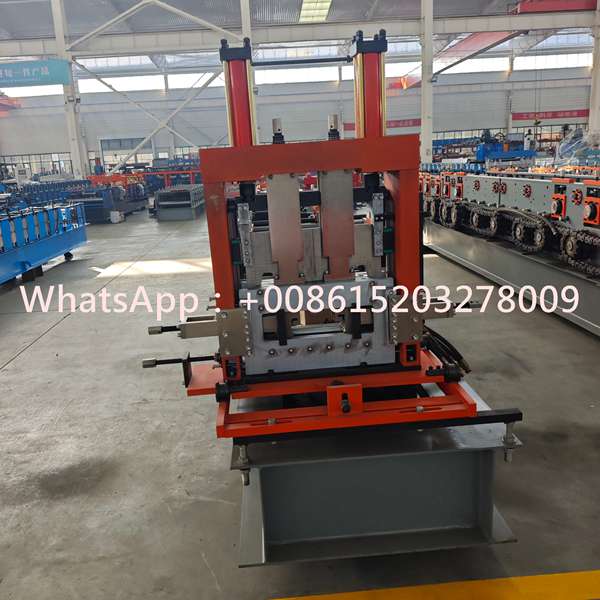
Across steel construction projects — from industrial warehouses and commercial units to agricultural buildings and solar farms — the secondary framing members that carry roof and wall cladding are known variously as purlins, correas, or rails depending on the market. Whatever the terminology, the requirement is the same: consistent profile dimensions, clean shear cuts, and reliable output volume to keep construction schedules on track.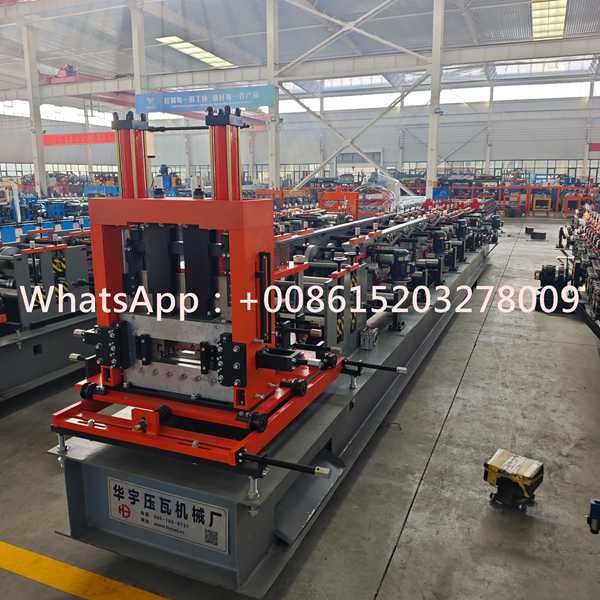
This correa purlin machine is built to meet that requirement continuously. Starting from standard steel coil, the machine forms structural open sections — C-profile or Z-profile — through a progressive cold-rolling sequence, cuts each member to the programmed length, and delivers finished sections ready for immediate dispatch. Profile dimensions are set digitally; the machine stores multiple section configurations and transitions between them without mechanical adjustments to the roller train.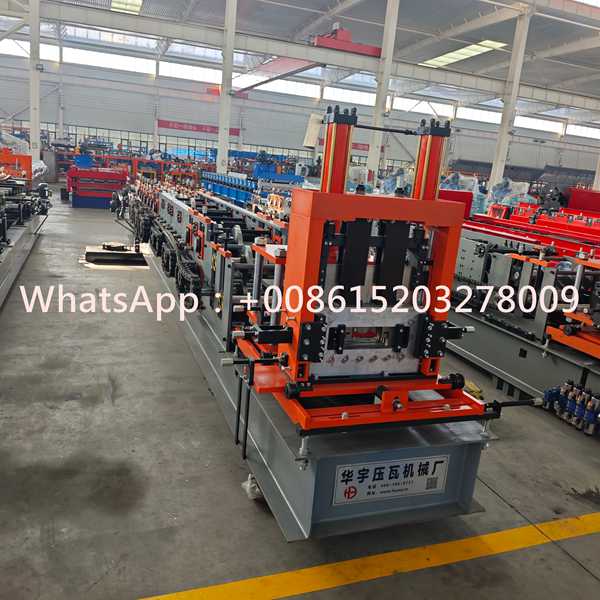
The production cycle begins at the decoiler, where the steel coil unwinds under controlled tension. The strip passes through a multi-roller leveling unit — configured with upper and lower rollers in a staggered arrangement — that removes the residual curvature acquired during coiling. Properly leveled strip enters the main forming station without camber or lateral bow, which is critical for achieving consistent flange and lip geometry across the full section length.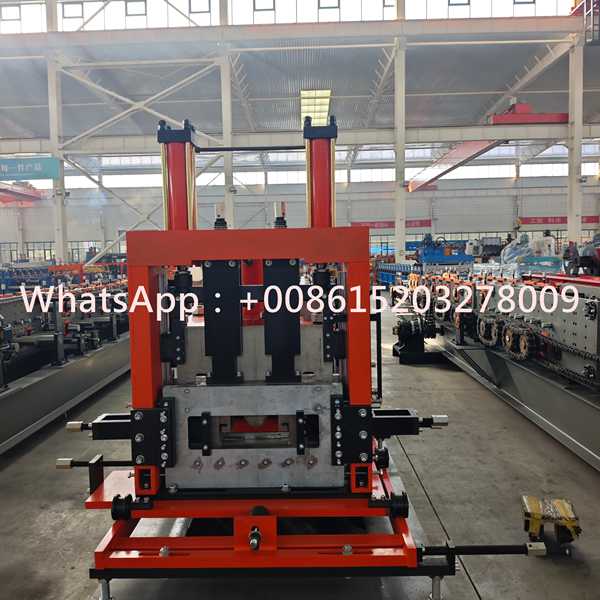
Inside the forming station, pairs of precision-machined rollers progressively bend the strip into the target correa purlin profile. Each roller pair contributes a defined increment of forming, distributing the total bend angle across the full roller train. This graduated approach reduces forming stress at any single station, which is particularly important when working with pre-painted or Galvalume-coated inputs where surface marking must be minimized.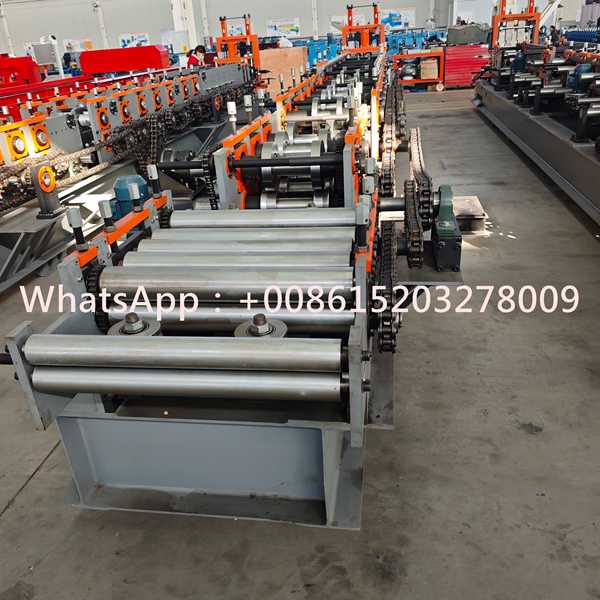
After the final forming roller, the strip enters the punching zone if bolt holes are required, then advances to the hydraulic cutting station. The shear severs the formed section at the programmed cut length. Finished correa purlin sections exit onto the receiving table and are collected for stacking, bundling, or direct loading.
| Parameter | Specification |
|---|---|
| Profile Types | C-section purlin, Z-section purlin (correa) |
| Compatible Coil | GI · GL · PPGI · PPGL (galvanized, Galvalume, pre-painted) |
| Material Thickness | 1.5–3.0 mm standard; extended range on request |
| Drive System | Servo motor — stable torque across full gauge range |
| Section Switching | Motorized depth adjustment — no manual roller change |
| Punching | Inline hydraulic — hole size and pitch set via PLC |
| Cutting | Hydraulic post-forming shear, length set digitally |
| Control System | Touchscreen PLC — multi-batch order pre-loading |
| Power Supply | 380V / 50Hz / 3-phase (other voltages available) |
| Warranty | 12 months full machine — non-operator damage |
| Delivery | Approx. 60 working days after deposit confirmed |
Detailed configuration sheets — roller layout drawings, punching diagrams, production line footprint — are provided at the quotation stage. All parameters are confirmed and locked to your section drawings before production begins.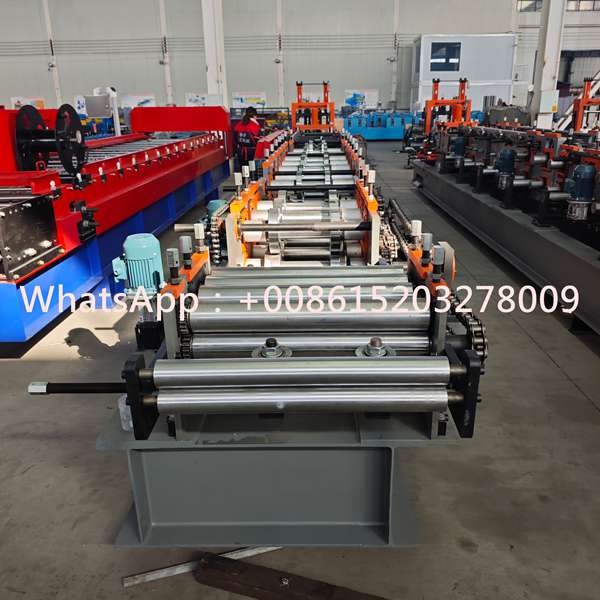
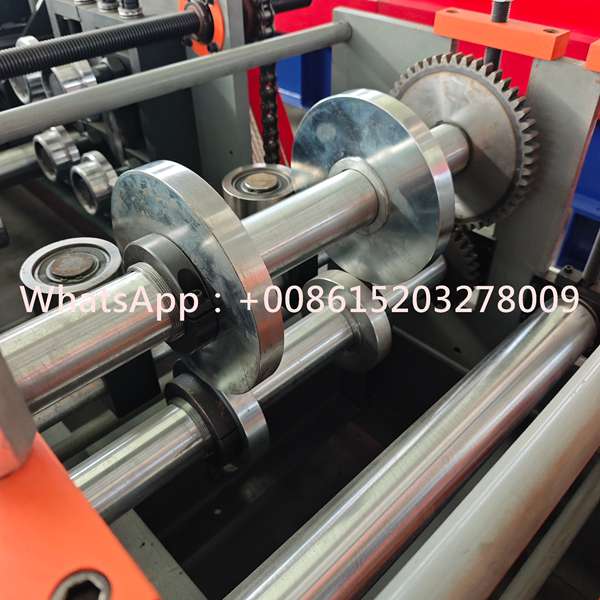
Section depth, flange width, and lip dimension confirmed to your project drawings at order stage. Roller sets machined to match your required tolerances.
One-touch profile changeover between C and Z output — servo-actuated, no manual roller adjustment, no production stoppage between runs.
Bolt hole size, spacing, and face position (bottom flange / web) configured via the PLC screen. Multiple punching groups available for complex hole patterns.
Upgrades from manual 3-tonne decoiler to 5-tonne hydraulic unit with or without powered coil loading trolley — reduces coil change time and manual handling effort.
6-metre or 12-metre automatic section stacker integrated at the line exit — eliminates manual collection labor and delivers neatly bundled output stacks.
Internet-connected PLC option allows engineers to monitor machine status and adjust control parameters remotely — useful for international installations with limited on-site technical support.
Xinnuo Roll Forming Machine Co., Ltd., established in 1995, is a leading enterprise specializing in the design, development, manufacturing, and sales of various cold roll forming equipment.
Located in Botou Economic Development Zone, the company benefits from a well-developed electromechanical manufacturing industry and a complete industrial chain...[ Read More >>]