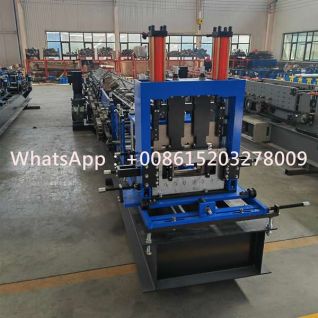
Cold-Rolled Purlin Machine: High-Precision Structural Steel Forming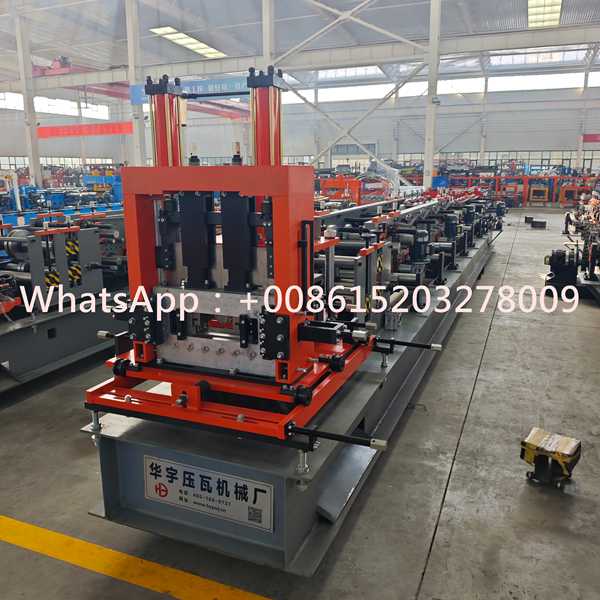
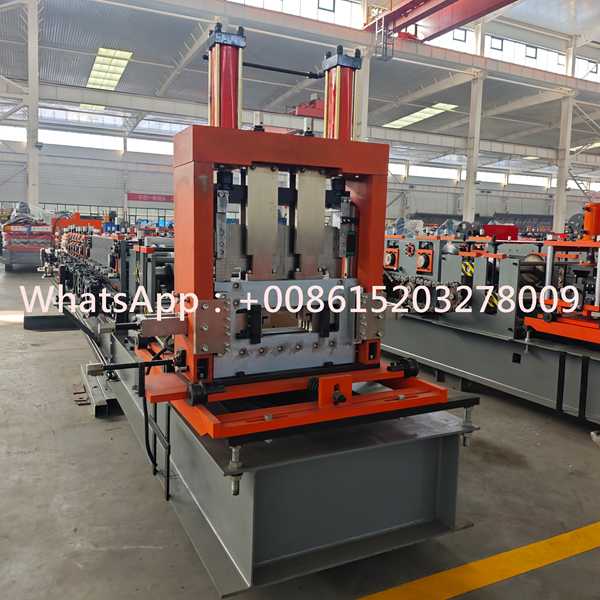
Cold-rolled purlin machines represent a significant evolution from conventional hot-formed or press-brake methods of producing structural steel sections. By drawing steel coil through a continuous sequence of precision-engineered rollers at ambient temperature, this equipment delivers purlins with tighter dimensional tolerances, superior surface finish, and consistent mechanical properties — without the thermal distortion associated with hot-rolling processes.
Designed for steel construction manufacturers, component fabricators, and project contractors who demand both output consistency and production flexibility, this machine combines a servo-controlled forming drive with a programmable PLC system to handle diverse purlin specifications within a single production line.
How the Cold-Rolling Process Works
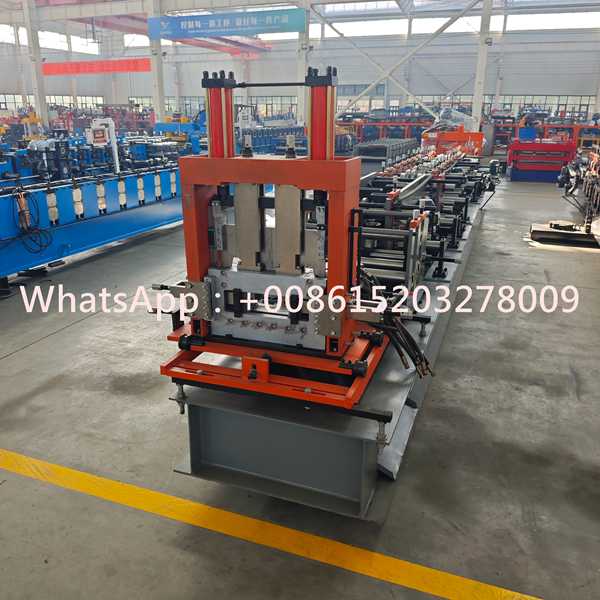
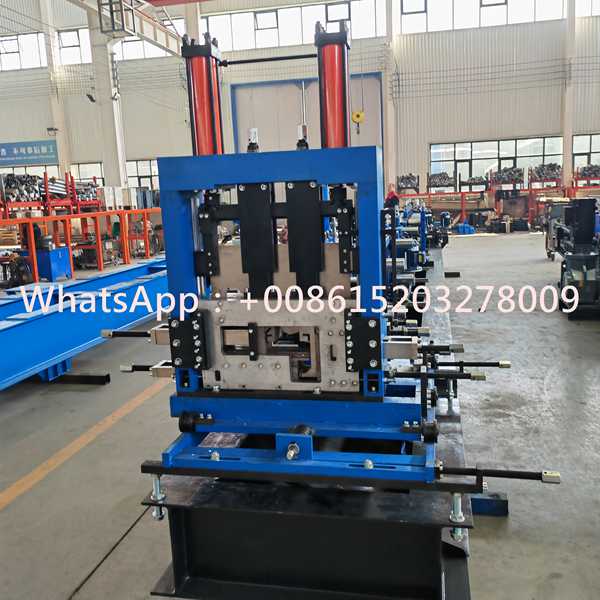
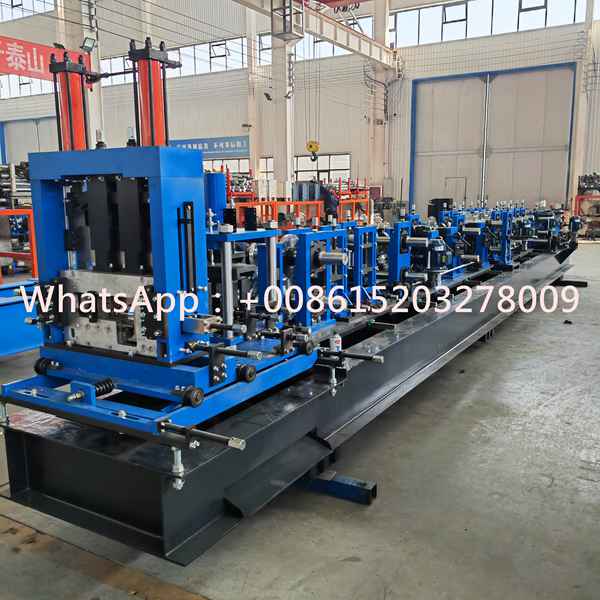
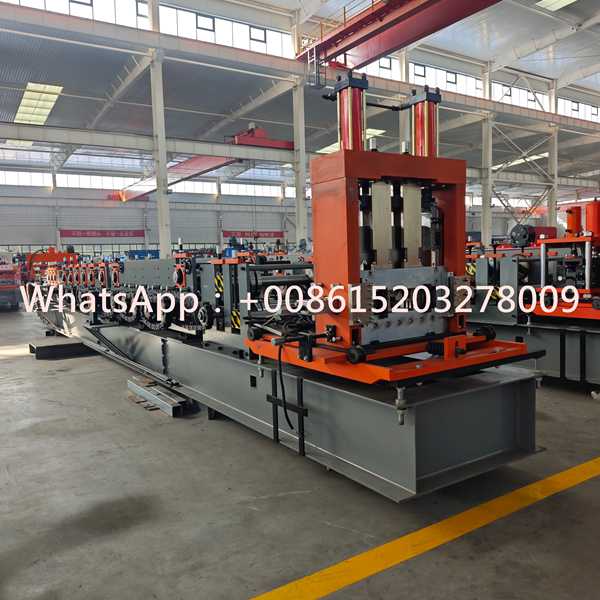
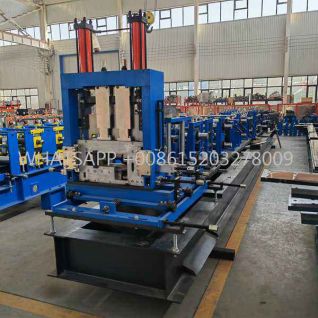
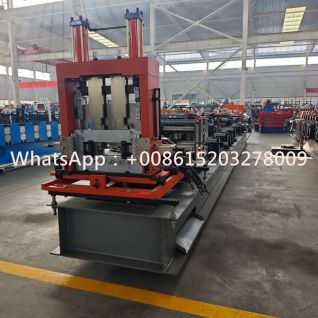
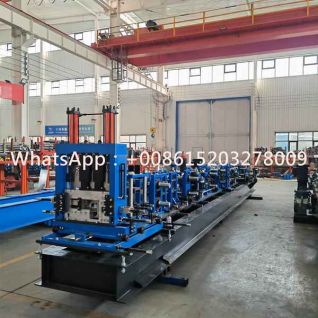
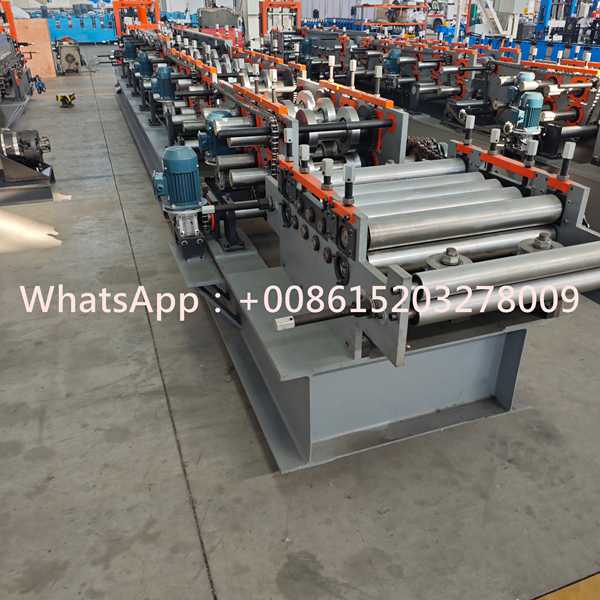
The production sequence begins at the decoiler, where the steel coil unwinds under controlled tension. The strip passes through a flattening unit that removes residual coil-set before entering the main forming station. A series of profiled roller pairs — each mounted on precision-ground shafts — progressively shape the flat strip into the target cross-section through incremental bending at each station.
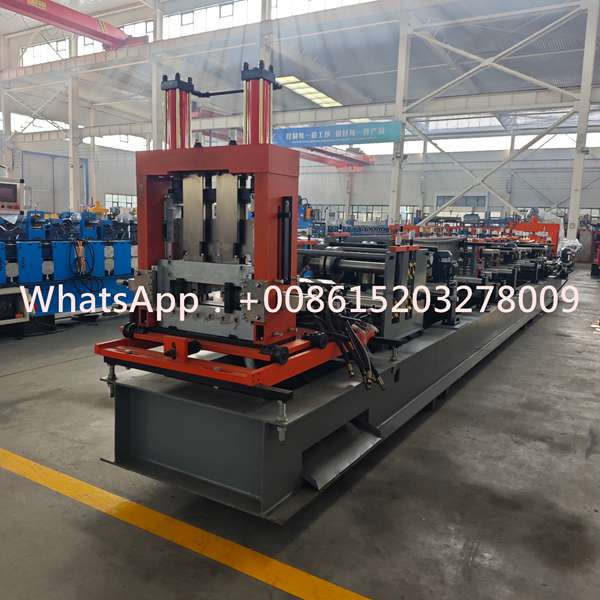
Unlike hydraulic press-brake forming, the continuous cold-rolling method maintains material grain structure throughout the bend zones, resulting in stronger section properties at equivalent steel thickness. After the final forming roller, a hydraulic cutting unit — synchronized with the PLC — shears each purlin to the programmed cut length without stopping the forming line, enabling uninterrupted high-speed production.
All parameters — profile dimensions, output length, and production count — are entered via a touchscreen HMI. The servo motor responds in real time to maintain consistent forming speed and roller engagement force, reducing material thinning and surface marking on pre-coated inputs
Application Scenarios
- Steel-frame industrial buildings — cold-rolled C and Z purlins as roof and wall secondary framing members across wide-span warehouses and logistics centers
- Agricultural and rural construction — lightweight structural members for grain storage, equipment sheds, and livestock buildings where corrosion resistance from pre-coated coil is essential
- Residential steel-frame housing — floor joists, wall tracks, and ceiling channels for light-gauge steel framing systems
- Modular and prefabricated structures — standardized cut-to-length purlins for flat-pack building kits, container homes, and rapid-deployment structures
- Solar mounting systems — custom channel sections used as ground-mount and rooftop photovoltaic racking components
- Steel component suppliers — batch production of mixed-profile purlins for distribution to construction contractors and steel fabricators
Customization Options
- Profile type and section geometry: Specify web height, flange width, lip length, and stiffener configuration at order stage; roller sets machined to your confirmed drawing
- CZ switchable or fixed-profile configuration: Choose a single fixed-profile machine or a servo-switching dual-profile system based on your production mix
- Material thickness range: Roller hardness, shaft diameter, and frame rigidity matched to your target gauge — from light 1.0 mm residential framing to heavy 3.5 mm structural purlins
- Punching module integration: Pre-punch bolt holes, connection slots, or service openings inline before cutting — reduces secondary fabrication time
- Flying-cut vs. stop-cut: Flying-cut hydraulic shear for continuous-speed high-volume production; stop-cut for lower-volume or mixed-length runs
- Line extensions: Upstream powered decoiler and straightener; downstream auto-stacking, bundling, and labelling systems available as integrated options
After-Sales Support
- Pre-shipment testing: Machine runs test production using your specified material thickness and profile before dispatch; sample parts provided for dimensional verification
- Installation support: Detailed foundation drawings, machine layout plans, and remote commissioning guidance via video call; on-site technician dispatch available for international buyers
- Operator training: Step-by-step onboarding covering machine startup, HMI programming, forming adjustment, and scheduled maintenance procedures
- Spare parts logistics: Critical wear components — forming rollers, cutting blades, servo modules, and hydraulic seals — available for direct international dispatch with short lead times
- Long-term technical support: Dedicated engineer response for production troubleshooting, roller adjustment guidance, and parameter optimization throughout the machine's operating life