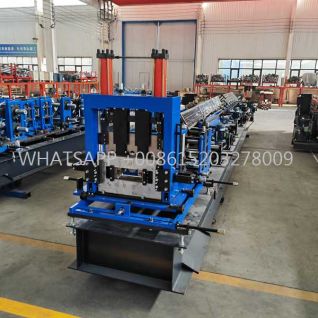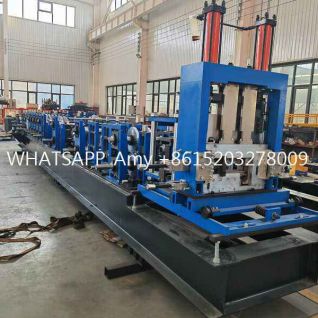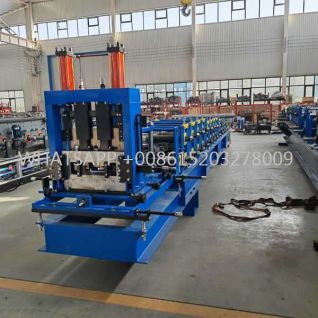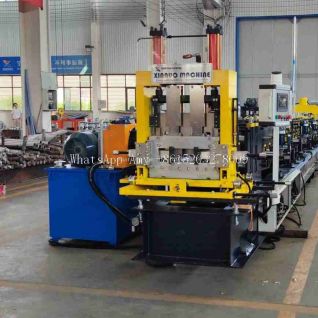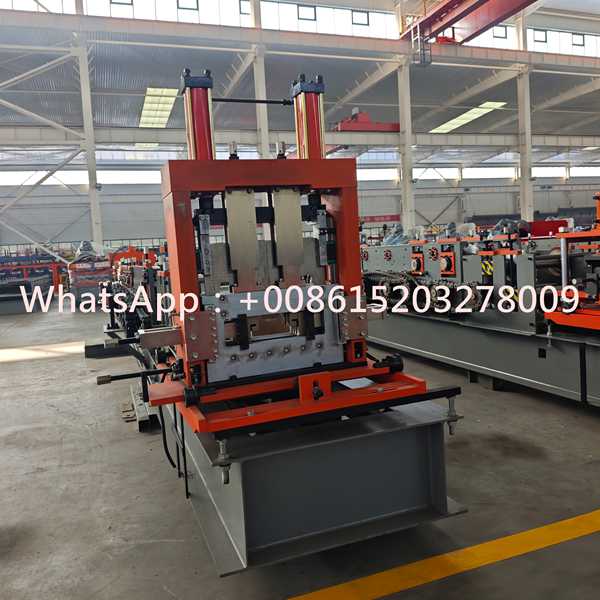
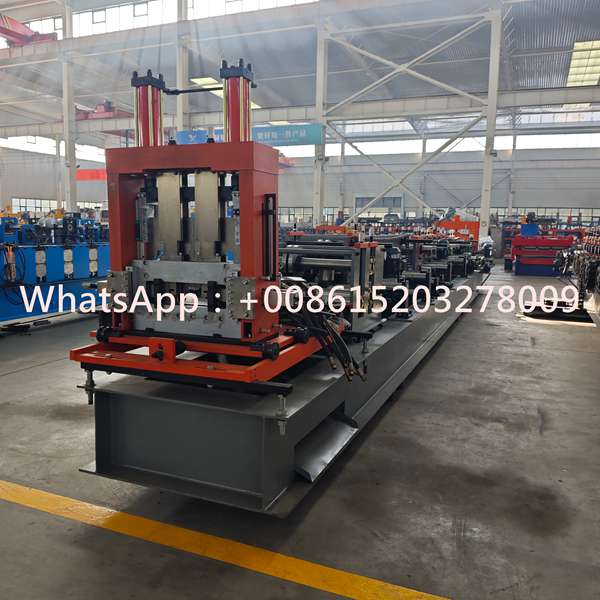
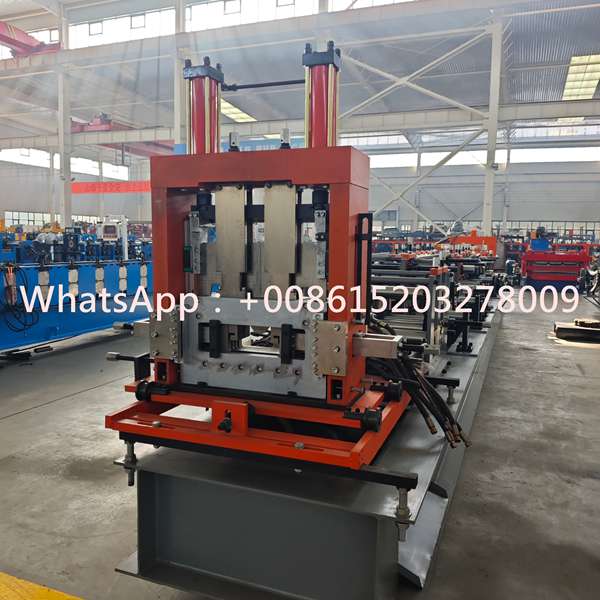
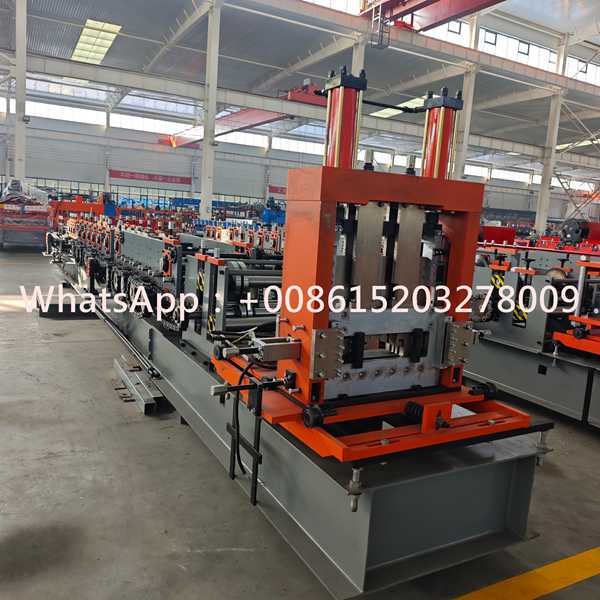
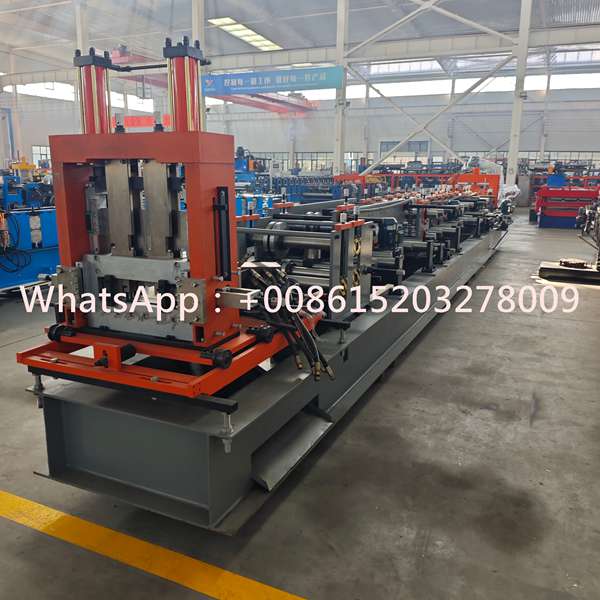
Forms continuous structural members directly from steel coil
Handles coated and galvanized steel for durable building components
Servo-assisted positioning supports repeatable dimensional performance
Automated production reduces manual handling throughout fabrication
Adjustable tooling accommodates different section sizes and thicknesses
Integrated operations streamline punching, forming, cutting, and collection
Suitable for factories producing components for commercial steel buildings
A continuous cold-forming system engineered to transform steel coil into accurately shaped pannes for modern steel construction.
Pannes are widely used as secondary structural members in steel buildings, particularly in roof and wall framing systems. Their geometry, material thickness, and connection arrangement are selected according to the structural requirements of each building.
This steel panne roll forming machine is designed for manufacturers that need a continuous method of producing structural sections from steel coil. Instead of relying on individual bending operations, the material travels through a series of forming stations that gradually establish the final cross-section.
The complete production concept can combine coil decoiling, material guiding, leveling when required, progressive forming, optional punching, automatic cutting, and finished-product collection. This arrangement provides a coordinated workflow from raw material to finished structural members.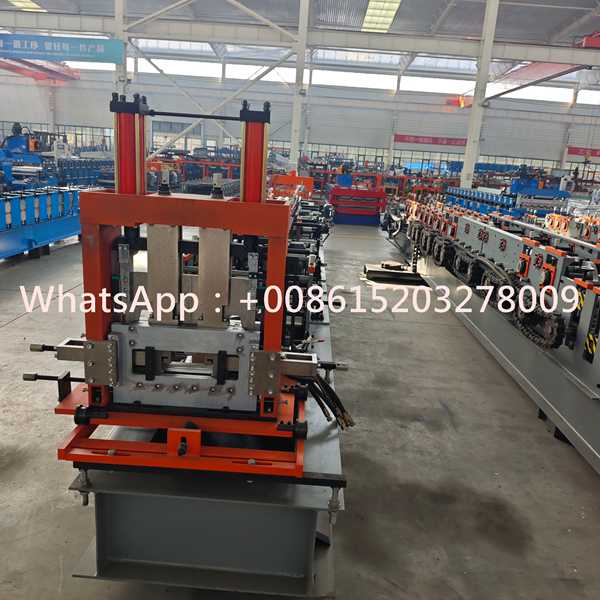
The roller configuration is determined by the required cross-section. Web height, flange width, lip geometry, material thickness, steel grade, hole pattern, and finished length are considered when developing the production line.
| Parameter | Reference Specification |
|---|---|
| Machine Type | Steel Panne Roll Forming Machine |
| Profile Configuration | C / Z Structural Sections |
| Material | Galvanized or coated structural steel coil |
| Reference Thickness | Approximately 1.5–3.2 mm |
| Reference Web Height | Approximately 40–80 mm |
| Reference Lip Size | Approximately 10–20 mm |
| Reference Forming Speed | Approximately 10–20 m/min |
| Punching | Optional in-line punching system |
| Cutting | Automatic hydraulic or configured cut-to-length system |
| Control | PLC-based automatic operation |
| Length Setting | Programmable according to production requirements |
| Application | Roof framing, wall framing, warehouses, workshops, industrial buildings |
Note: Final specifications should be confirmed according to the customer's profile drawing, steel grade, coil thickness, required production speed, punching layout, finished lengths, and local electrical conditions.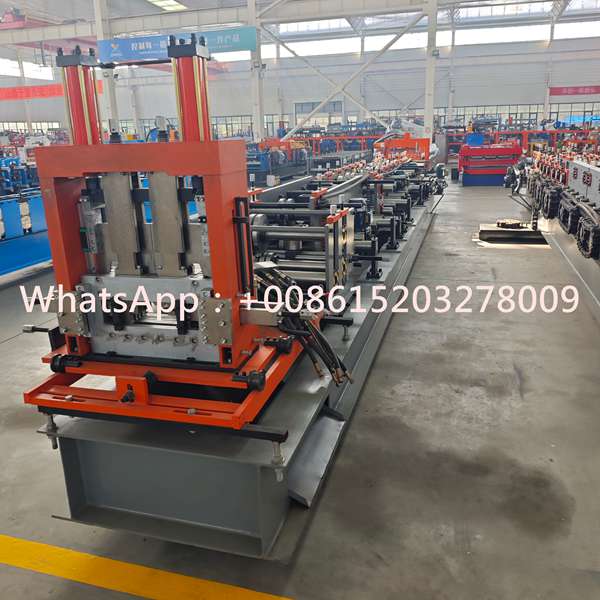
In steel construction terminology, the word “panne” is commonly used in some markets to describe a purlin or secondary framing member. These components are positioned within the building frame to support roof or wall cladding and distribute loads to the primary structural system.
Depending on the engineering design, pannes can be produced in C-shaped, Z-shaped, or other cold-formed configurations. The selected section must be compatible with the building's structural calculations, connection details, material properties, and applicable construction standards.
Because pannes are often produced in substantial quantities for steel building projects, continuous roll forming provides an efficient alternative to separate manual forming operations. The production line can manufacture long sections directly from coil and divide them into required finished lengths.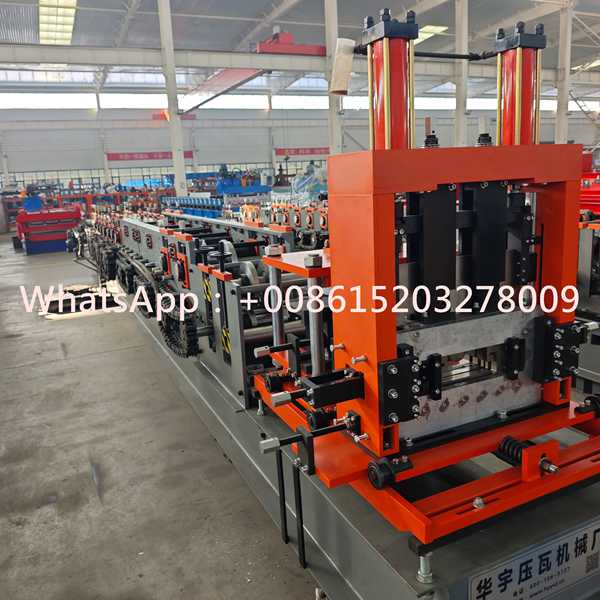
The manufacturing process begins when the steel coil is installed on the decoiler. The coil is unwound under controlled conditions and directed toward the feeding section.
Guide rollers align the strip before it reaches the main forming stations. Maintaining a stable centerline is important because even small deviations can influence the final profile geometry during continuous forming.
The strip then passes through multiple roller stations. Each station performs a controlled bending operation, progressively changing the flat strip into the required structural profile.
If the design includes connection holes, the punching section can process the material according to the programmed hole pattern. This operation can be positioned within the production sequence according to the machine design.
After the section reaches the required shape, the cutting unit separates the continuous profile into individual members. Finished pannes are then transferred to the output area for measurement, sorting, bundling, and shipment.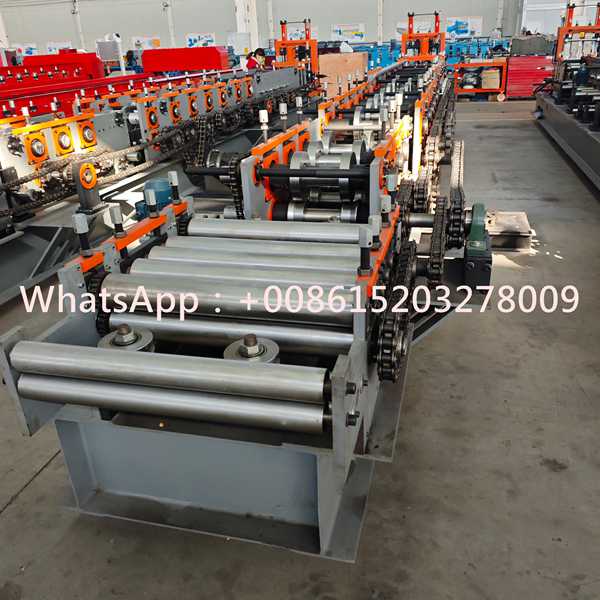
The forming section is the core of the machine. Its roller arrangement is developed around the target profile rather than using a universal geometry for every application.
Profile dimensions may include the overall section width, web height, flange dimensions, return lip, corner radius, and other features specified by the engineering drawing. The forming sequence is designed to gradually establish these dimensions.
For C sections, the forming process creates a channel-shaped profile with the required flange and lip geometry. For Z sections, the roller arrangement is designed to establish the offset geometry required by the selected section.
When a customer needs several section sizes, the machine can be designed with an appropriate adjustment or changeover concept. The suitable solution depends on the required size range and production strategy.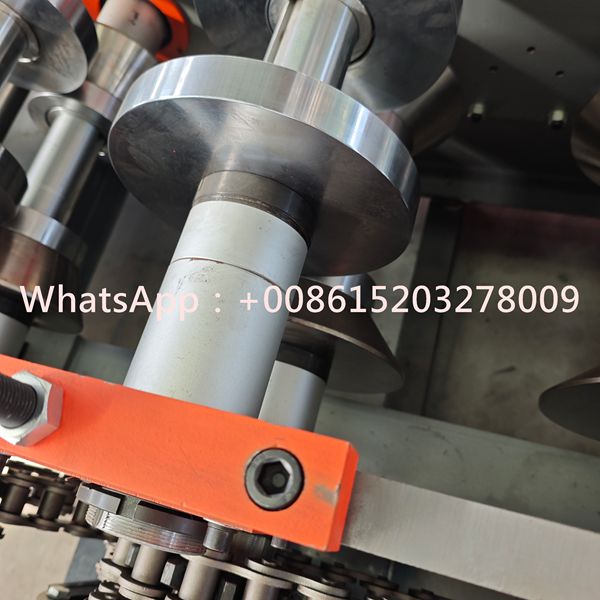
The machine can be configured for structural steel coil according to the required finished profile. Galvanized and coated steel can be considered when the building application requires improved resistance to environmental exposure.
Steel thickness and yield strength should be provided before machine design because they influence the forming requirements. The mechanical characteristics of the material should be compatible with the selected roller configuration and drive capacity.
Coil width, thickness tolerance, surface coating, and material consistency can also influence feeding and forming stability. Using suitable incoming material helps establish a more predictable production process.
Modern steel fabrication projects frequently require members in different lengths. The automatic control system allows operators to enter the desired cutting dimensions and organize production according to the order requirements.
The measuring and cutting sequence works together with the forming speed to separate finished sections at the programmed positions. This reduces repetitive manual measurement and supports a more consistent production workflow.
Production quantities can also be organized through the control system. This is useful when a project contains several batches of structural members that need to be manufactured, identified, and delivered in a planned sequence.
Connection holes can be incorporated into the production line when required by the structural design. The punching system is configured according to the hole diameter, position, spacing, and quantity specified in the approved drawing.
In-line punching can reduce secondary processing after forming. Instead of transporting finished sections to a separate drilling or punching station, the required holes can be produced during the continuous manufacturing process.
Before full-scale production, sample sections should be inspected to confirm the hole pattern and dimensional relationship between the holes and the finished member. This verification is particularly important for projects involving prefabricated structural assemblies.
Steel pannes are used in many building systems where secondary framing members are required. The machine can serve manufacturers supplying structural components to a variety of construction markets.
Suitable for producing roof and wall framing members for storage and distribution buildings.
Supports continuous production for factories, workshops, and manufacturing facilities.
Can supply structural secondary members for selected agricultural and farm structures.
Provides production capacity for fabricators serving commercial steel construction projects.
Every steel fabrication business has different product requirements. Some manufacturers focus on a limited range of standard sections, while others supply multiple profile sizes for different construction projects.
The machine can be configured around the required product range. Customization may include forming profile, material thickness, roller arrangement, punching system, cutting method, automation level, production speed, and finished-product handling.
Customers can provide profile drawings, sample sections, or dimensional specifications during the technical discussion. These details are used to determine the forming stations and related production components.
Workshop conditions can also be considered. Machine orientation, coil loading direction, finished-product discharge, operator access, safety protection, and electrical requirements can be incorporated into the layout planning.
Structural pannes should maintain the dimensions specified by the approved engineering drawing. Consistent web height, flange width, lip geometry, straightness, and finished length contribute to predictable installation and assembly.
During commissioning, sample pieces can be checked using appropriate measuring equipment. Profile dimensions and punching positions are compared with the approved drawings before regular production begins.
During daily operation, operators should observe material alignment, forming behavior, roller condition, cutting accuracy, and punching quality. Regular inspections can help identify developing deviations at an early stage.
The actual dimensional tolerance should be established according to the product drawing, applicable standards, material characteristics, and project requirements rather than relying on a single universal tolerance value.
Proper installation provides the foundation for stable long-term operation. The machine should be positioned according to the agreed layout with adequate room for coil handling, finished product movement, maintenance, and operator access.
Before trial production, the mechanical transmission, forming stations, electrical wiring, control functions, cutting system, and optional punching equipment should be inspected.
Trial forming is performed with the selected material and profile. The machine parameters can be adjusted based on the resulting sample until the required profile geometry and production sequence are established.
Operator training can cover startup and shutdown procedures, control-panel operation, production parameter input, profile adjustment, routine inspection, lubrication, safety procedures, and basic troubleshooting.
Regular maintenance is recommended to keep the forming line operating smoothly. Rollers, shafts, bearings, transmission components, cutting tools, punching tooling, electrical connections, and fasteners should be checked according to the operating schedule.
Operators should pay attention to abnormal sounds, vibration, material tracking problems, dimensional changes, or deterioration in punching quality. Early inspection can help prevent minor adjustments from developing into larger production problems.
Technical support can cover machine operation, forming adjustment, control parameters, punching configuration, cutting functions, maintenance procedures, and troubleshooting. Replacement components can be selected according to the actual machine configuration.
This steel panne roll forming machine provides a continuous method for manufacturing structural C and Z sections from steel coil. With configurable forming tooling, automatic cut-to-length operation, optional punching, and project-oriented control functions, it offers a flexible production platform for manufacturers serving warehouse, industrial, agricultural, commercial, and other steel building applications.
Xinnuo Roll Forming Machine Co., Ltd., established in 1995, is a leading enterprise specializing in the design, development, manufacturing, and sales of various cold roll forming equipment.
Located in Botou Economic Development Zone, the company benefits from a well-developed electromechanical manufacturing industry and a complete industrial chain...[ Read More >>]