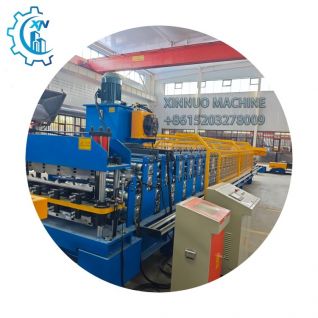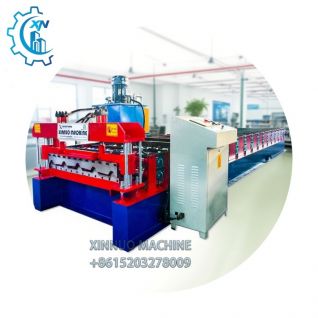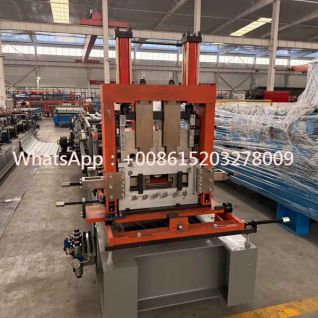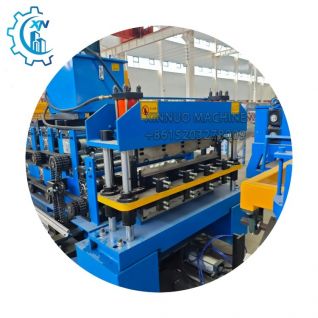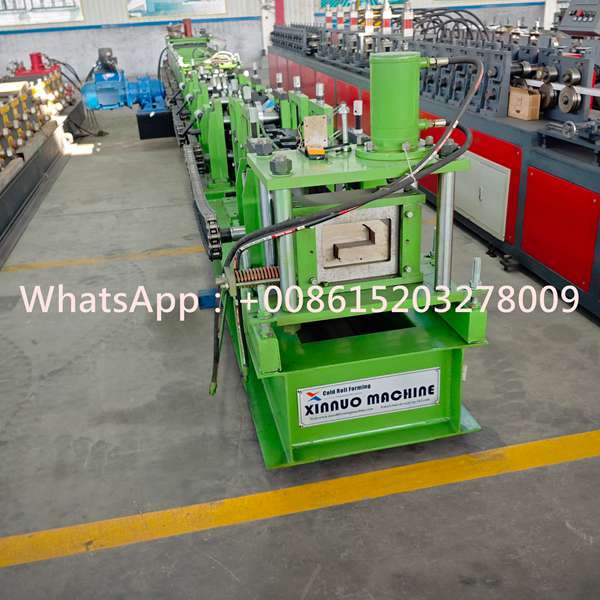
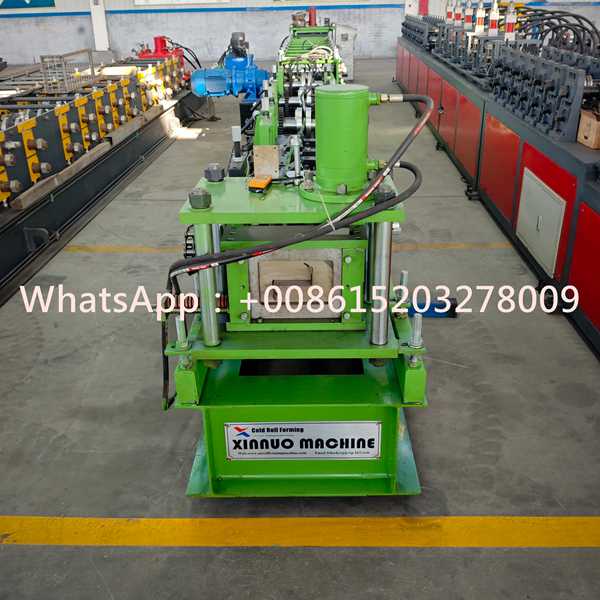
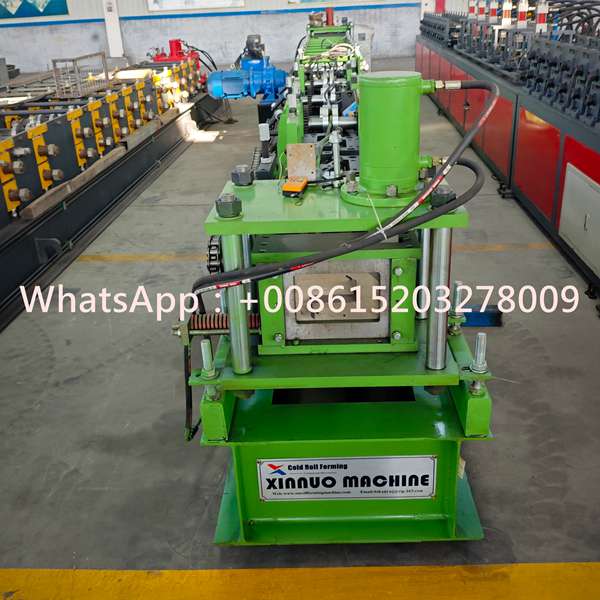
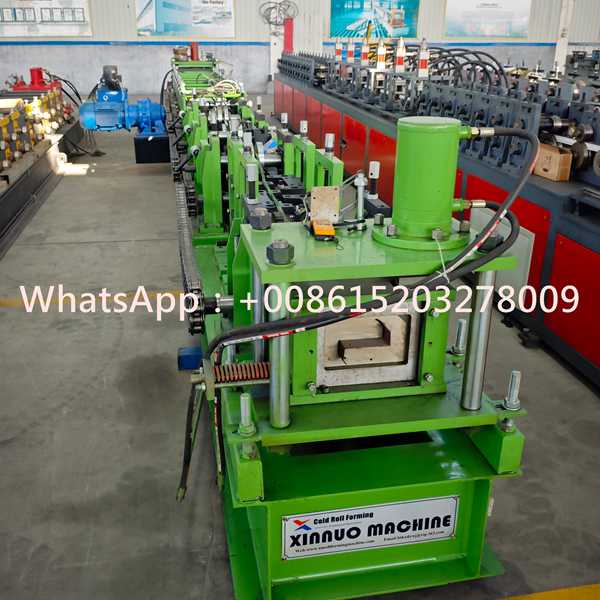
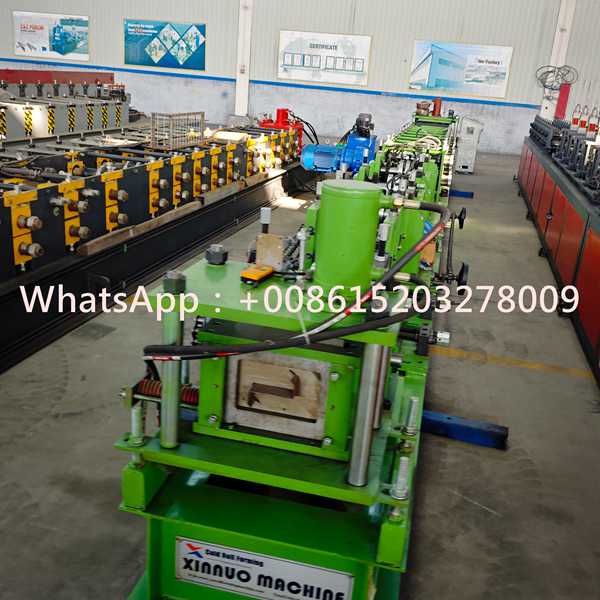
Shapes lightweight steel strips into precise construction framing sections
Handles coated steel materials commonly selected for building applications
Continuous processing supports streamlined prefabricated component manufacturing
Stable forming geometry helps maintain uniform structural section dimensions
Computerized operation simplifies repeat production and parameter management
Tooling layouts can follow project-specific framing profile drawings
Suitable for residential, commercial, modular, and prefabricated buildings
A continuous steel framing production solution for converting lightweight coils into accurately formed sections used in modern building systems.
Light gauge steel construction has become an important option for manufacturers looking for efficient, repeatable, and factory-controlled building component production. Compared with conventional site-based fabrication, roll forming allows steel framing sections to be produced continuously from coil material with controlled dimensions and repeatable geometry.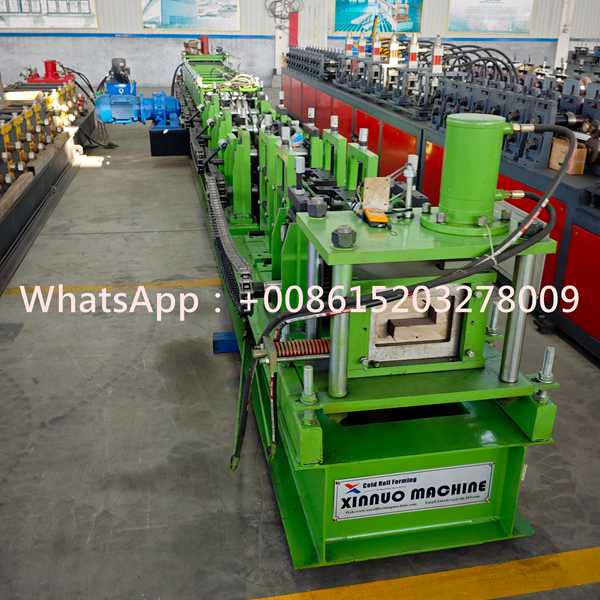
This light gauge steel forming machine is designed to transform thin structural steel strip into profiles used in framing applications. The production line can incorporate coil feeding, leveling, progressive forming, punching, cutting, and finished-section collection according to the required configuration.
The machine concept is suitable for manufacturers producing components for residential construction, modular buildings, commercial projects, temporary structures, interior framing systems, and other applications where lightweight steel sections are required.
Light gauge steel profiles vary considerably between construction systems. The forming stations, punching arrangement, cutting method, and control functions can therefore be configured around the customer's approved section drawing and production requirements.
| Parameter | Reference Specification |
|---|---|
| Machine Type | Light Gauge Steel Roll Forming Machine |
| Product Type | Light Gauge Steel Framing Profiles |
| Raw Material | Cold-Formed Structural Steel Coil |
| Material Condition | Coated or uncoated steel according to application |
| Profile Geometry | Customized according to approved drawings |
| Forming Method | Progressive multi-station roll forming |
| Punching | Optional in-line punching system |
| Cutting | Automatic cut-to-length configuration |
| Control | PLC-based automatic control |
| Production Speed | Determined by profile, material, punching, and machine configuration |
| Profile Change | Mechanical or automated adjustment according to design |
| Application | Residential, modular, commercial, and prefabricated construction |
Note: Final parameters are confirmed according to steel grade, material thickness, coil width, profile dimensions, hole requirements, finished length, and applicable production standards.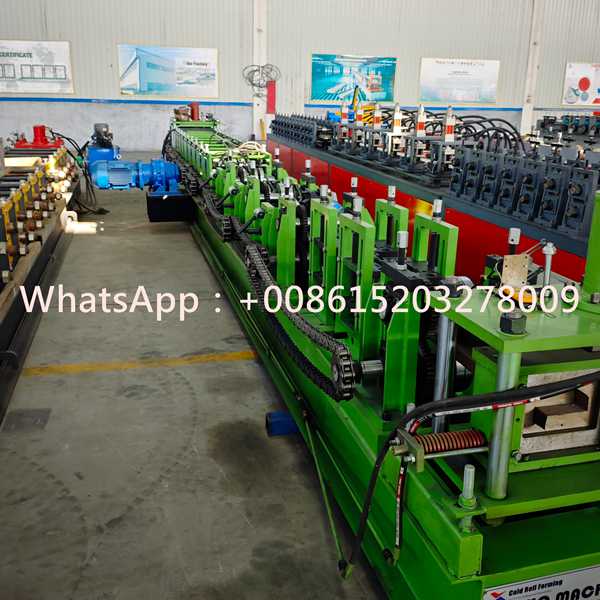
Light gauge steel forming is a cold-forming process in which steel strip is progressively shaped into structural or framing sections without heating the material to a high temperature. The process uses a sequence of precisely positioned rollers to create the required profile from a continuous coil.
The resulting sections can be designed for different framing purposes. Common profile concepts include studs, tracks, channels, joist-type sections, furring members, and other specially developed components used within lightweight construction systems.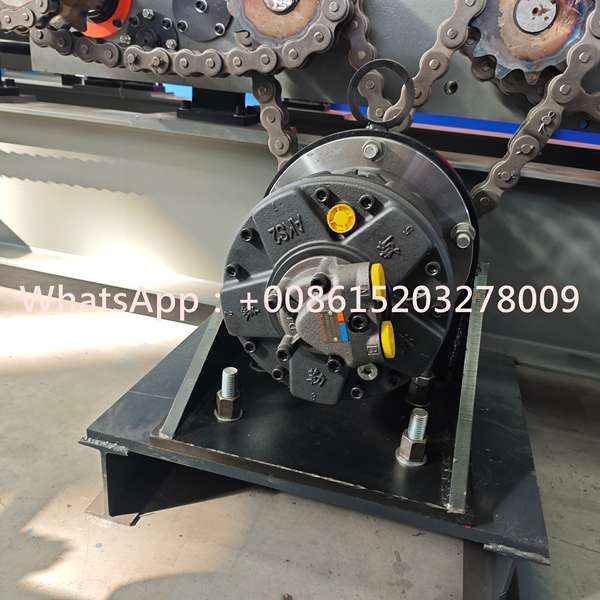
Because the steel is formed continuously from coil, manufacturers can establish a repeatable production process that is well suited to standardized building components. The final section geometry, material specification, and production parameters depend on the engineering requirements of the intended application.
The manufacturing process begins when the steel coil is loaded onto the decoiler. The coil is released at a controlled rate and enters the feeding system. Guide components maintain the strip position as it moves toward the forming stations.
If required, a leveling section can be installed before the forming rollers. Leveling helps establish a more stable starting condition for the strip and can reduce the effects of coil curvature before the profile begins to develop.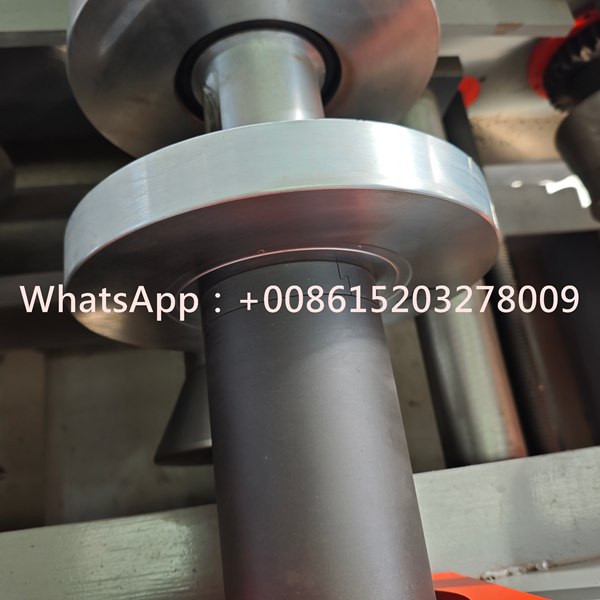
The steel then passes through multiple roller stations. Each station introduces a controlled bend, gradually developing the final cross-section. The progressive approach allows the profile to be formed continuously while maintaining a defined material path.
When the design includes service openings or structural connection holes, an optional punching system can be integrated into the line. After forming and punching, the profile is automatically cut to the programmed length and transferred to the output area.
Factory-produced light gauge steel sections are commonly used in construction systems where repeatable component dimensions are important. The profiles can be prepared in advance and delivered to a construction site for assembly according to the building design.
Compared with producing every framing member manually, automated forming provides a consistent production route from coil to finished section. This can be particularly valuable for prefabricated construction manufacturers that need to reproduce the same profiles across multiple projects.
The machine can be configured for individual profile production or selected multi-profile systems. The appropriate configuration depends on the required product range, changeover frequency, available factory space, and expected production volume.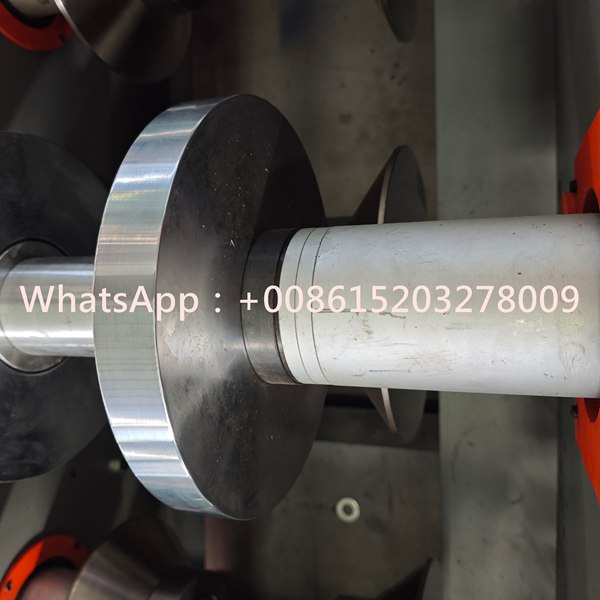
Many light gauge steel framing systems require holes or slots for connections, services, fasteners, or assembly positioning. These openings can be incorporated into the manufacturing line rather than being produced as a completely separate operation.
The punching arrangement is designed according to the profile drawing. Hole diameter, slot dimensions, spacing, quantity, and longitudinal position can be specified during the engineering stage.
Automatic cutting then separates the continuous profile into individual members. Finished lengths can be programmed according to project requirements, helping manufacturers organize components for subsequent framing assembly.
For projects using different member lengths, the control system can be configured around the required production sequence. This can make it easier to manufacture project-specific framing packages without relying entirely on manual measurement and cutting.
The PLC control system provides a centralized interface for managing the main production functions. Operators can enter production parameters, monitor machine status, and coordinate the forming and cutting sequence through the control panel.
Automation is particularly useful for manufacturers producing standardized framing members in batches. Once a suitable parameter set has been established, repeat orders can be processed with less manual intervention and more organized setup procedures.
Depending on the required production concept, the machine can include additional automation functions such as automatic length control, punching coordination, profile adjustment, production counting, and other process-management features.
Dimensional consistency is important when light gauge steel members are assembled into walls, floors, roofs, or modular structures. The profile needs to maintain the intended width, depth, flange geometry, and connection features throughout the production batch.
Roller alignment, tooling condition, material characteristics, and machine setup all contribute to the final profile. The forming stations should therefore be carefully adjusted during commissioning using the actual production material.
Sample profiles can be measured against the approved drawing before regular production begins. Important inspection points may include overall profile width, web height, flange dimensions, lip geometry, hole position, slot dimensions, and finished length.
Light gauge steel profiles can be incorporated into many modern construction systems. The exact application depends on the structural design, local building requirements, steel grade, profile dimensions, and engineering calculations.
Produces framing components for selected lightweight steel housing and residential construction systems.
Supports factory production of repeatable steel members used in modular construction.
Can manufacture selected lightweight sections for partitions, interior framing, and building fit-outs.
Provides continuous production for standardized members prepared for off-site assembly.
Light gauge steel framing products are often developed around specific construction systems. The machine can therefore be customized according to the customer's drawings instead of relying on a fixed universal profile.
Customization may include profile width and height, flange configuration, lip dimensions, material thickness, steel grade, hole or slot arrangement, finished length, forming speed, and production sequence.
The forming tooling can be designed around the required cross-section. Where several profiles are produced on the same production line, the adjustment concept can be selected according to the desired changeover method and production volume.
The punching system can also be adapted to the required connection and service openings. Different tooling arrangements may be considered when a product range contains several hole patterns.
Light gauge framing can be manufactured from different steel materials depending on the intended application. Coated steel is commonly selected when surface protection is required, while other steel grades may be chosen according to structural specifications and local standards.
Material thickness should be determined together with the required profile geometry and structural performance. A change in thickness or steel grade may affect the forming force and should therefore be considered when selecting the roller tooling and machine configuration.
Coil quality also influences production stability. Consistent thickness, width, edge condition, and surface quality can contribute to smoother feeding and more predictable profile development.
Continuous coil processing allows manufacturers to establish a streamlined route from raw material to finished framing member. The operator loads the coil, sets the production parameters, starts the line, and monitors the forming process while the machine performs the programmed operations.
Automated punching and cutting can further reduce intermediate processing. This is particularly useful for manufacturers producing complete framing packages where members require different lengths and predetermined connection openings.
Production efficiency depends on the actual profile, material thickness, punching pattern, finished length, machine speed, and automation level. The final machine configuration should therefore be selected based on expected production rather than speed alone.
Installation begins with positioning the forming line according to the agreed factory layout. The machine should be leveled and checked before connecting electrical, hydraulic, and other auxiliary systems.
During commissioning, the specified coil material is introduced into the line. Trial profiles are produced and checked against the approved technical drawings. Forming alignment, punching positions, cutting lengths, and overall profile dimensions can then be adjusted where necessary.
Operators can receive guidance on machine startup, production parameter entry, profile adjustment, punching operation, cutting control, lubrication, cleaning, and basic troubleshooting.
Routine maintenance helps keep the forming system operating reliably. Important inspection areas include rollers, shafts, bearings, transmission components, cutting tools, punching tooling, hydraulic components where applicable, electrical connections, and fastening points.
Operators should monitor profile changes, unusual vibration, abnormal noise, material tracking, and dimensional variation during production. Early identification of these conditions can help prevent larger production problems.
Technical support can cover machine operation, profile adjustment, punching configuration, component identification, maintenance procedures, and troubleshooting. Replacement wear parts can be specified according to the actual machine configuration.
This light gauge steel roll forming machine provides a continuous manufacturing platform for producing customized framing sections from steel coil. With progressive forming, optional punching, automatic cutting, PLC-based control, and profile-specific tooling, the system can support manufacturers serving residential, modular, commercial, and prefabricated construction markets.
Xinnuo Roll Forming Machine Co., Ltd., established in 1995, is a leading enterprise specializing in the design, development, manufacturing, and sales of various cold roll forming equipment.
Located in Botou Economic Development Zone, the company benefits from a well-developed electromechanical manufacturing industry and a complete industrial chain...[ Read More >>]