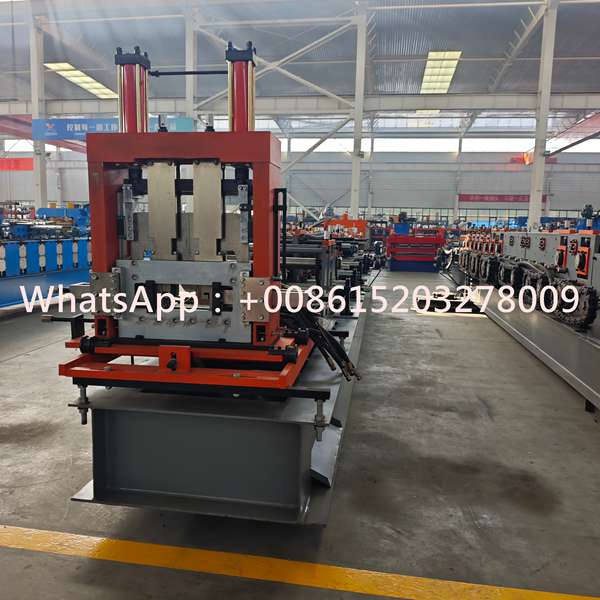
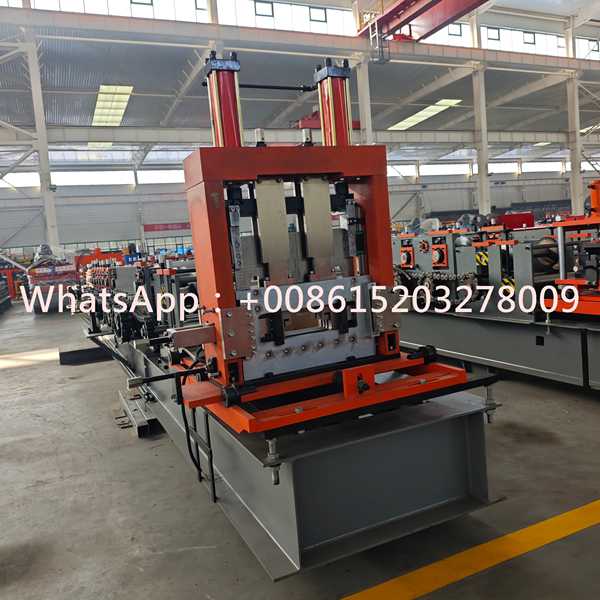
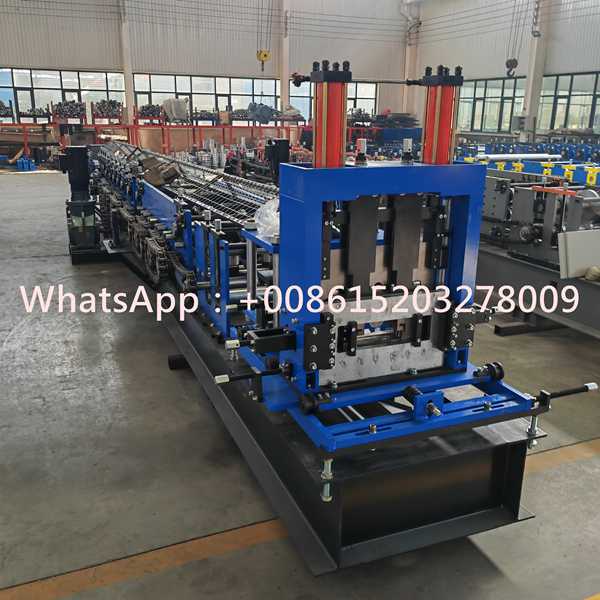
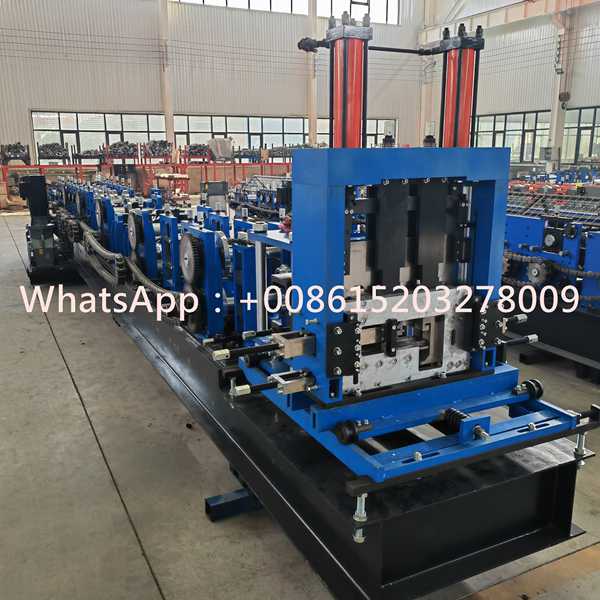
Processes galvanized and structural steel coils for framing components
Adjustable section geometry accommodates diverse engineering and construction requirements
Integrated forming operations reduce repetitive handling during continuous manufacturing
Reinforced tooling supports dependable shape consistency throughout extended production
Programmable settings simplify profile transitions and routine production adjustments
Optional punching configurations match project-specific connection and installation requirements
Ideal for warehouses, factories, workshops, agricultural buildings, and steel structures
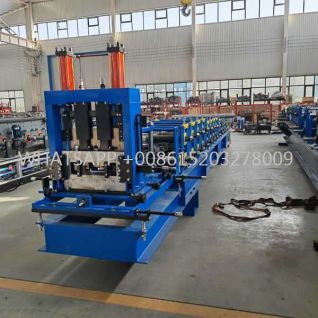
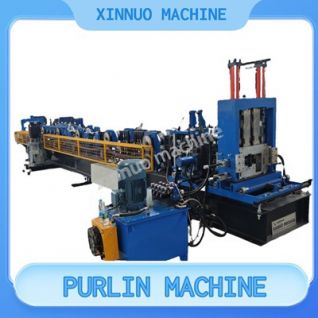
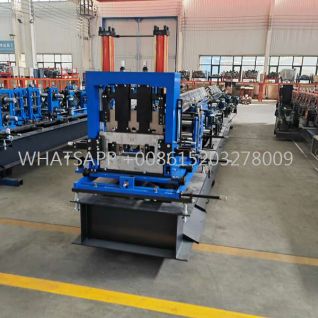
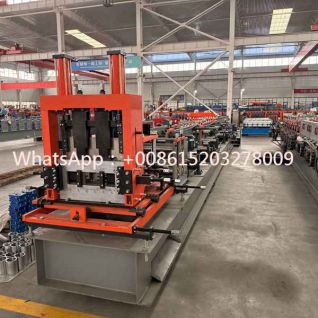
A versatile cold-forming solution developed for producing accurately shaped C and Z structural purlins across a broad 100-300 mm size range.
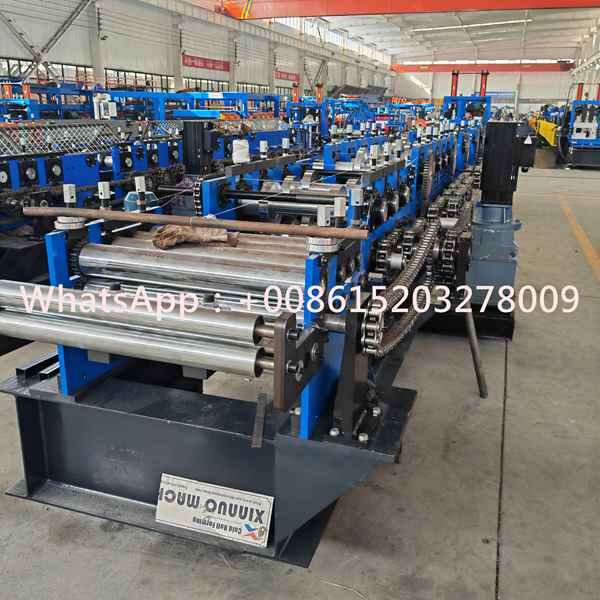
Structural steel manufacturers often need to produce different purlin sections without maintaining a separate machine for every profile size. The 100-300 mm CZ purlin roll forming machine provides a practical production platform for manufacturers working with C and Z structural members. Its adjustable configuration allows the forming section to accommodate different web dimensions while maintaining a consistent production workflow.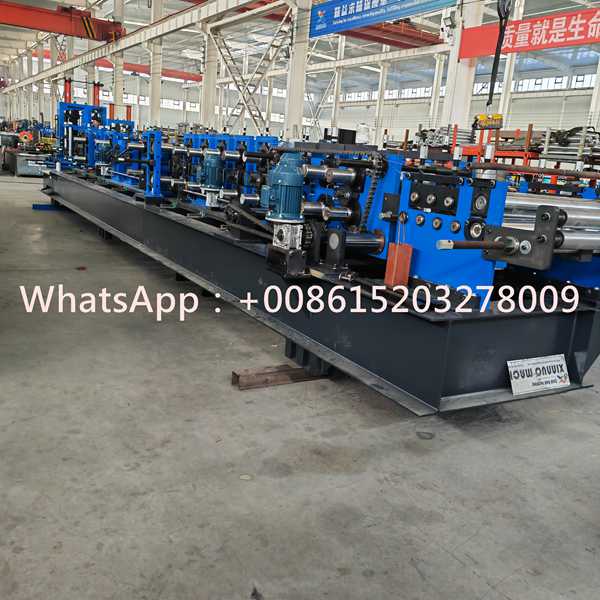
The equipment is designed around continuous cold roll forming technology. Steel coil is gradually guided through the forming stations, where a sequence of controlled bending operations transforms the flat strip into the required structural section. This progressive method allows the material to develop its final geometry step by step instead of applying excessive deformation at one point.
The 100-300 mm range makes the machine suitable for a variety of steel framing projects. Depending on the final configuration, the system can be arranged for C purlin production, Z purlin production, or interchangeable C/Z manufacturing. Additional processing functions can be integrated when the finished profiles require connection holes, specified cutting lengths, or other project-related requirements.
Profile range: 100-300 mm | Material thickness: approximately 1.5-3.2 mm | Section type: C / Z purlins | Process: continuous cold forming
| Parameter | Reference Value |
|---|---|
| Machine Type | CZ Purlin Roll Forming Machine |
| Production Profile | C Purlin / Z Purlin |
| Profile Width | 100-300 mm |
| Flange Height | Approximately 40-80 mm |
| Lip Size | Approximately 10-20 mm |
| Material Thickness | Approximately 1.5-3.2 mm |
| Material Type | Galvanized steel or structural steel coil |
| Forming Speed | Approximately 10-20 m/min |
| Control System | PLC-based automatic control |
| Size Adjustment | Configured according to required profile range |
| Punching | Optional according to hole pattern requirements |
| Cutting | Configured for specified finished lengths |
Note: Final machine specifications can be adjusted according to material grade, thickness, profile drawing, punching pattern, production speed, and electrical requirements.
The production cycle starts with a steel coil loaded onto the decoiling section. The coil is released at a controlled rate and directed toward the feeding and guiding mechanism. Stable material entry is important because the position of the strip at the beginning of the line directly influences the forming condition further downstream.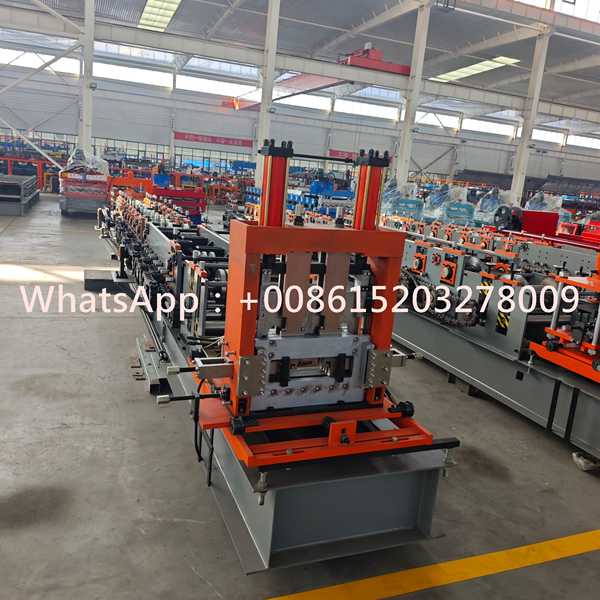
After entering the machine, the steel passes through a series of forming stations. Each roller station performs a controlled bending action, gradually developing the required C or Z section. The progressive forming sequence helps distribute deformation across the machine and provides a smoother transition from flat sheet to finished structural profile.
Depending on the selected configuration, punching can be performed before or after the main forming operation. Hole positioning can be designed around the customer's structural drawings, including web holes, flange holes, slots, or other connection patterns. After the required processing is completed, the profile is measured and cut into predetermined lengths.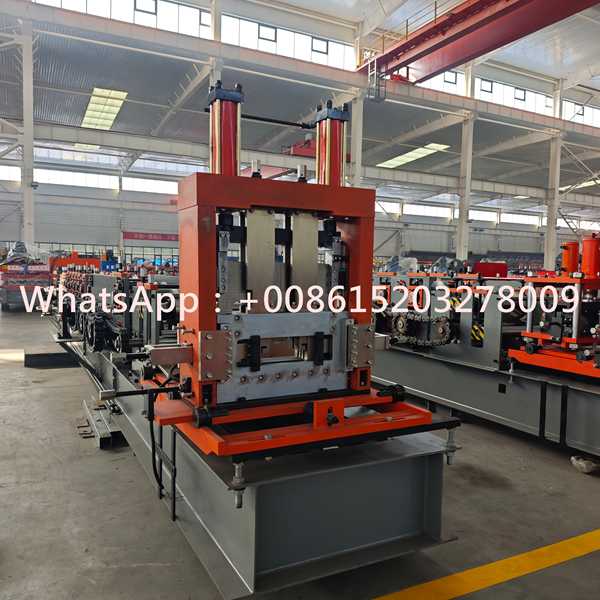
The finished sections are then transferred toward the discharge area for collection and subsequent handling. By connecting these stages through a coordinated control system, the machine can reduce unnecessary intermediate handling and provide a more organized manufacturing process.
One of the main benefits of this equipment is its broad section-size capability. A 100-300 mm production range allows one production line to serve different structural requirements instead of restricting the manufacturer to one fixed purlin dimension.
The actual profile geometry can be established according to engineering drawings. Web width, flange dimensions, lip configuration, material thickness, hole position, and finished length can all influence the final machine arrangement. The forming tooling is therefore selected and positioned according to the required profile rather than treating every project as an identical application.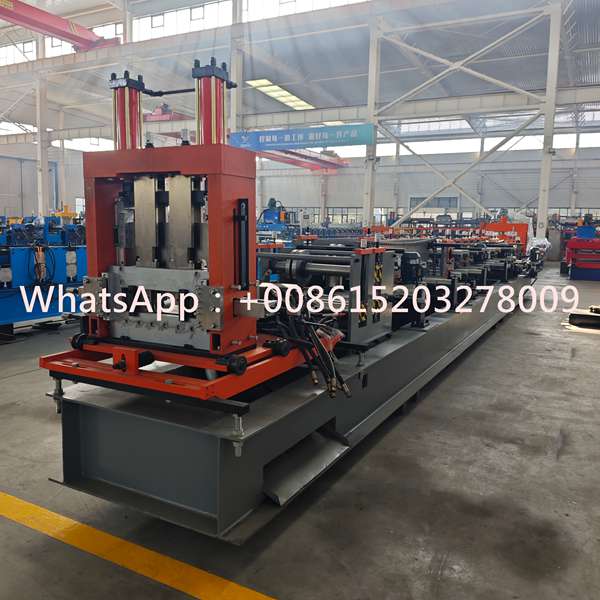
For manufacturers producing different sizes on a regular basis, an adjustable configuration can provide additional convenience. The exact adjustment method depends on the machine design and required range. Production parameters can be stored or entered through the control interface so that operators can reproduce established settings during subsequent orders.
The quality of a finished purlin depends on more than the nominal section dimensions. Straightness, flange alignment, lip position, surface condition, and consistency between individual pieces are also important during installation. The forming stations therefore need to guide the material progressively while maintaining stable alignment throughout the production path.
The roller arrangement is developed around the selected section profile. Carefully coordinated forming stages reduce sudden changes in bending direction and help the strip reach its final geometry gradually. Proper material guidance at the entry and forming areas further contributes to consistent section development.
For continuous production, the machine structure must also provide a stable foundation for the forming stations. A rigid frame reduces unwanted movement during operation and supports repeatable interaction between the rollers and the steel strip.
Regular inspection of roller condition, shaft alignment, transmission components, cutting tools, and electrical connections is recommended to maintain long-term production performance. Maintenance requirements can be established according to the final machine configuration and actual operating conditions.
The PLC-based control system provides a centralized interface for managing key production functions. Operators can use the control panel to enter production parameters, monitor machine operation, manage cutting quantities, and coordinate the forming sequence.
Automatic control is particularly useful when the same production line is used for different profile sizes. Instead of depending entirely on manual operation, programmed parameters can help standardize repeated production tasks. This can reduce operator workload and make daily production easier to organize.
The control architecture can also be configured around the customer's preferred electrical standards and production requirements. Voltage, frequency, control components, safety arrangements, and interface language can be discussed during the technical confirmation stage before manufacturing.
C and Z purlins are commonly used as secondary structural members in steel building systems. Their relatively efficient section geometry makes them suitable for supporting roofing and wall systems while maintaining a practical balance between material consumption and structural requirements.
Produces structural purlins for warehouse roofing and wall framing applications.
Suitable for fabrication companies supplying steel components for factories and workshops.
Supports production of framing members for selected agricultural and storage structures.
Provides repeatable steel sections for modular and prefabricated construction systems.
The machine can be configured for steel coil according to the requirements of the finished purlin and the structural application. Galvanized steel is commonly selected where corrosion resistance is important, while other structural steel materials may be used according to project specifications.
Material thickness is an important factor when selecting the forming configuration. For the reference range of approximately 1.5-3.2 mm, the roller design, transmission arrangement, punching method, and cutting system should be matched to the actual material conditions. When the customer provides the steel grade, yield strength, coil width, thickness, and profile drawing, the machine configuration can be evaluated more precisely.
A complete production line normally follows a logical material path from coil loading to finished-section collection. The layout can be arranged according to available workshop space, coil storage location, operator access, finished-product handling, and transportation requirements.
A practical workflow helps minimize unnecessary material movement. Coil preparation takes place near the feeding area, while finished profiles can be directed toward a dedicated collection zone. Where automated stacking or additional handling equipment is required, the discharge side can be considered during the initial layout design.
This approach is particularly useful for manufacturers planning to integrate the machine into an existing steel fabrication workshop. The line arrangement can be discussed before production so that equipment dimensions, operator access, electrical connections, and material flow are considered together.
Installation is an important stage when introducing a new forming line into production. The equipment should be positioned on a suitable foundation and connected according to the final electrical and mechanical configuration. Before regular manufacturing begins, the machine should be inspected and commissioned using the specified material.
During commissioning, operators can verify feeding alignment, roller positioning, profile geometry, cutting length, punching location, and control parameters. Sample production allows the final settings to be checked before the equipment enters routine operation.
Technical documentation and operating guidance can be supplied according to the final configuration. Operators can receive instructions covering basic machine operation, parameter setting, routine inspection, lubrication, cleaning, and troubleshooting procedures.
Long-term machine performance depends on correct operation and regular maintenance. Technical support can assist customers with production parameter questions, basic troubleshooting, component identification, and maintenance procedures after installation.
For customers producing several profile sizes, technical assistance can also help operators understand the adjustment procedure and establish suitable production settings for different orders. Maintenance recommendations can be adapted to the actual working environment, production hours, material thickness, and operating frequency.
The 100-300 mm CZ purlin roll forming machine provides a flexible foundation for structural steel profile production. With adjustable forming dimensions, continuous coil processing, optional punching and cutting functions, and PLC-based operation, the system can be configured around the actual profile drawings and production objectives of steel structure manufacturers. From warehouse framing to industrial construction, the equipment offers a practical route from steel coil to finished structural purlin.
Xinnuo Roll Forming Machine Co., Ltd., established in 1995, is a leading enterprise specializing in the design, development, manufacturing, and sales of various cold roll forming equipment.
Located in Botou Economic Development Zone, the company benefits from a well-developed electromechanical manufacturing industry and a complete industrial chain...[ Read More >>]