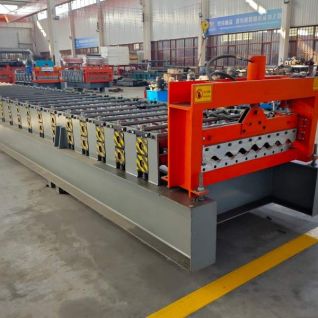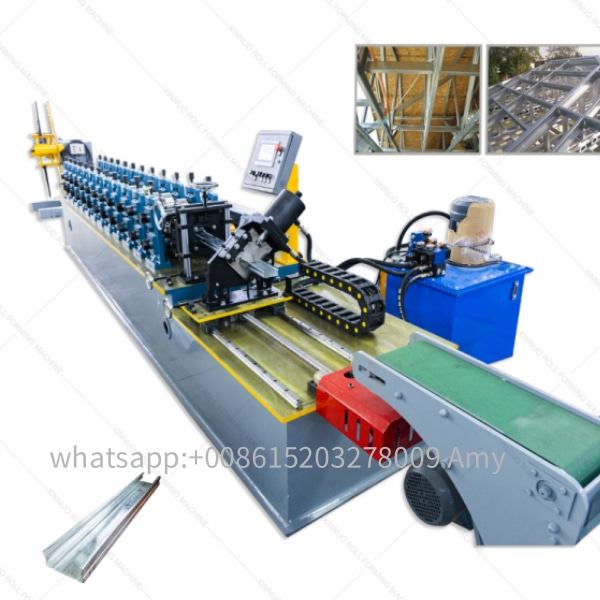
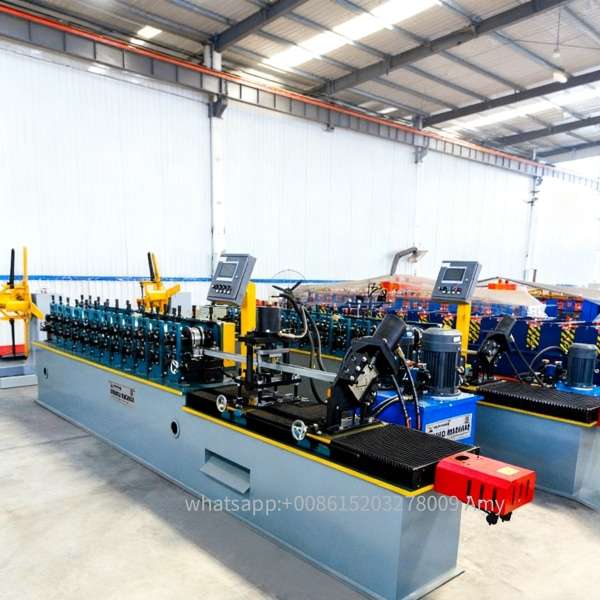
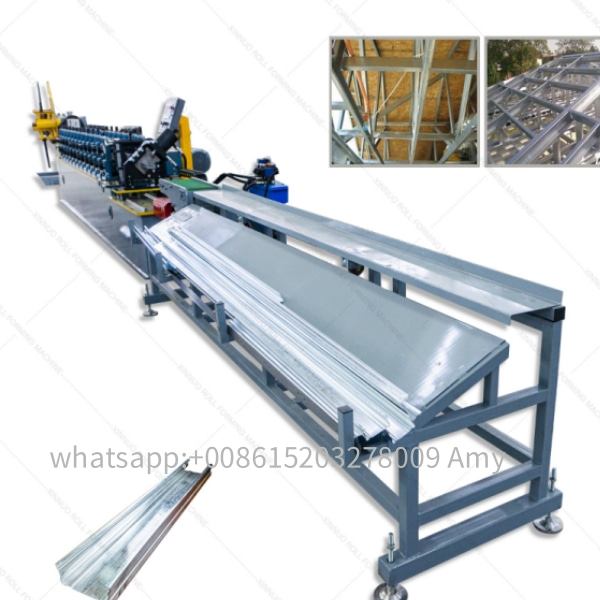
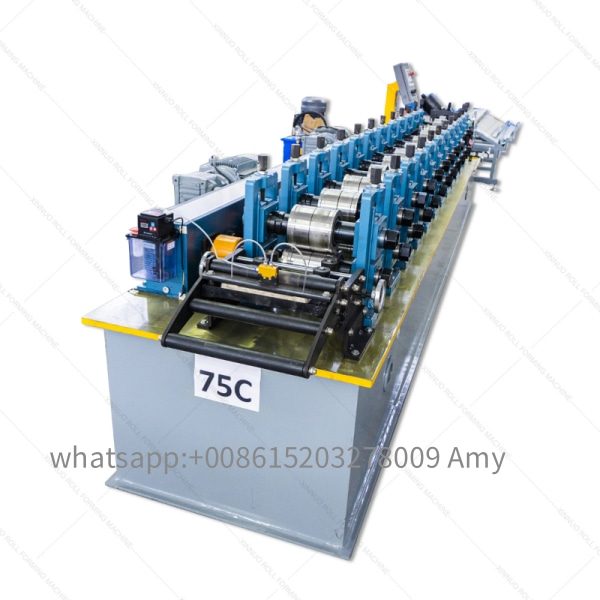
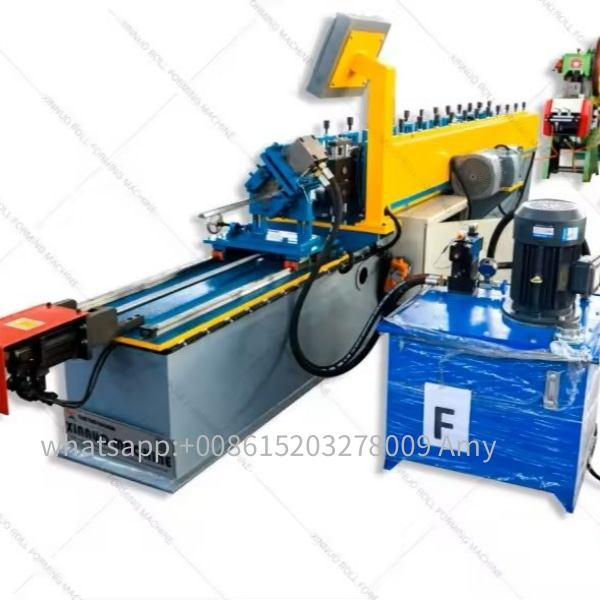
The C channel roll forming machine is designed for continuous manufacturing of C-shaped steel channels widely used in modern construction and industrial structural frameworks. It delivers stable forming accuracy, high efficiency output, and reliable performance for large-scale production environments.
The machine enables uninterrupted forming of steel coils into C channel profiles, ensuring stable speed and consistent output quality for industrial manufacturing requirements.
The system supports quick adjustment of different C channel sizes, allowing multiple specifications to be produced without complex roller replacement, improving production flexibility.
The machine structure is built with welded steel reinforcement, ensuring long-term stability during continuous high-load operation and reducing vibration impact.
High-quality rollers ensure accurate shaping of steel strips into consistent C channel profiles, maintaining dimensional stability throughout production cycles.
The hydraulic cutting unit provides smooth and precise cutting results, ensuring clean edges and reducing secondary processing requirements.
| Item | Description |
|---|---|
| Material Type | Galvanized Steel / Cold Rolled Steel |
| Profile Type | C Channel Section |
| Thickness Range | 1.5 – 3.5 mm |
| Production Speed | 10 – 25 m/min |
| Roller Stations | 12 – 20 stations |
| Control System | PLC Automatic Control |
| Cutting System | Hydraulic Servo Cutting |
| Adjustment Mode | Manual / Automatic Adjustment |
| Shaft Material | 45# High Strength Steel |
| Frame Structure | Heavy Duty Welded Frame |
| Voltage | 380V / 50Hz / 3 Phase |
Steel Coil Loading → Decoiler → Leveling System → Punching Unit → Roll Forming Section → Length Measurement → Hydraulic Cutting → Output Table
High Precision Automatic C Channel Roll Forming Machine for Steel Structure Building Frame Channel and Industrial Metal Profile Production Line Equipment
The keel roll forming machine is a core processing equipment in the building materials industry, specifically designed for the mass production of light steel keels, ceiling keels, partition wall keels, and other profiles. Utilizing a continuous roll forming process, it achieves integrated processing from raw material coils to finished keels.
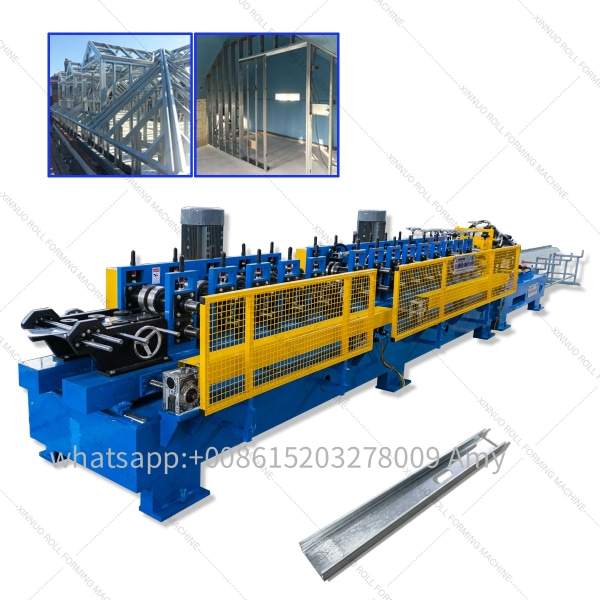 The core structure of the equipment comprises five major systems: a feeding rack stably supports the steel strip coils, preventing material deviation; a leveling device precisely corrects the flatness of the steel strip, ensuring forming quality; the roll forming unit consists of multiple precision molds, progressively shaping the steel strip into the preset keel cross-section through rolling; a fixed-length cutting mechanism using hydraulic or pneumatic control, offering high cutting accuracy and speed; and a PLC control system enabling fully automated operation, allowing flexible setting of keel specifications, length, and other parameters for convenient operation.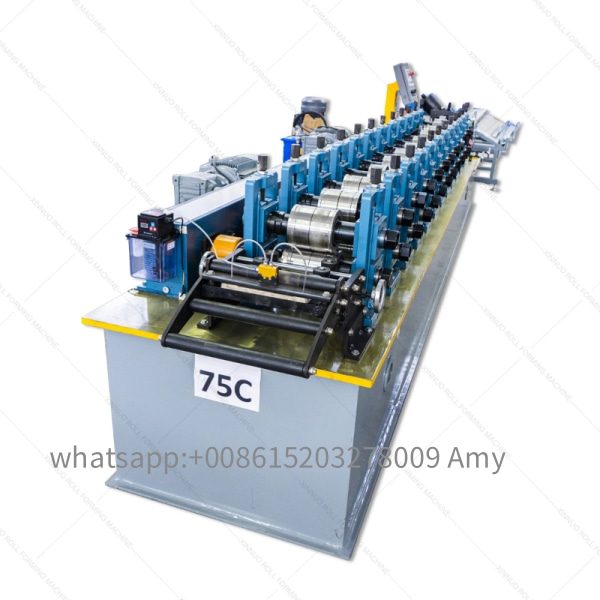
Its core advantages are significant: First, high production efficiency, with continuous rolling technology achieving an output of hundreds of meters per hour, far exceeding traditional processing methods; second, superior forming precision, with precision-machined molds controlling keel dimensional errors to the millimeter level, resulting in a smooth, burr-free surface; third, wide adaptability, allowing for the production of various keel specifications such as U-shaped, C-shaped, and T-shaped keels by changing molds, meeting the needs of different decoration scenarios; fourth, energy-saving and environmentally friendly, employing a cold-bending forming process that eliminates the need for high-temperature heating, resulting in low energy consumption and zero waste gas emissions, meeting green production standards; and fifth, strong stability, with the machine body welded from heavy-duty steel plates, resulting in low vibration and noise during operation and a long service life.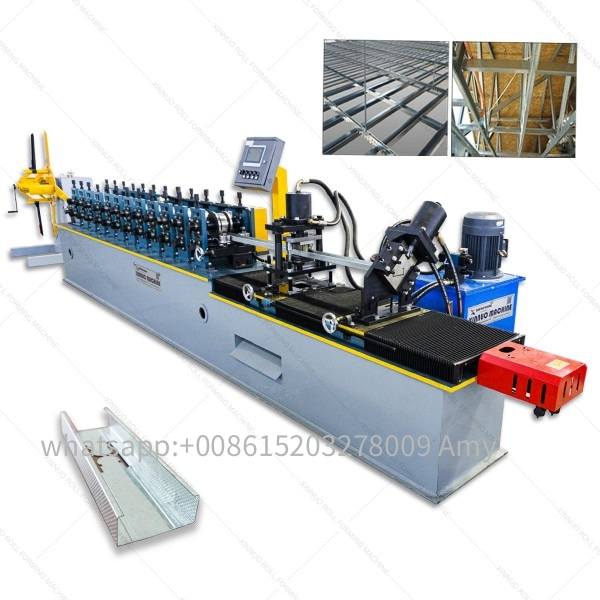
This equipment is widely used in residential decoration, commercial buildings, industrial plants, and other scenarios, serving as a key piece of equipment for ceiling and partition wall construction. Its automated and efficient processing characteristics not only reduce labor costs but also significantly improve the consistency and reliability of keel production, providing strong support for large-scale production in the building materials industry.
Xinnuo Roll Forming Machine Co., Ltd., established in 1995, is a leading enterprise specializing in the design, development, manufacturing, and sales of various cold roll forming equipment.
Located in Botou Economic Development Zone, the company benefits from a well-developed electromechanical manufacturing industry and a complete industrial chain...[ Read More >>]