| Specification | Details |
| Machine Name | Roof Panel Machine |
| Production Scope | Metal roof panel fabrication |
| Compatible Materials | Pre-painted steel, galvanized steel, zinc-aluminum steel |
| Thickness Capacity | 0.3 – 1.2 mm |
| Panel Profile | Defined by customer design |
| Operating Speed | 6 – 15 m/min |
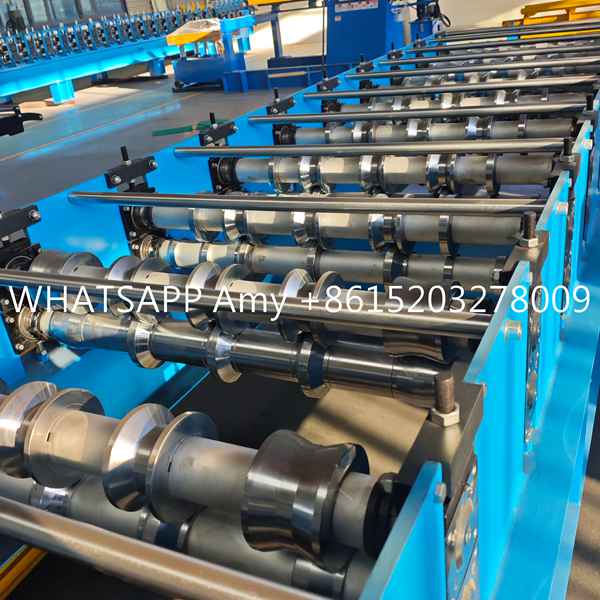
| Forming Structure | Sequential roll forming stations |
| Transmission System | Electric motor with reduction gearbox |
| Cutting Technology | Hydraulic cutting with length positioning |
| Automation Level | PLC-controlled automatic operation |
| Voltage Standard | Configurable by country |
| Custom Engineering | Profile geometry, speed, structure |
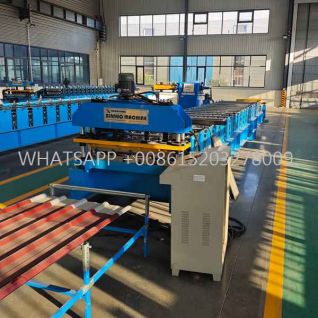
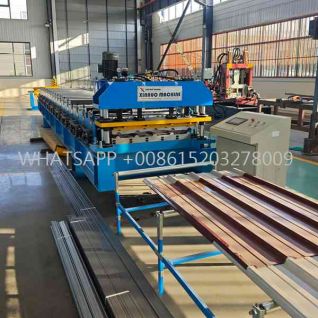
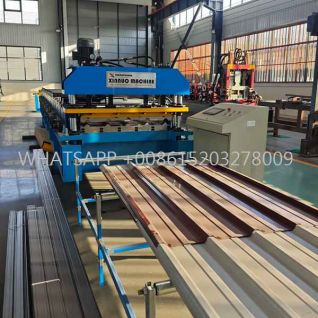
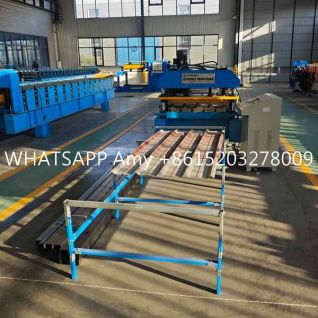
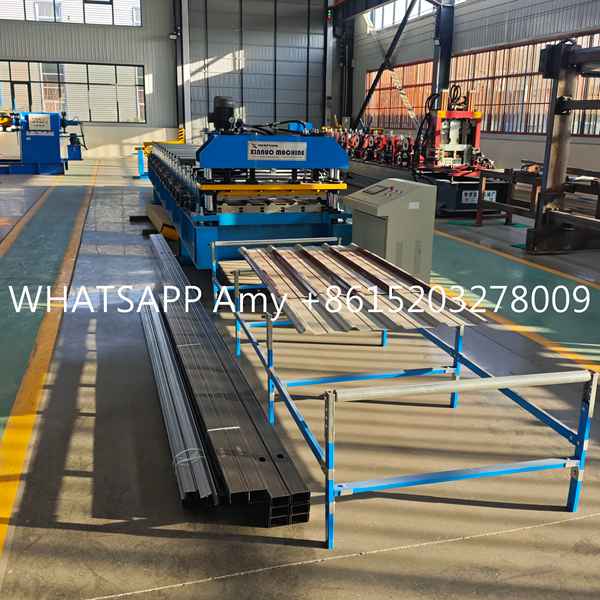
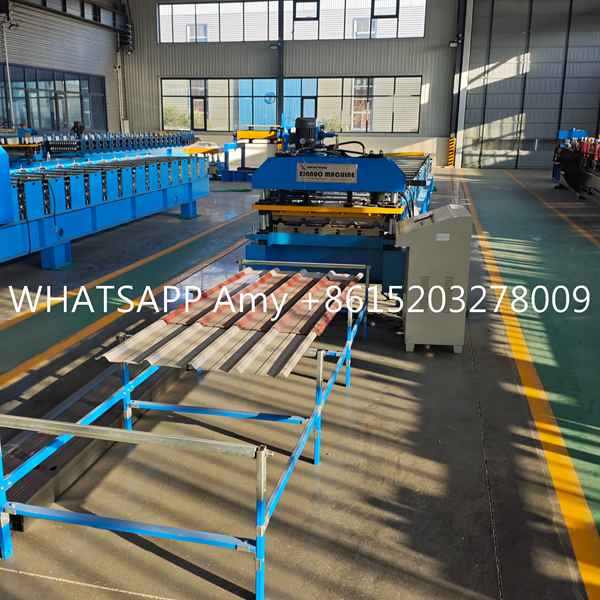
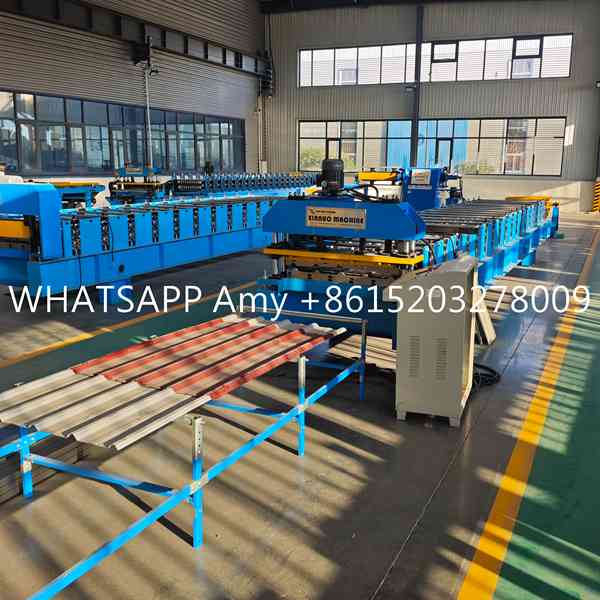
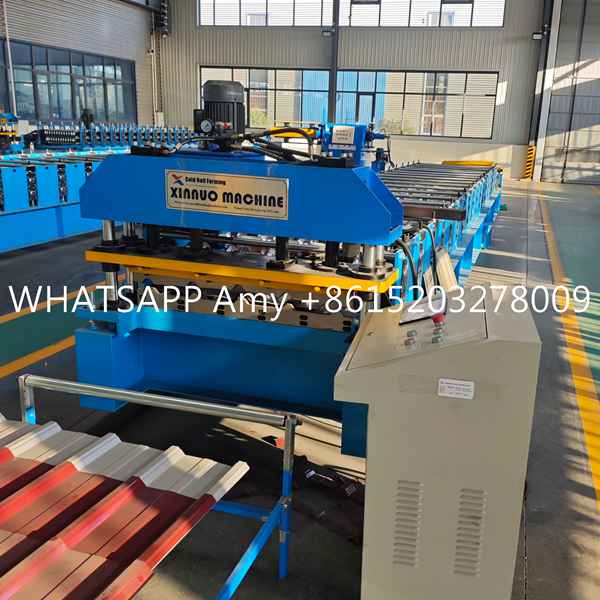
The roof panel machine is designed to manufacture metal roof panels used as structural and protective elements in building envelopes. The machine converts flat metal coils into finished roof panels with repeatable dimensions and stable mechanical properties, supporting standardized installation systems.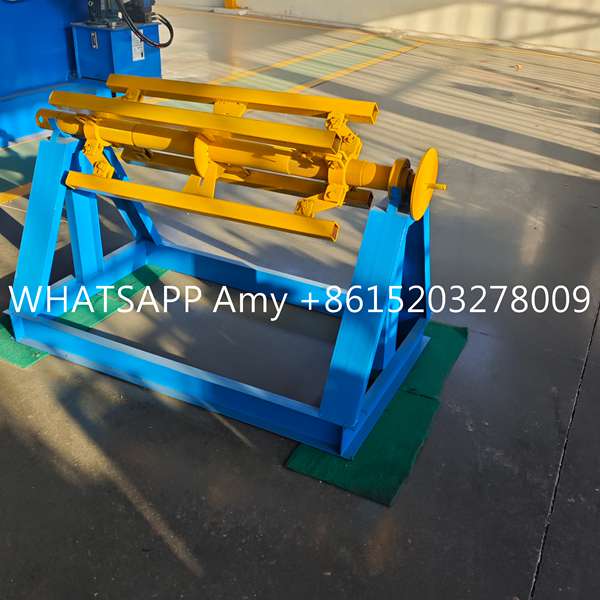
The machine applies a step-by-step forming process in which each roller station contributes a defined bending stage. This controlled forming method improves dimensional consistency, reduces internal stress in the material, and ensures clean panel geometry along the entire length.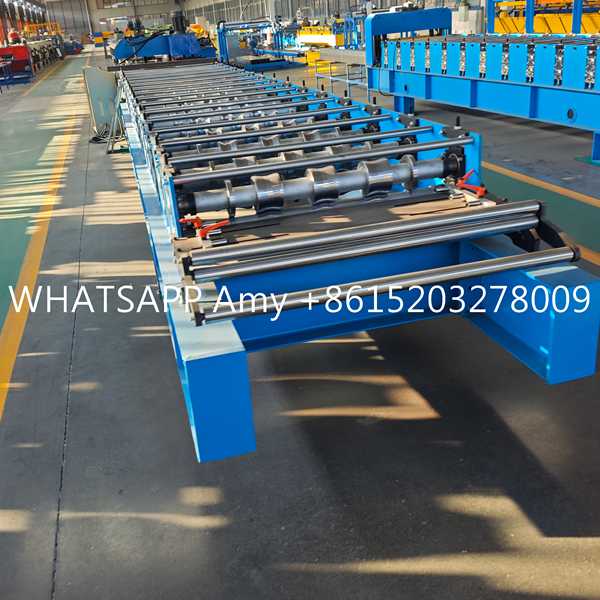
A reinforced machine frame forms the foundation of the roof panel machine. Precision-installed shafts and rollers operate within a rigid alignment system, ensuring reliable performance under continuous production and reducing long-term structural fatigue.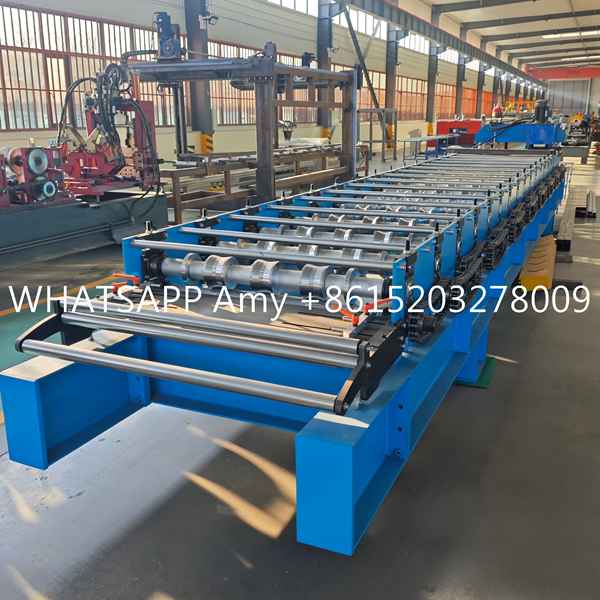
The roof panel machine is suitable for both project-based manufacturing and continuous industrial output. Adjustable operating speed allows manufacturers to align production capacity with order size, material type, and thickness without altering forming quality.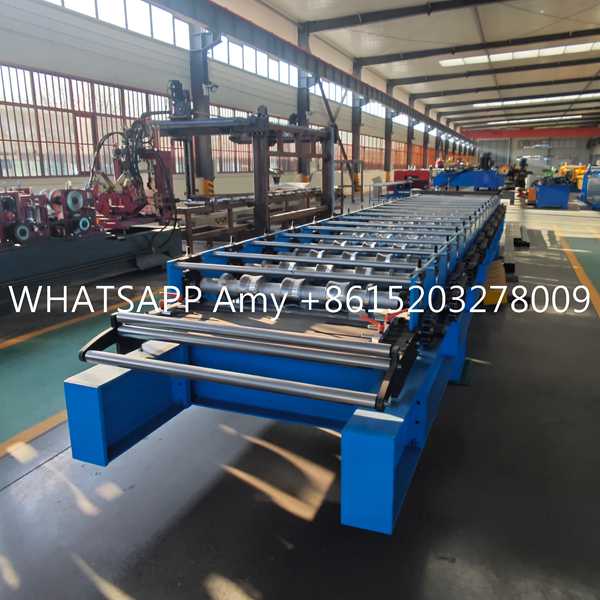
An integrated PLC system governs forming speed, panel length control, and cutting coordination. The operator interface enables quick setup, production monitoring, and parameter recall, supporting efficient workflow management and consistent product results.
The cutting mechanism is synchronized with panel movement to maintain accuracy without damaging the formed profile. Accurate length positioning reduces installation errors on site and improves material utilization throughout the production process.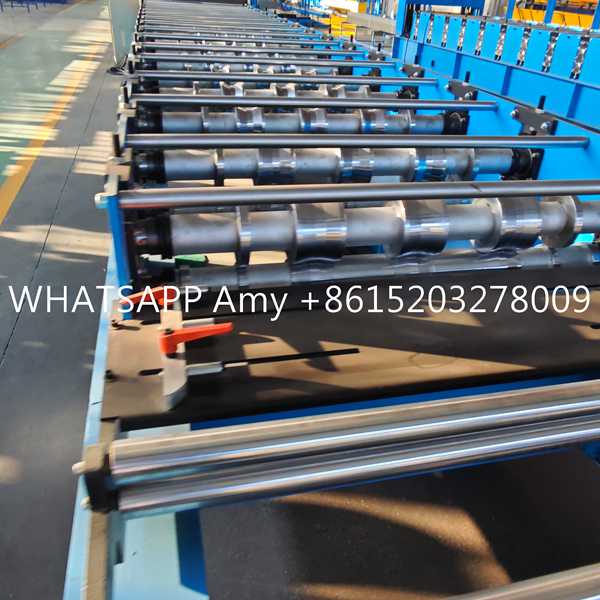
The roof panel machine can be engineered to support various roof panel geometries, widths, and structural configurations. Electrical standards, safety components, and automation levels can be adapted to comply with regional construction and manufacturing requirements.
Roof panels produced by this machine are widely applied in:
Industrial roofing systems
Commercial building envelopes
Storage and logistics facilities
Agricultural and utility structures
By combining structural rigidity, controlled forming logic, and automated operation, the roof panel machine delivers dependable performance for manufacturers seeking long-term equipment stability and consistent roof panel quality.
| Specification | Details |
| Machine Name | Roof Panel Machine |
| Production Scope | Metal roof panel fabrication |
| Compatible Materials | Pre-painted steel, galvanized steel, zinc-aluminum steel |
| Thickness Capacity | 0.3 – 1.2 mm |
| Panel Profile | Defined by customer design |
| Operating Speed | 6 – 15 m/min |
| Forming Structure | Sequential roll forming stations |
| Transmission System | Electric motor with reduction gearbox |
| Cutting Technology | Hydraulic cutting with length positioning |
| Automation Level | PLC-controlled automatic operation |
| Voltage Standard | Configurable by country |
| Custom Engineering | Profile geometry, speed, structure |
Xinnuo Roll Forming Machine Co., Ltd., established in 1995, is a leading enterprise specializing in the design, development, manufacturing, and sales of various cold roll forming equipment.
Located in Botou Economic Development Zone, the company benefits from a well-developed electromechanical manufacturing industry and a complete industrial chain...[ Read More >>]