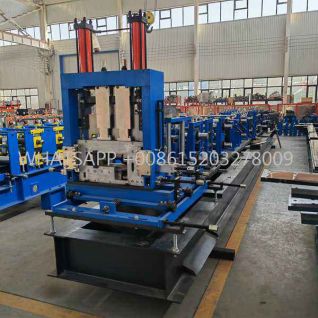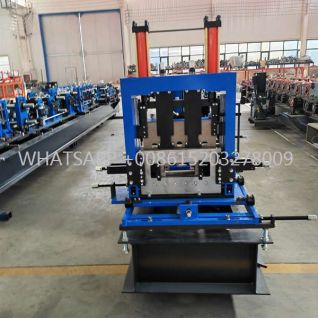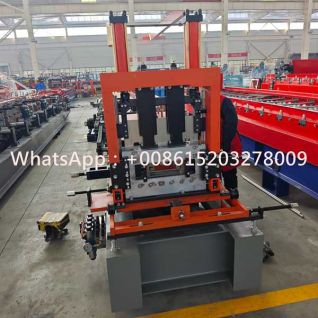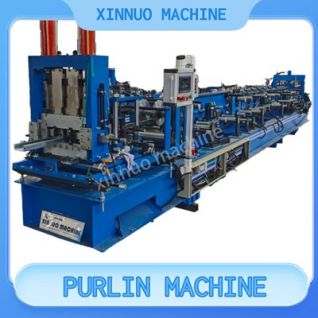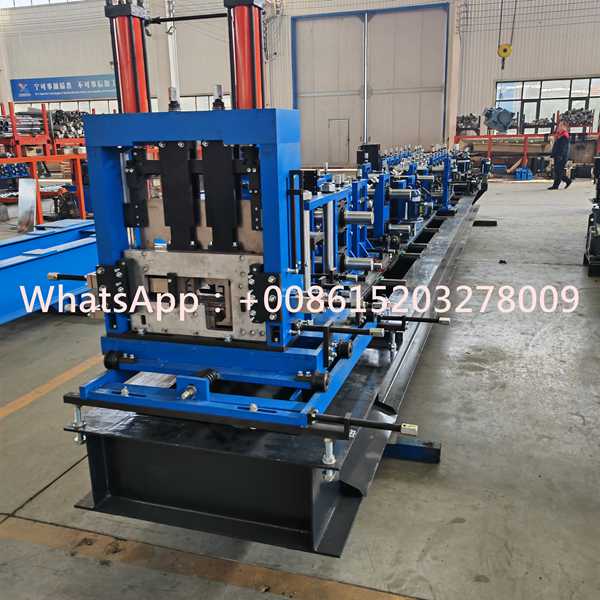
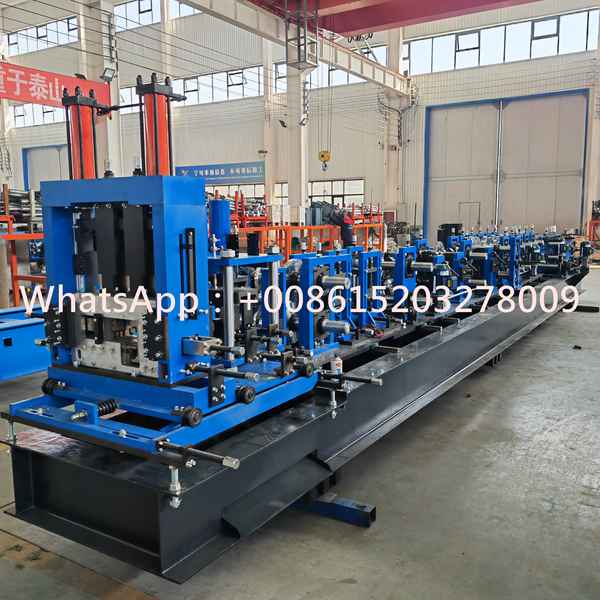
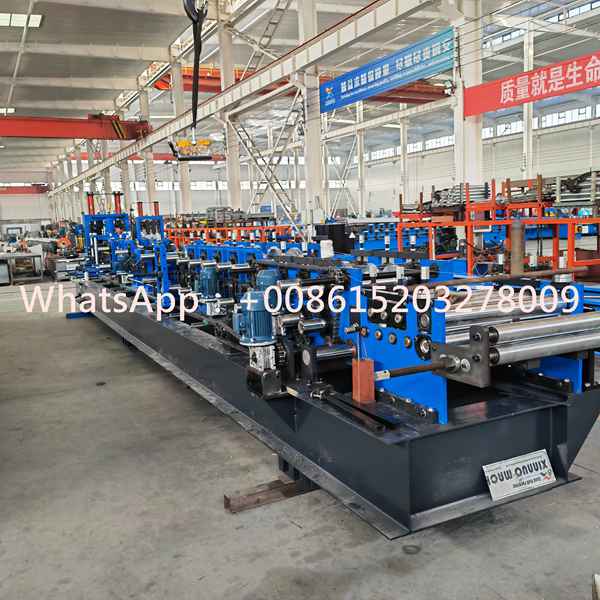
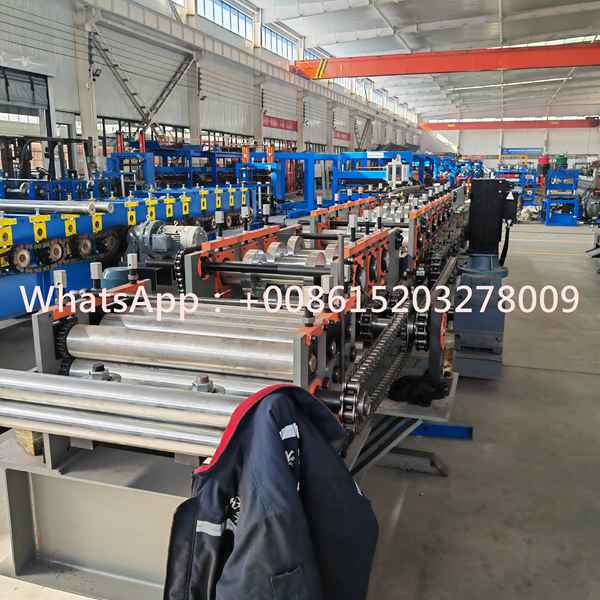
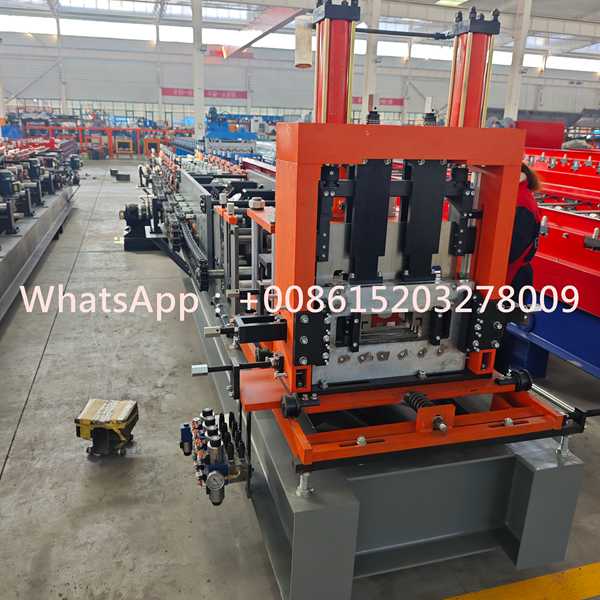
A flexible production solution for manufacturers requiring accurate, repeatable, and efficient fabrication of structural purlin sections.
Modern steel construction projects increasingly require structural components that combine reliable load-bearing performance, dimensional consistency, and efficient manufacturing. A customized purlin production system is designed to meet these requirements by converting steel coils into finished structural sections through a continuous forming process. Instead of relying on several independent fabrication operations, the production line integrates material feeding, roll forming, profile processing, cutting, and finished-product discharge into one coordinated workflow.
The equipment can be configured according to the required purlin geometry, raw material characteristics, production volume, and factory workflow. This makes it suitable for manufacturers producing standard sections as well as companies handling project-based orders where profile dimensions may change according to engineering requirements. The adjustable configuration provides greater flexibility when different structural specifications need to be manufactured on the same production platform.
With a forming thickness range of approximately 1.5–3.2 mm and adjustable section dimensions, the system can be applied to a broad range of structural steel fabrication tasks. The forming speed can be configured within a practical production range of approximately 10–20 m/min, depending on the selected profile, material thickness, punching requirements, cutting method, and overall machine configuration.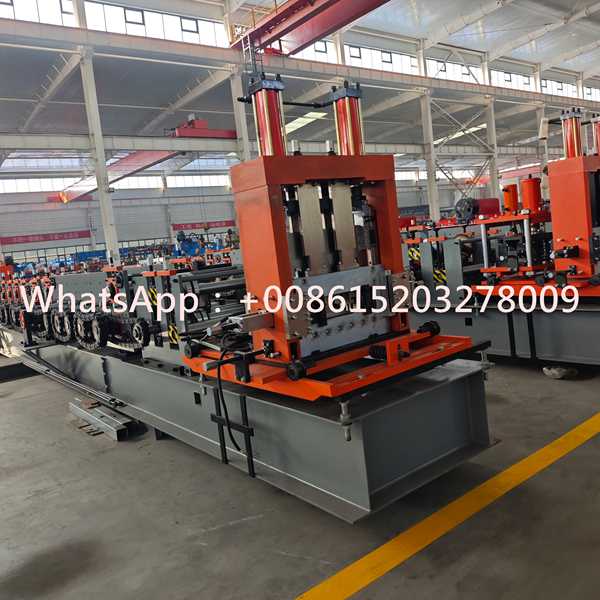
Section width: approximately 80–300 mm · Section height: approximately 40–80 mm · Flange/edge size: approximately 10–20 mm · Material thickness: approximately 1.5–3.2 mm · Forming speed: approximately 10–20 m/min
| Item | Reference Specification |
|---|---|
| Machine Type | Customized structural purlin roll forming production line |
| Section Width | Approximately 80–300 mm |
| Section Height | Approximately 40–80 mm |
| Flange / Edge Size | Approximately 10–20 mm |
| Material Thickness | Approximately 1.5–3.2 mm |
| Forming Speed | Approximately 10–20 m/min |
| Material | Structural steel coil, according to project requirements |
| Control Method | Automatic control system, configured to production requirements |
| Cutting Method | Configured according to profile and production requirements |
| Customization | Profile dimensions, tooling, processing functions, and line layout |
The production cycle begins with a steel coil positioned on the material uncoiling section. The coil is gradually released and guided toward the forming entrance. A controlled feeding arrangement helps maintain a stable strip position before the material enters the forming stations.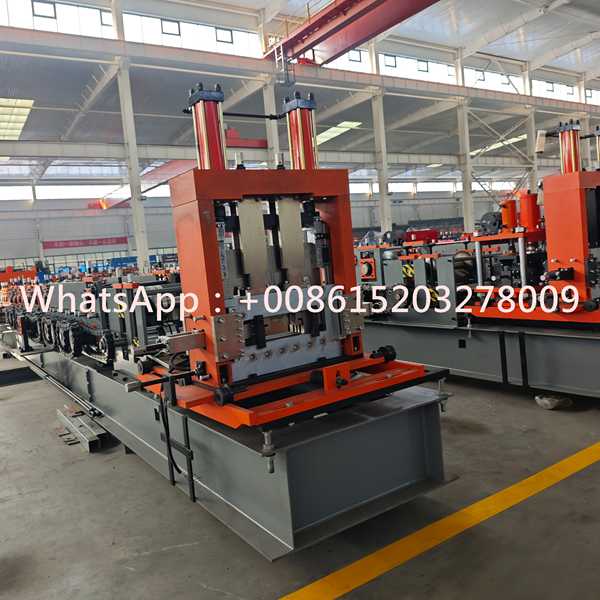
Inside the forming section, a series of precisely arranged rollers progressively bends the flat strip into the required structural geometry. Rather than creating the complete shape in a single operation, the material passes through multiple forming stages. Each stage introduces a controlled amount of deformation, helping maintain smooth profile development and reduce unnecessary stress on the steel.
When the project requires holes or other structural processing, the line can be configured with corresponding punching equipment. Hole positions, spacing, and processing requirements can be determined according to engineering drawings. After forming and required processing are completed, the finished profile is cut to the specified length and transferred to the discharge section for collection.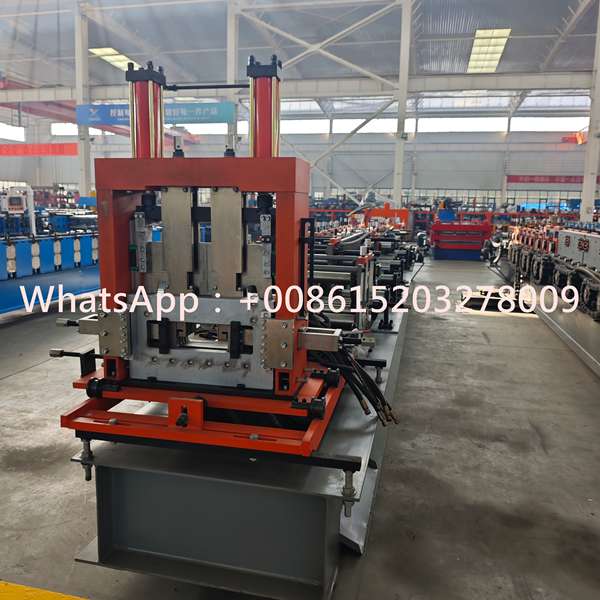
The coordinated control system allows the major production stages to operate as a connected process. This reduces repeated manual positioning and helps operators maintain consistent production conditions during longer manufacturing runs.
Every structural steel manufacturer may have different profile drawings, material specifications, production targets, and factory conditions. For this reason, the line is not limited to one fixed configuration. The forming tooling can be designed around the required section geometry, while the processing arrangement can be adapted to the intended production workflow.
Customization can cover section width, section height, flange dimensions, material thickness, hole patterns, finished length, punching requirements, feeding arrangement, control functions, and line layout. Where several profile sizes are required, the equipment configuration can also be evaluated according to the customer's production strategy and changeover requirements.
Before manufacturing, technical drawings and production requirements can be reviewed to determine the suitable roller arrangement and processing configuration. This approach helps ensure that the finished equipment corresponds closely with the actual structural sections required by the customer rather than relying on a generic machine specification.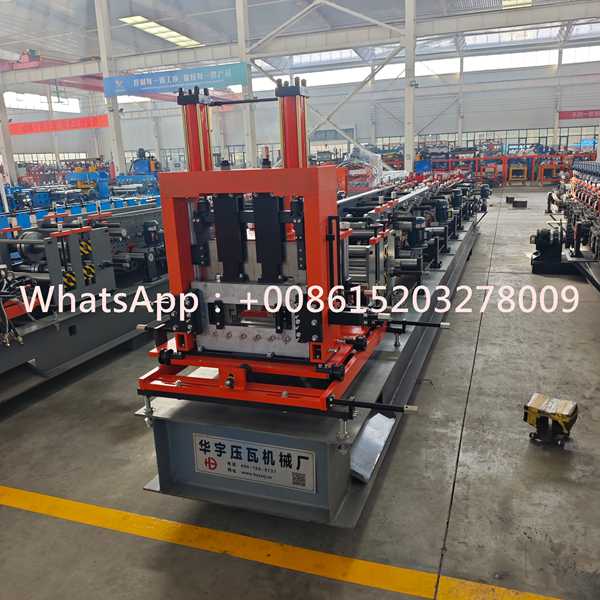
Profile consistency is particularly important when purlins are used as part of a larger steel structure. Variations in section geometry can affect installation, connection alignment, and overall construction efficiency. The forming system therefore focuses on controlled material guidance and progressive deformation through the roller stations.
A properly configured roller system helps maintain the intended profile shape throughout continuous production. The combination of controlled feeding, stable forming stations, and automated cutting allows manufacturers to produce repeated sections with consistent dimensions while reducing the need for frequent manual adjustment.
Production efficiency also depends on the relationship between material thickness, profile geometry, line speed, punching requirements, and cutting cycle. These factors can be evaluated together during the machine design stage so that the final configuration is balanced for the customer's actual production conditions.
Structural purlins are widely used in steel building systems where secondary framing members are required to support roofing or wall assemblies. The production line is suitable for manufacturers serving different construction and fabrication markets.
Production of structural sections for factories, workshops, and industrial facilities.
Efficient fabrication of purlins for warehouse roof and wall framing systems.
Suitable for fabrication plants producing structural components for construction projects.
Applicable to selected commercial and agricultural steel framing applications.
The production line is intended to create a more organized workflow from coil preparation to finished-section collection. Continuous processing can reduce intermediate handling and help operators concentrate on monitoring material condition, production parameters, and finished-product quality.
For manufacturers handling repeated orders, the ability to maintain a stable production cycle can improve overall utilization of the workshop. Automated length control and coordinated processing also help reduce repetitive manual work. The result is a production environment better suited to medium- and high-volume structural steel fabrication.
The equipment layout can be planned according to the customer's available workshop length, material storage position, finished-product handling method, and operating requirements. This is especially useful for factories where space utilization and material movement are important considerations.
A roll forming system is only as effective as the mechanical and control configuration behind it. For this reason, the machine design should consider the relationship between frame strength, roller arrangement, material guidance, transmission, cutting, and electrical control. Proper coordination of these components contributes to smoother operation and more stable long-term production.
The forming rollers are arranged according to the target section profile, allowing the strip to move progressively through the machine without abrupt deformation. The supporting structure is designed to provide a stable platform for the forming stations, while the control system coordinates feeding, forming, processing, and cutting functions.
Before final production, the selected configuration can be checked against the customer's drawings and material specifications. This provides an additional opportunity to verify section dimensions, processing requirements, and production objectives before the equipment enters manufacturing.
Proper installation and commissioning are important for achieving the expected production performance of a customized forming line. Technical documentation can be prepared according to the final machine configuration, covering equipment arrangement, electrical connections, operating procedures, and maintenance requirements.
During commissioning, the forming condition can be checked using the specified material and target profile. Production parameters are adjusted according to the actual material thickness, section geometry, punching requirements, and cutting length. This process helps establish suitable operating conditions before regular production begins.
After installation, ongoing technical support can assist operators with machine operation, parameter adjustment, routine maintenance, and troubleshooting. Wear parts and commonly serviced components can also be identified according to the final configuration, helping customers establish a practical maintenance plan.
By combining adjustable profile dimensions, continuous forming, optional punching and cutting functions, and a production layout tailored to the customer's requirements, this equipment provides a practical solution for structural steel manufacturers. From warehouse framing to industrial construction components, the line can be configured around the actual profile drawings, material specifications, and production objectives of each project.
Xinnuo Roll Forming Machine Co., Ltd., established in 1995, is a leading enterprise specializing in the design, development, manufacturing, and sales of various cold roll forming equipment.
Located in Botou Economic Development Zone, the company benefits from a well-developed electromechanical manufacturing industry and a complete industrial chain...[ Read More >>]