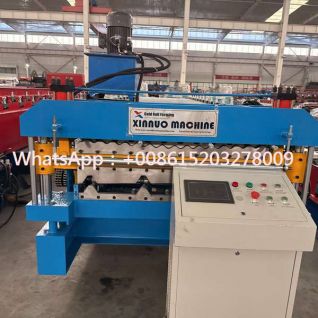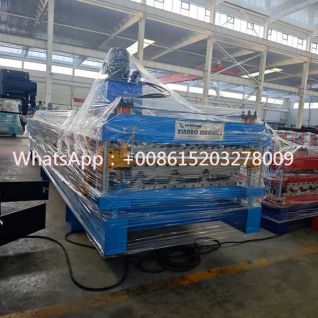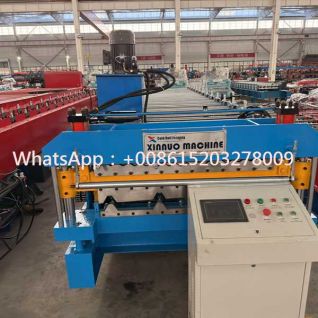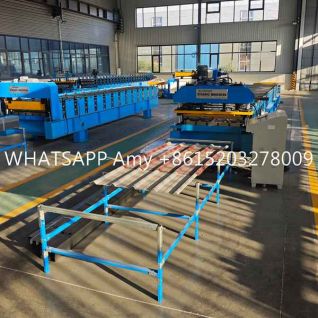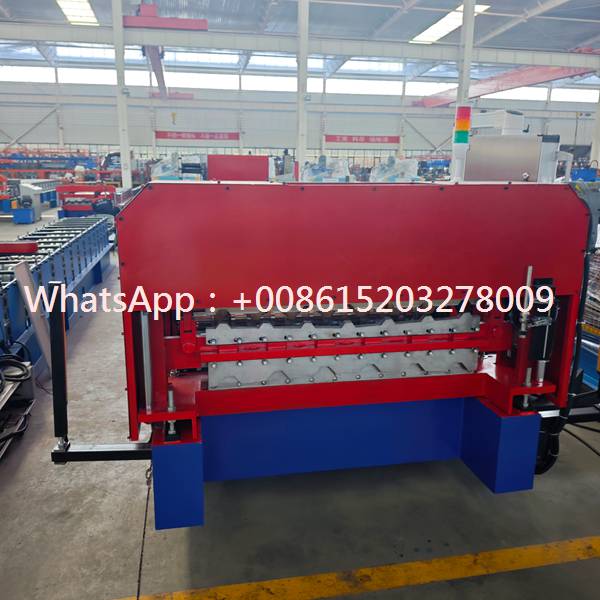
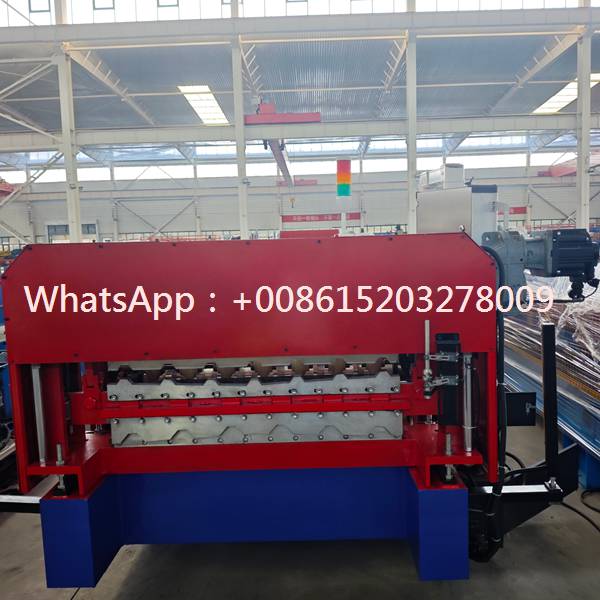
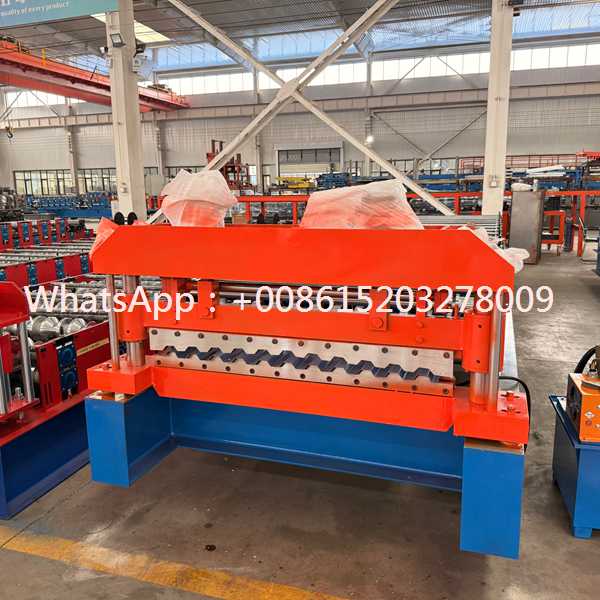
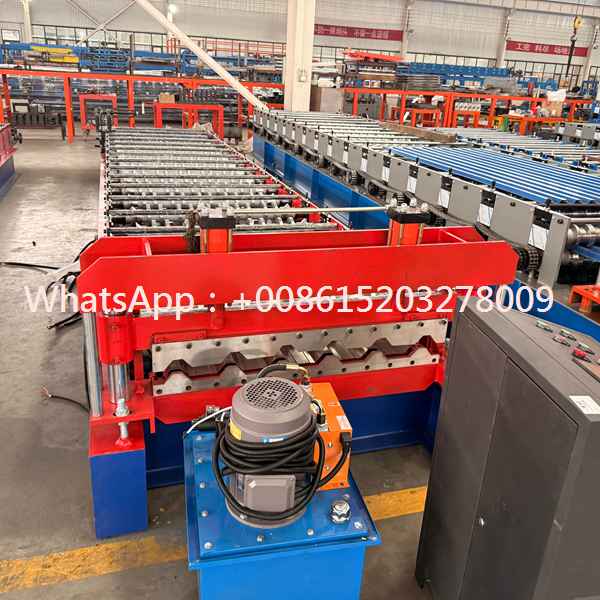
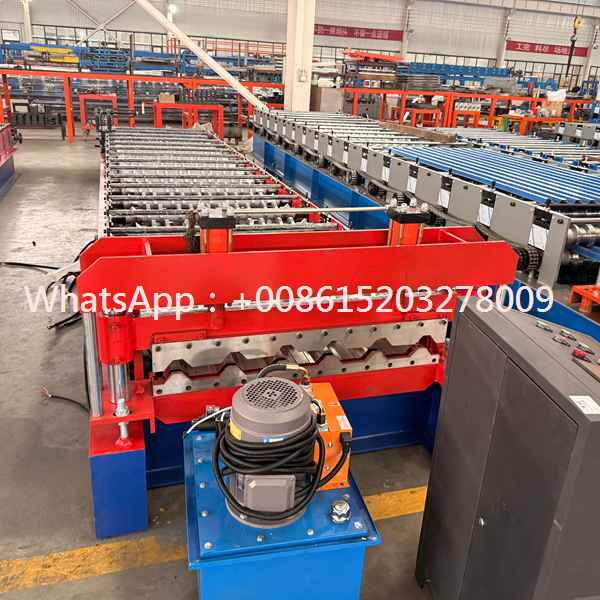
The Automatic TP40 Roof Panel Machine is a specialized metal sheet production system designed to manufacture TP40 trapezoidal roofing panels from galvanized steel, pre-painted steel, color-coated steel, Aluzinc and other suitable metal coils. The equipment uses continuous cold roll forming technology to convert flat coil material into finished roof panels with consistent rib geometry, controlled dimensions and a clean surface appearance.
TP40 roof panels are commonly selected for industrial buildings, warehouses, workshops, agricultural facilities, storage structures and commercial construction projects. The trapezoidal profile provides a practical balance between panel rigidity, roof coverage and water drainage. Final roofing performance depends on the selected material, coating, panel thickness, installation method and building design.
The machine can be configured as a complete production line with a decoiler, feeding guide, roll forming section, automatic length measurement system, profile cutting unit and finished panel receiving equipment. This integrated arrangement supports efficient production while reducing repeated manual measuring and handling.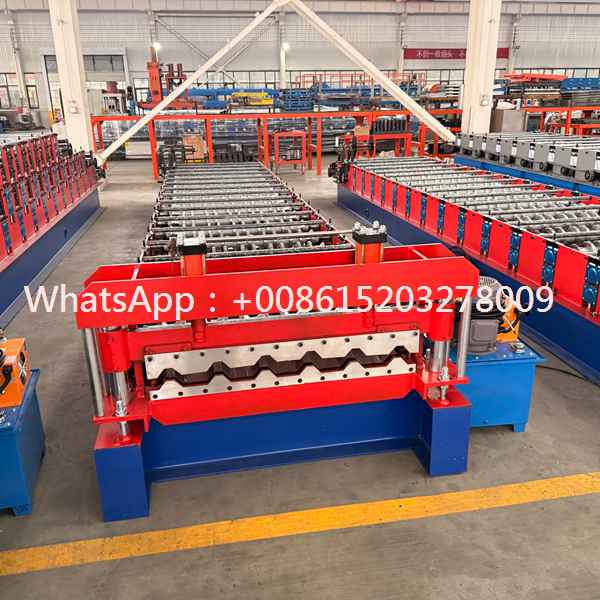
The TP40 roof profile is produced through a sequence of carefully arranged forming stations. The incoming metal strip passes through matched upper and lower rollers, and each station gradually develops part of the final profile.
The progressive forming method distributes the shaping work across multiple stages. This supports smooth material movement and helps maintain consistent rib height, panel width and profile geometry throughout continuous production.
The roller design is developed according to the required TP40 profile drawing. Important parameters may include the original coil width, effective cover width, rib height, rib spacing and material thickness. The final machine design can be adjusted according to customer specifications and local market requirements.
| Technical Item | Typical Specification |
|---|---|
| Machine Name | Automatic TP40 Roof Panel Machine |
| Finished Product | TP40 Trapezoidal Metal Roof Panel |
| Compatible Materials | PPGI, GI, Aluzinc and Color-Coated Steel |
| Material Thickness | 0.3-0.8 mm, Customized |
| Coil Width | Based on the TP40 Profile Drawing |
| Forming Technology | Multi-Station Cold Roll Forming |
| Production Speed | 8-20 m/min, Depending on Configuration |
| Drive System | Motor with Chain or Gear Transmission |
| Control Method | PLC and Touch Screen Control |
| Cutting System | Automatic Hydraulic Profile Cutting |
| Panel Length | Programmable According to Order Requirements |
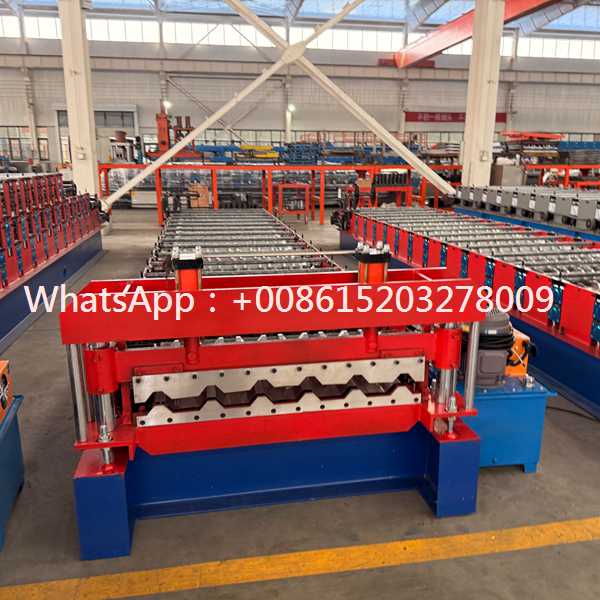
The production process begins with controlled coil unwinding. A manual decoiler can be used for standard production, while a hydraulic decoiler may be selected for heavier coils or higher automation requirements.
After leaving the decoiler, the metal strip enters the feeding and guiding section. Adjustable guide components help keep the coil centered before it reaches the roll forming stations. Correct strip alignment supports stable profile formation and consistent finished panel dimensions.
Depending on the coil condition, a leveling device can be added to improve material flatness before forming. Optional coil loading equipment may also be included to simplify heavy coil handling and improve production efficiency.
The roll forming section is built on a rigid machine base designed to support continuous industrial operation. The forming stations are arranged in a controlled sequence to guide the metal strip from a flat condition into the finished TP40 roofing profile.
The roller material, shaft diameter, station quantity and transmission arrangement can be selected according to the required panel design, material thickness and expected production capacity.
Accurate roller machining and stable station alignment support consistent profile quality. The machine structure is designed to provide reliable support during long production runs while allowing convenient inspection and routine maintenance.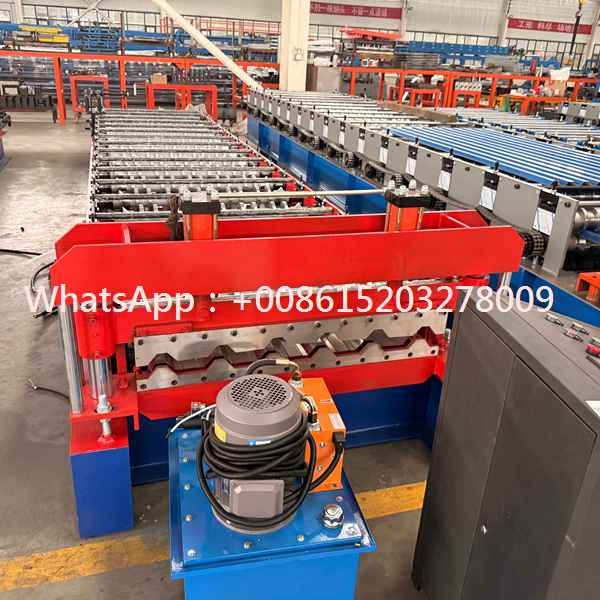
The PLC control system provides centralized management of the main production functions. Operators can enter the required panel length, production quantity and operating parameters through the touch screen interface.
During automatic production, the system monitors material movement and coordinates the cutting operation according to the programmed settings. This reduces repeated manual measurement and supports consistent panel lengths.
Production information can be adjusted for different orders, allowing manufacturers to change finished panel dimensions without modifying the complete forming system. The control interface can support automatic operation and manual adjustment functions according to the final machine configuration.
After the metal strip passes through the final forming station, the completed TP40 profile moves toward the cutting section. The length control system monitors panel travel and sends a cutting command when the programmed dimension is reached.
The cutting mold is designed to match the shape of the finished roof panel. This helps preserve the trapezoidal profile while producing clean and consistent panel ends.
The cutting configuration can be selected according to production speed, material thickness and required output. Finished panels may be transferred to a manual run-out table or an optional automatic stacking system.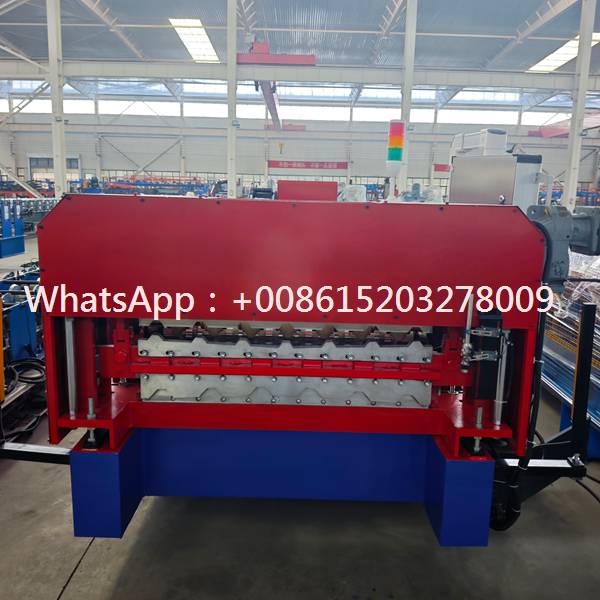
| Production Stage | Processing Function |
|---|---|
| Coil Loading | Install metal coil on the decoiler |
| Coil Unwinding | Supply material continuously |
| Strip Guiding | Maintain correct material alignment |
| Progressive Forming | Create the TP40 trapezoidal profile |
| Length Monitoring | Control the required panel size |
| Automatic Cutting | Separate finished roofing panels |
| Panel Receiving | Support collection and packaging |
TP40 roofing panels can be used in many construction applications. The appropriate material grade, coating system, panel thickness and installation method should be selected according to the building environment and applicable construction requirements.
| Optional Unit | Main Purpose |
|---|---|
| Hydraulic Decoiler | Provides controlled powered uncoiling |
| Coil Loading Car | Assists with heavy coil installation |
| Material Leveling Unit | Improves strip flatness before forming |
| Servo Length System | Supports precise length management |
| Automatic Stacker | Organizes finished roof panels |
| Run-Out Support Table | Supports panel collection and handling |
| Machine Feature | Production Advantage |
|---|---|
| TP40 Profile-Specific Rollers | Produces consistent trapezoidal panels |
| Continuous Cold Forming | Supports efficient long-panel production |
| PLC Production Control | Simplifies operating parameter management |
| Programmable Panel Length | Improves order flexibility |
| Profile-Matched Cutting | Supports clean panel separation |
| Customizable Production Line | Matches different factory requirements |
The Automatic TP40 Roof Panel Machine provides a reliable production solution for manufacturers of trapezoidal metal roofing sheets. Its continuous roll forming technology, programmable control system and automatic cutting function support efficient manufacturing for industrial, agricultural, commercial and residential construction markets.
The machine can be customized according to the required TP40 profile, coil material, thickness range, production speed and factory layout. With suitable auxiliary equipment and production settings, manufacturers can produce consistent roof panels while improving output efficiency and reducing unnecessary manual processing.
Xinnuo Roll Forming Machine Co., Ltd., established in 1995, is a leading enterprise specializing in the design, development, manufacturing, and sales of various cold roll forming equipment.
Located in Botou Economic Development Zone, the company benefits from a well-developed electromechanical manufacturing industry and a complete industrial chain...[ Read More >>]